 F4LUFTBILDER
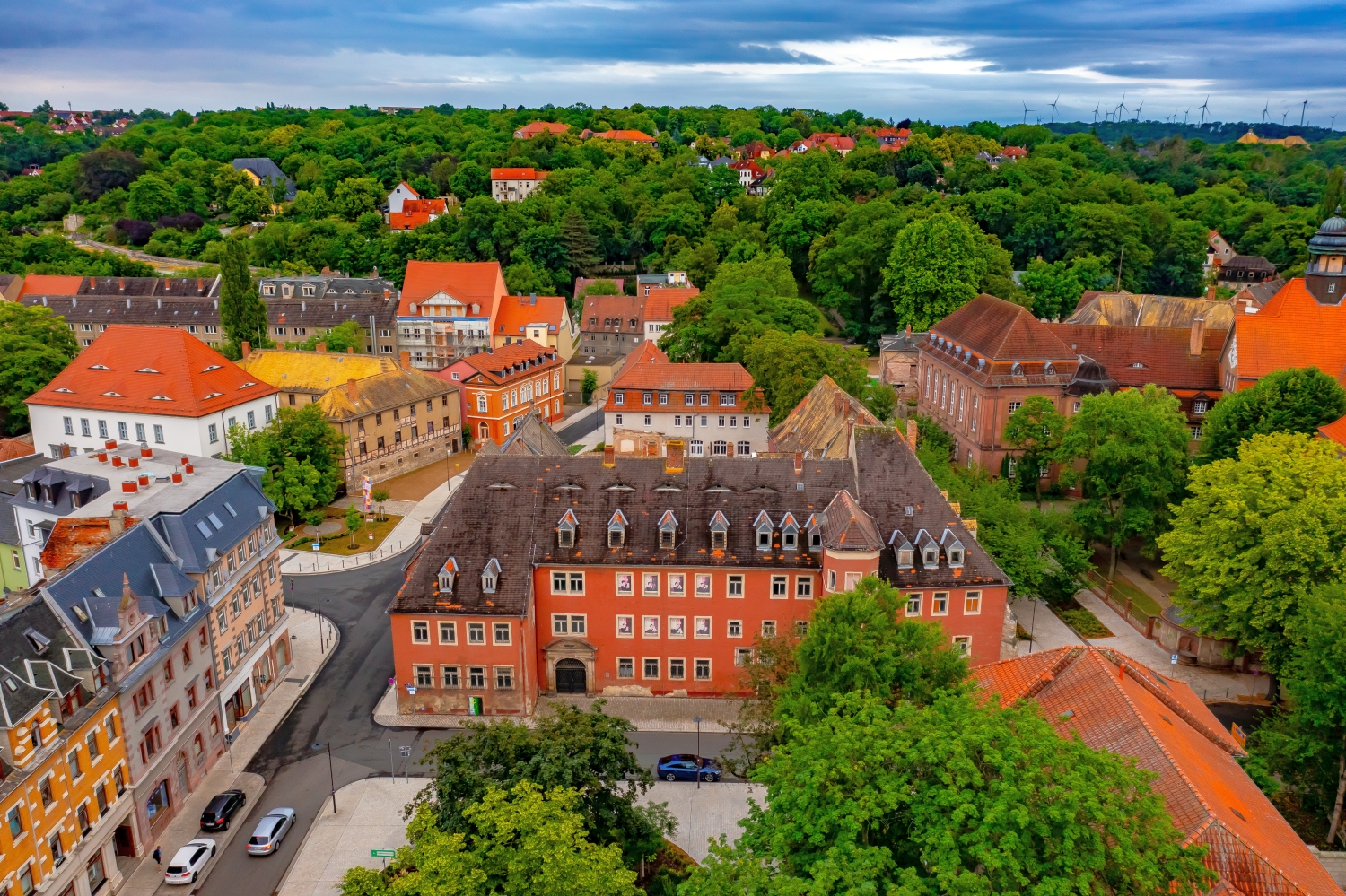
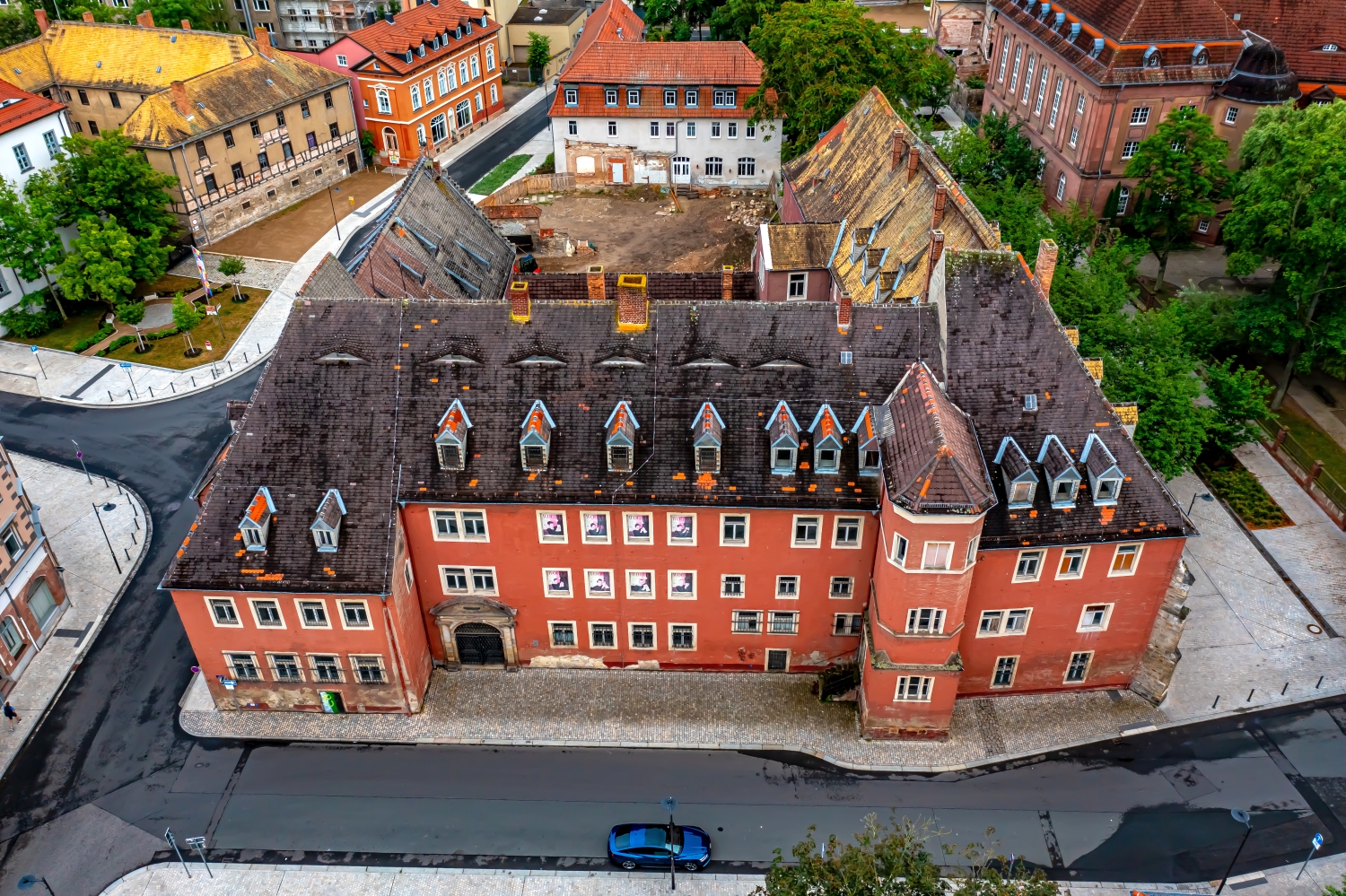
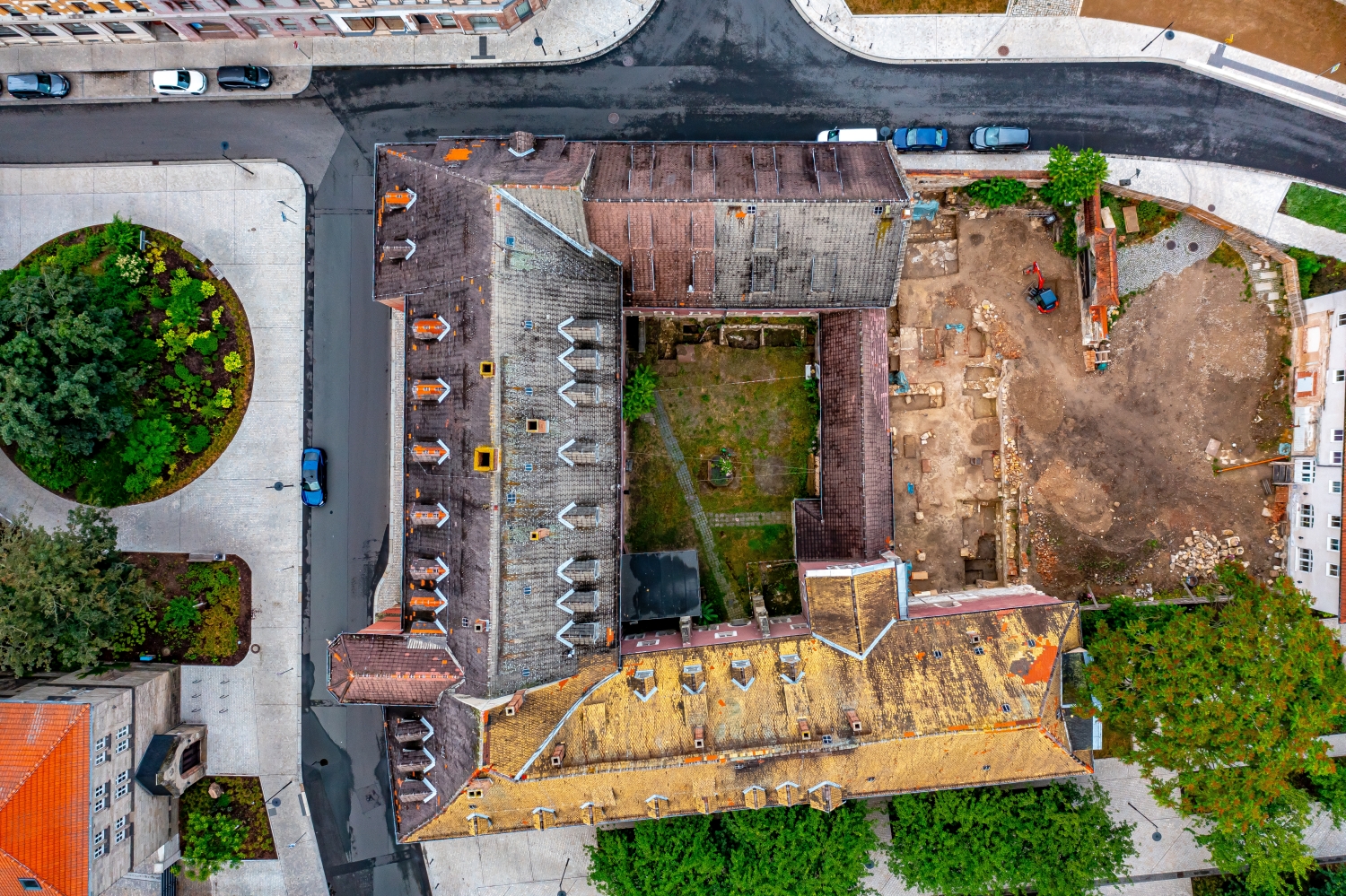
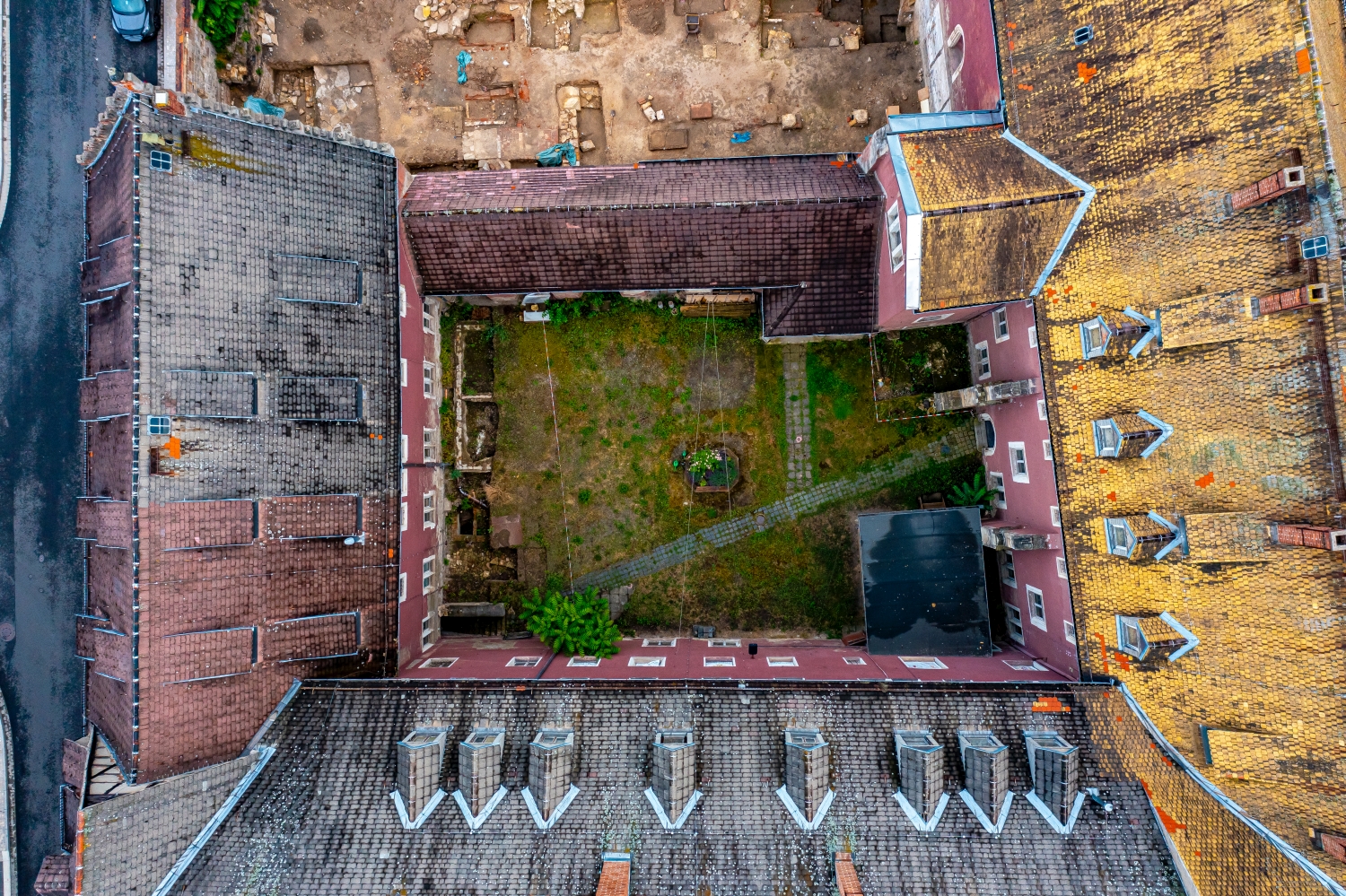
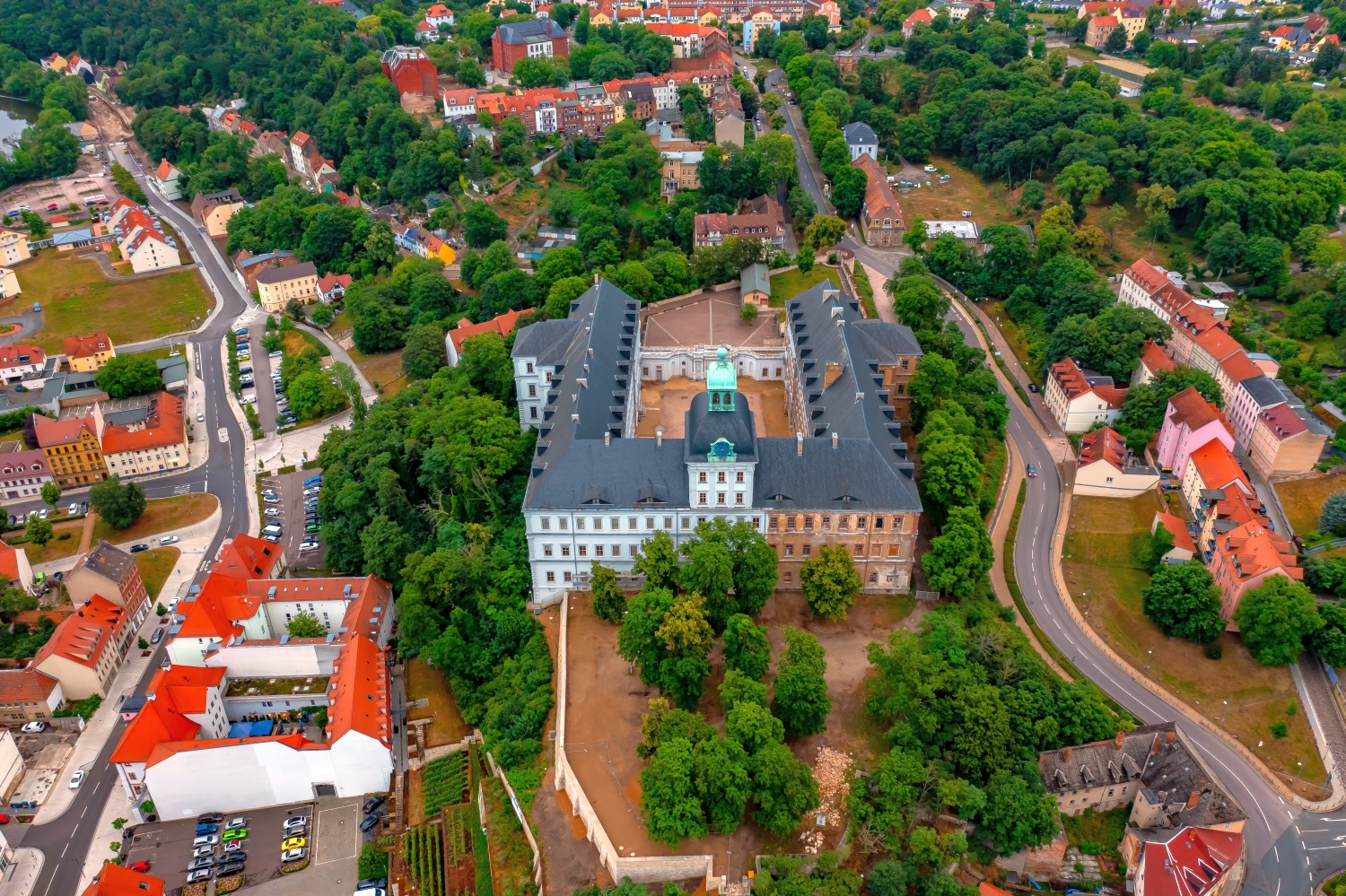
Inner courtyards and palace complex in Weißenfels
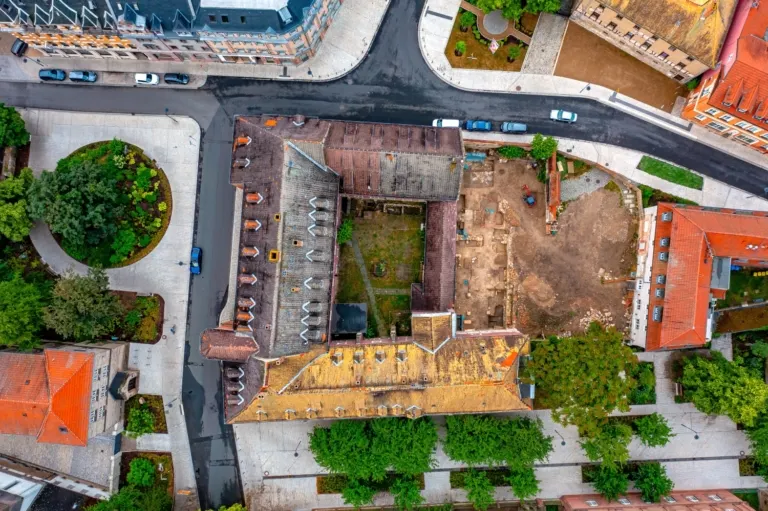
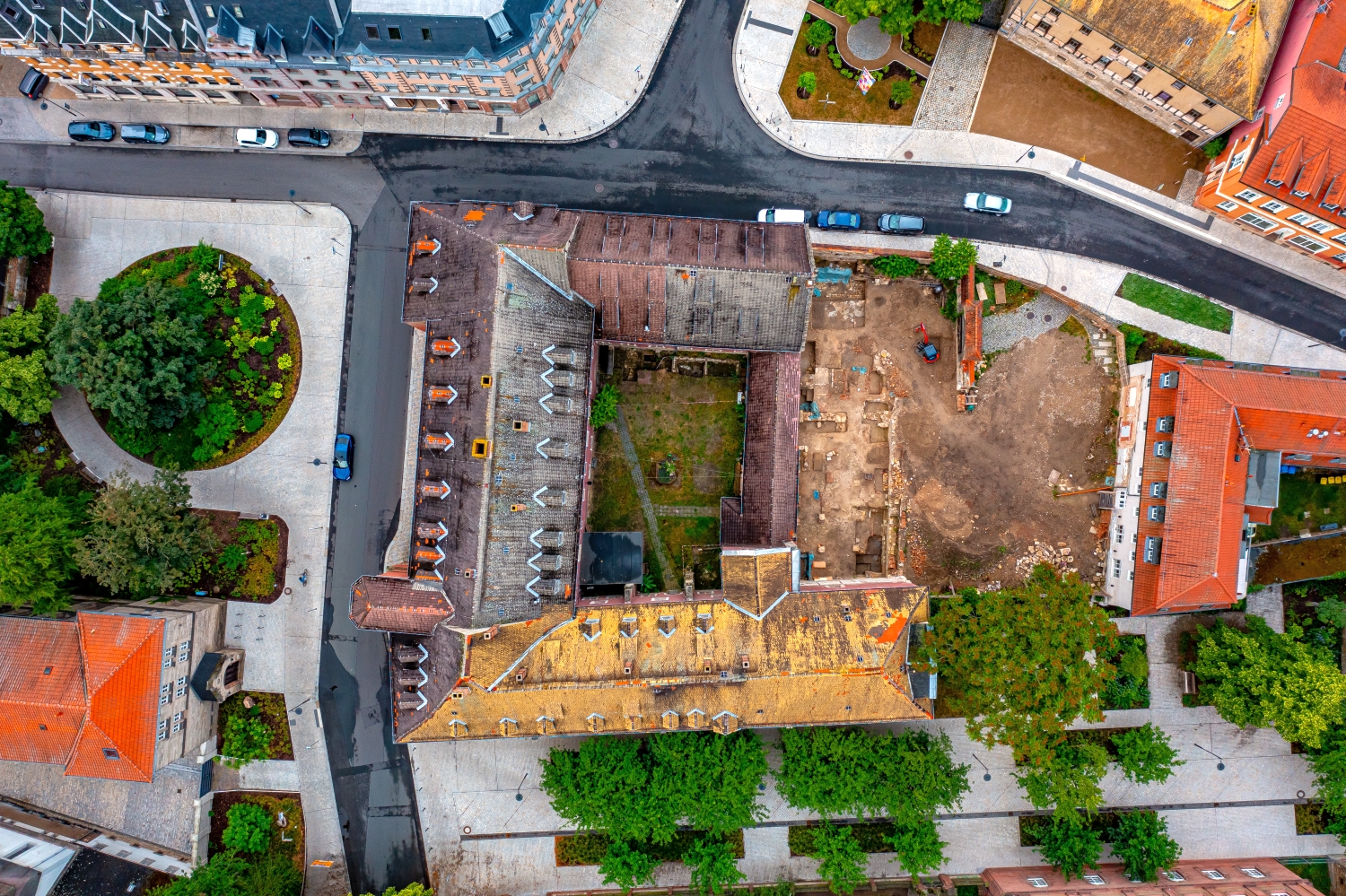
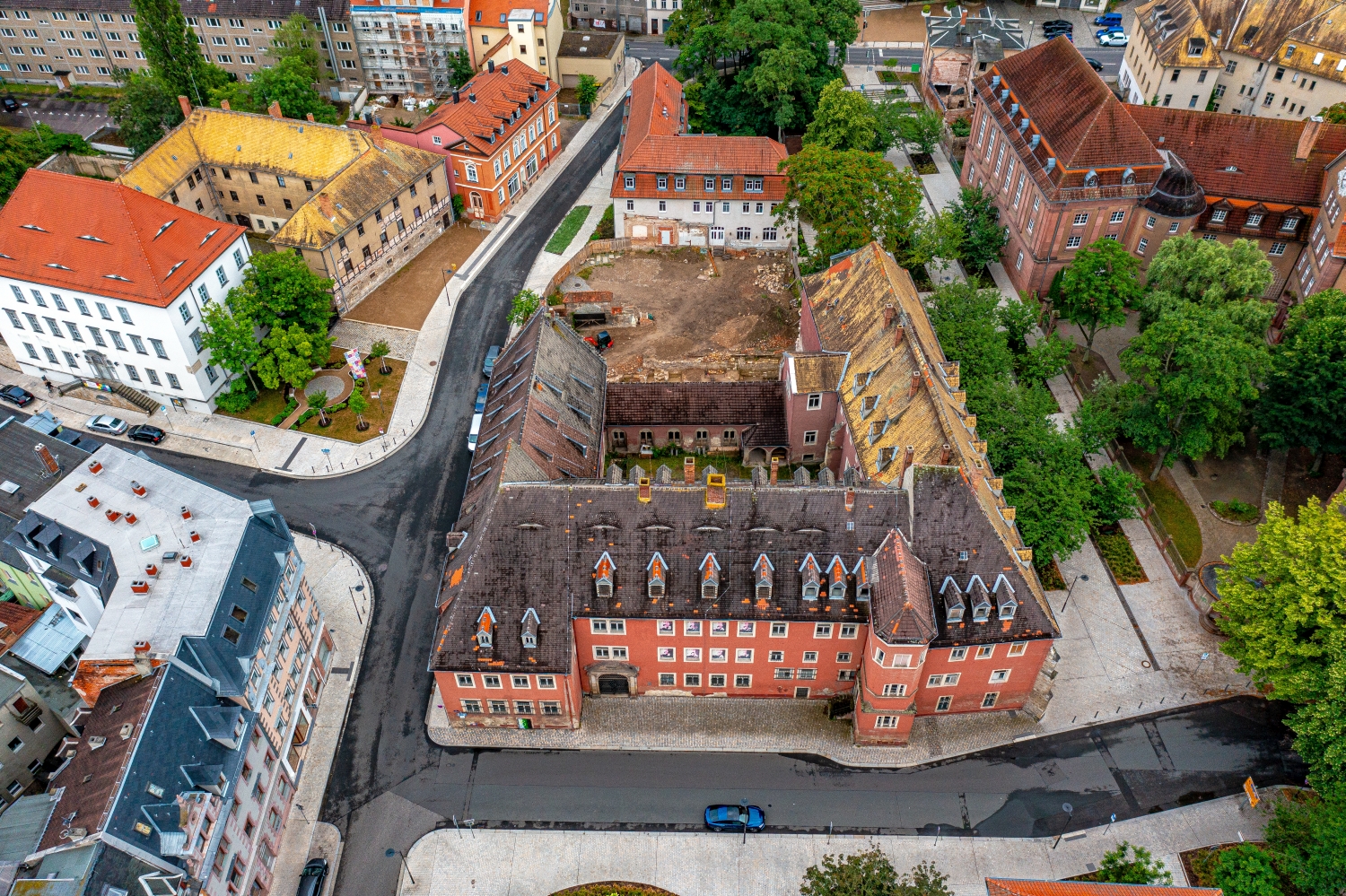
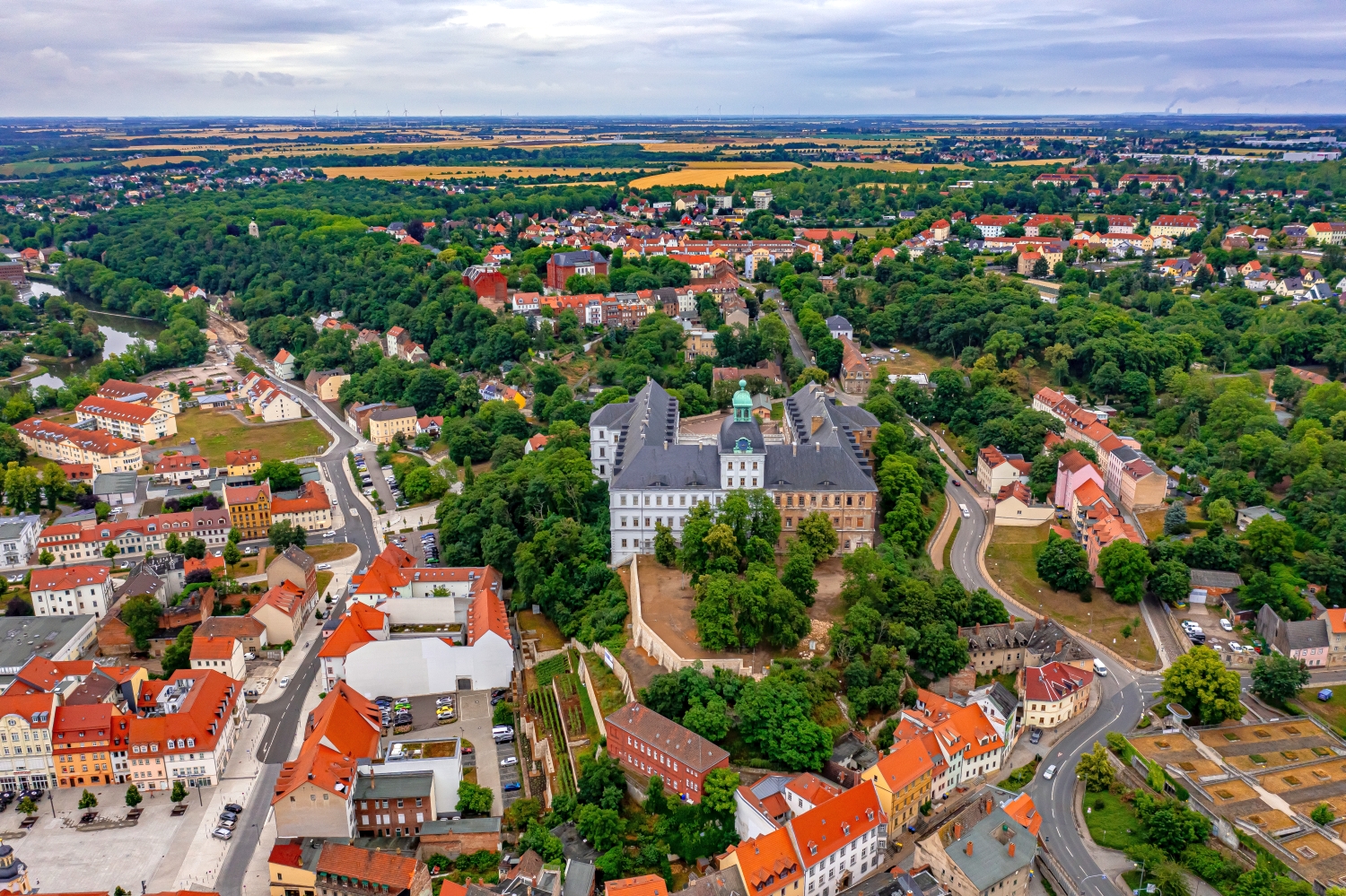
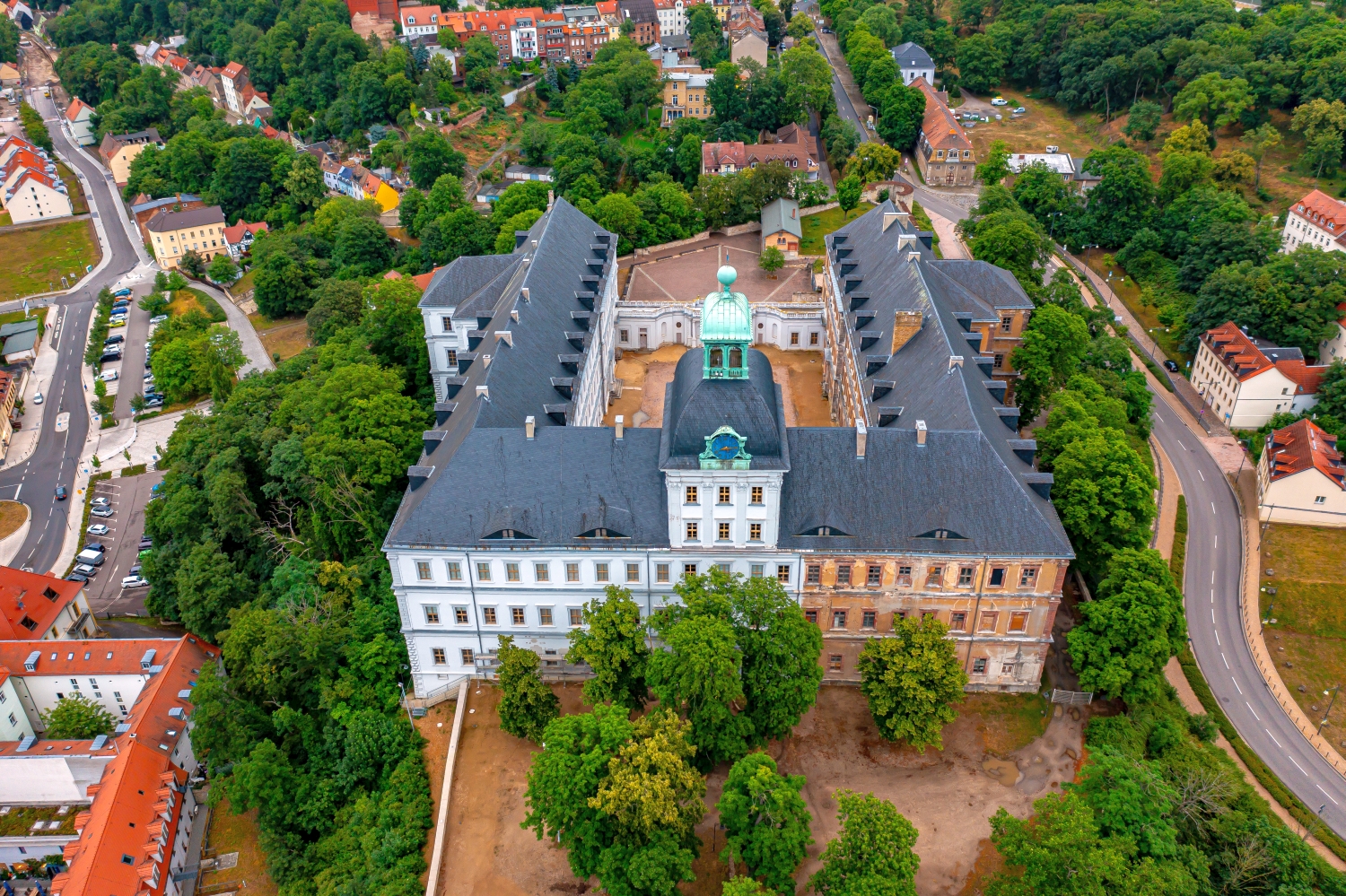
In Weißenfels, the shots change from the urban space to individual building complexes. Neu-Augustusburg Castle and the St. Claren Monastery are two reference points in the series. A nearly vertical view shows the courtyards and roof wings in an arrangement that is difficult to see from the alley.
Weißenfels above its farms
The inner courtyard in Weißenfels conveys more about the proportions than the roof color alone. It can be used to compare the length of a wing and the width of an entrance. The two named systems should each appear in captions with their own name.
In a courtyard, the relationships between buildings change. What appears from the outside to be a single long building can actually wrap around several open areas. In a steep aerial view, the passageways, the corners and the orientation of the adjacent roofs become understandable. For a caption, a specific reference to the visible side of the courtyard is often more helpful than a list of all the buildings. This means the viewer can recognize the spatial connection themselves and find it again in other images.
What the roofs reveal about the floor plan
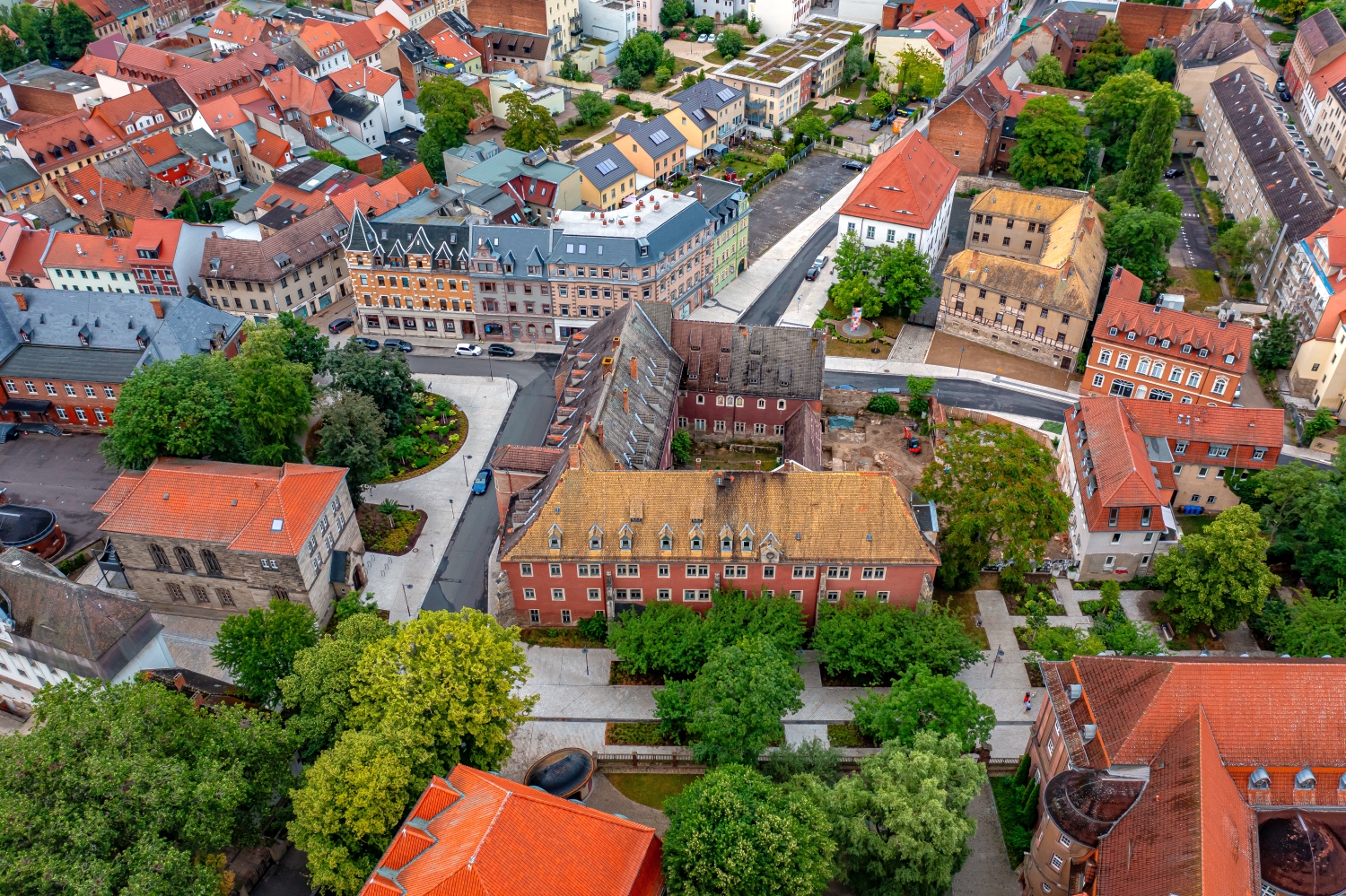
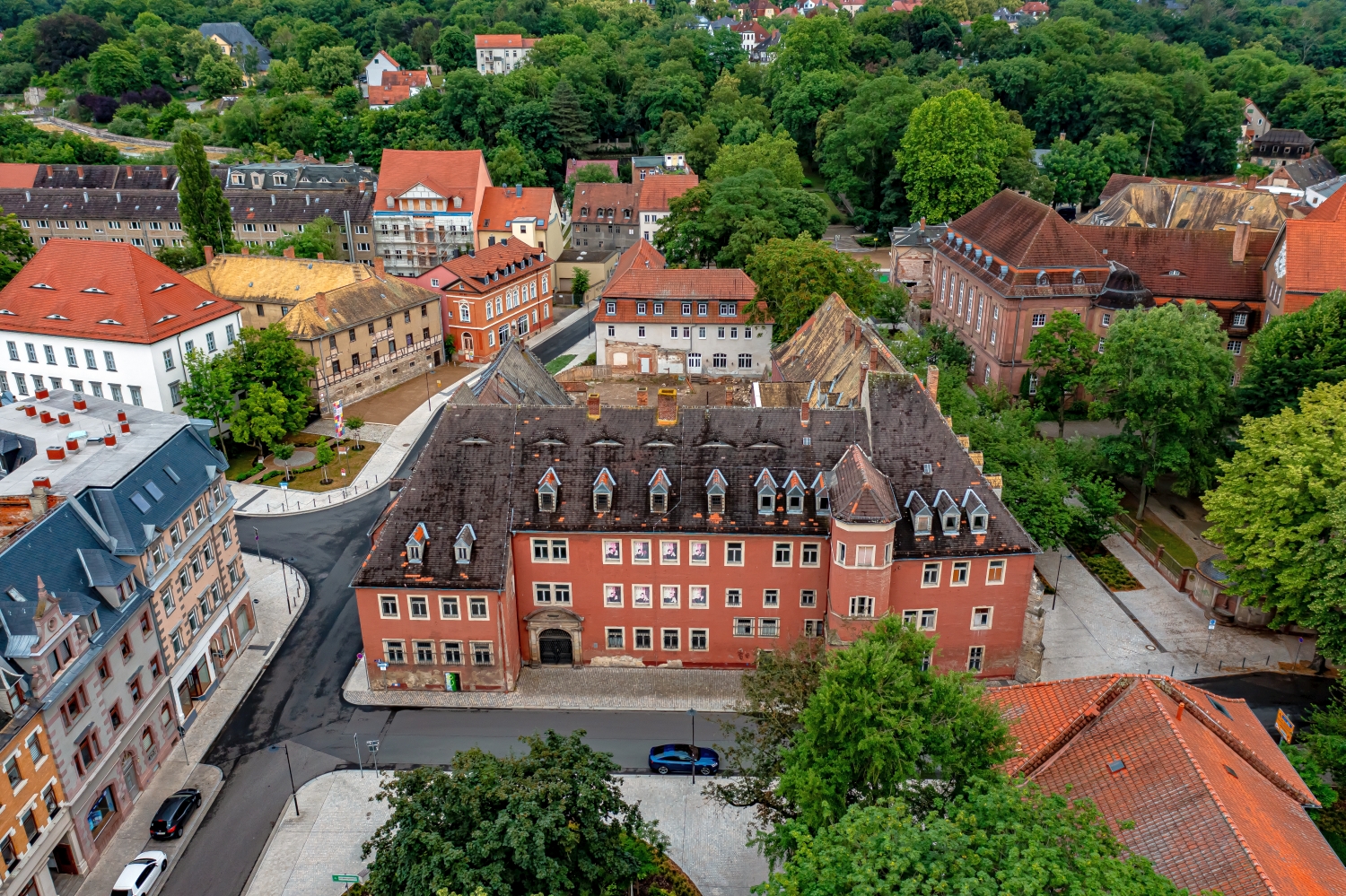
If you look at it at an angle, the houses not only show their roofs, but also their facades of different widths. This gives the motif more depth than in the pure top view. Even the change from a low neighboring building to a taller building reveals something about the gradation of the place. Such a view is particularly useful for a local chronicle if the caption indicates the starting point of the view. Readers can then follow the rows of houses themselves to the edge of the picture.
Understand the system through its structure
When looking at a castle, it is worth looking at the roofs and the spaces between them separately. A large roof wing initially attracts attention. In addition, a courtyard or a narrow passage can show much better how the parts of the system are connected. An oblique aerial photo also gives an idea of their altitude. With a narrower section, a piece of outer wall or slope maintains orientation and allows the building to remain visible in the context of its location.
Shades of green in the image
For a direct image comparison, use shot 7 and shot 11 from the gallery with 12 aerial photos. In the first image, green areas make up a smaller part of the section than in the second. It's worth tracking the green areas individually. Only in connection with neighboring forms does it become clear what is in the foreground and what belongs to the more distant surroundings.
According to camera data, Shot 1 and Shot 12 were taken on June 30, 2023. There is a gap of around 8 minutes between the two pictures. The exposure time was 1/40 second for the first of the images mentioned and 1/50 second for the second.
The Aerial Videos section supplements the photos with 2 clips. The photographs by the aerial photographer linked there include “St. Claren Monastery in Weißenfels - Aerial Photographs”. The relevant video page on Adobe Stock can be opened using the respective preview.
Prepare a cityscape for readers
A local person will often recognize a street by a single roof. Anyone who sees the city for the first time needs more clues. For a city guide, a short caption can best start at a visible intersection and lead the eye from there to the actual subject. The aerial photographer sees the surroundings outside the section while taking the picture. Readers will later only see the published area. Especially when cropping later, it is worth checking whether the connection described can still be seen in the final image.
Related motifs in the aerial photo archive
The article Sondershausen offers another perspective. In Sondershausen, the large castle wings grouped around a courtyard stand out compared to the smaller town houses. In the gallery Freyburg (Unstrut) there is a different focus. In Freyburg an der Unstrut the red roofs are close together.