 F4LUFTBILDER


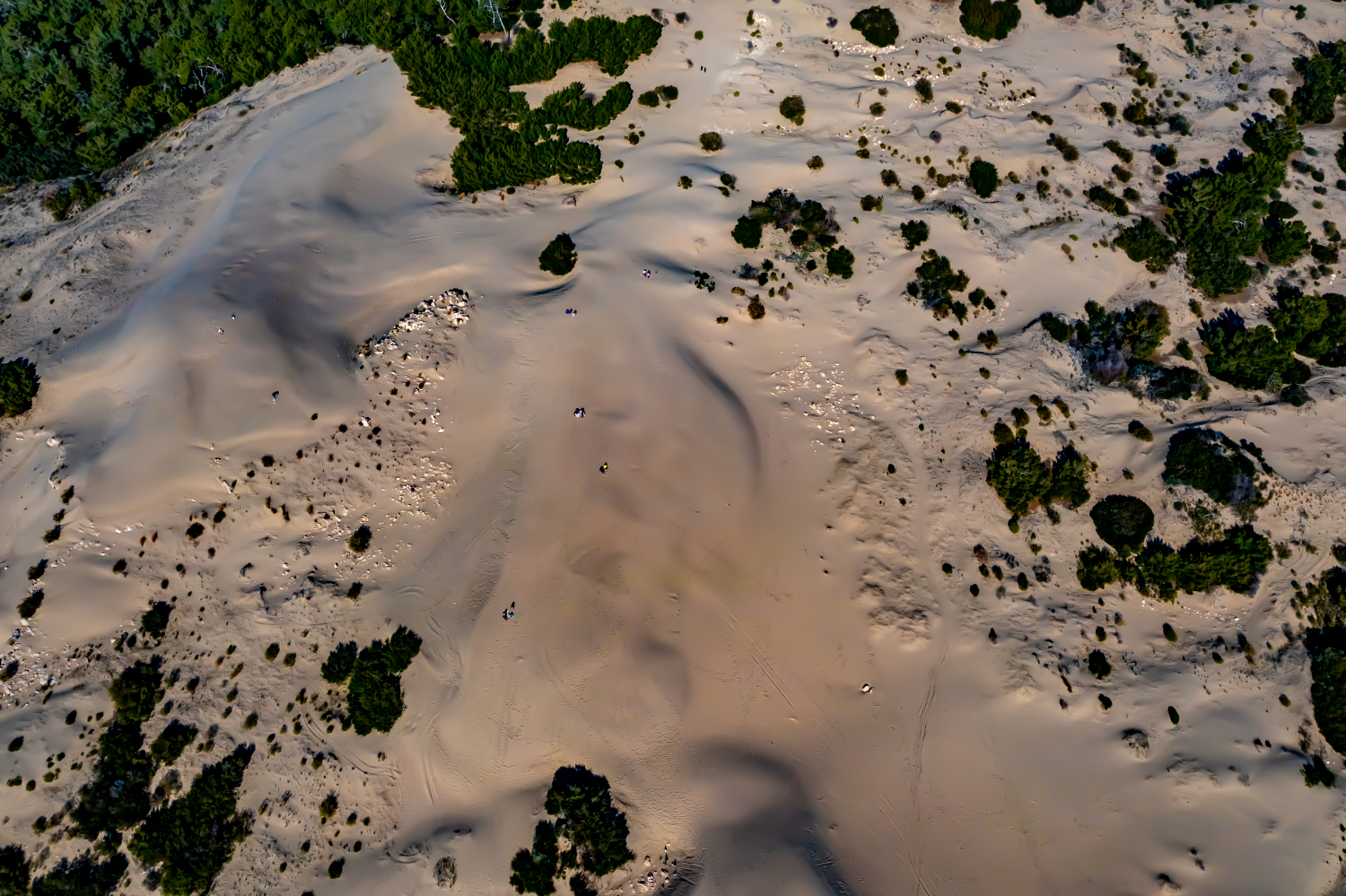
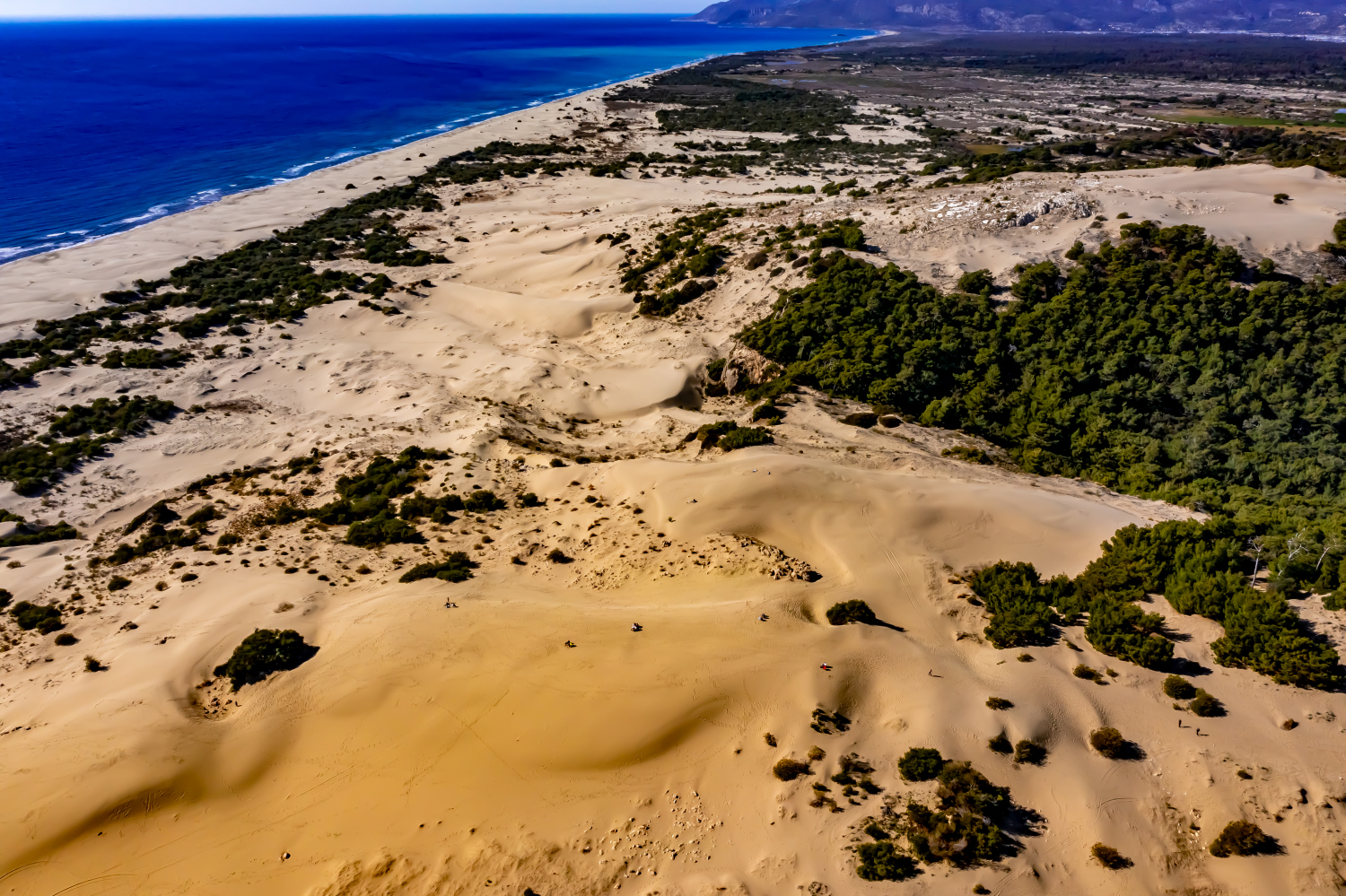
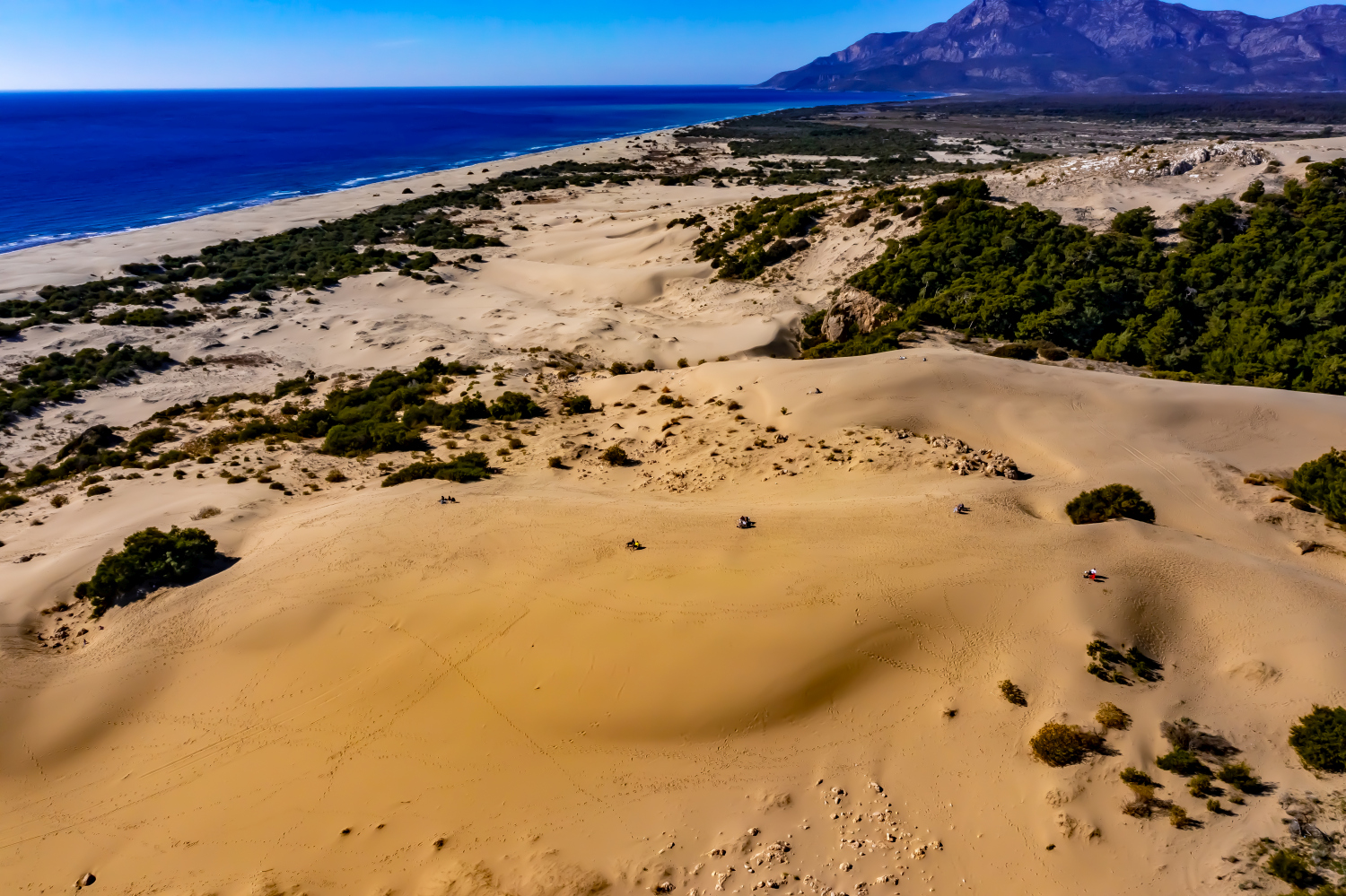
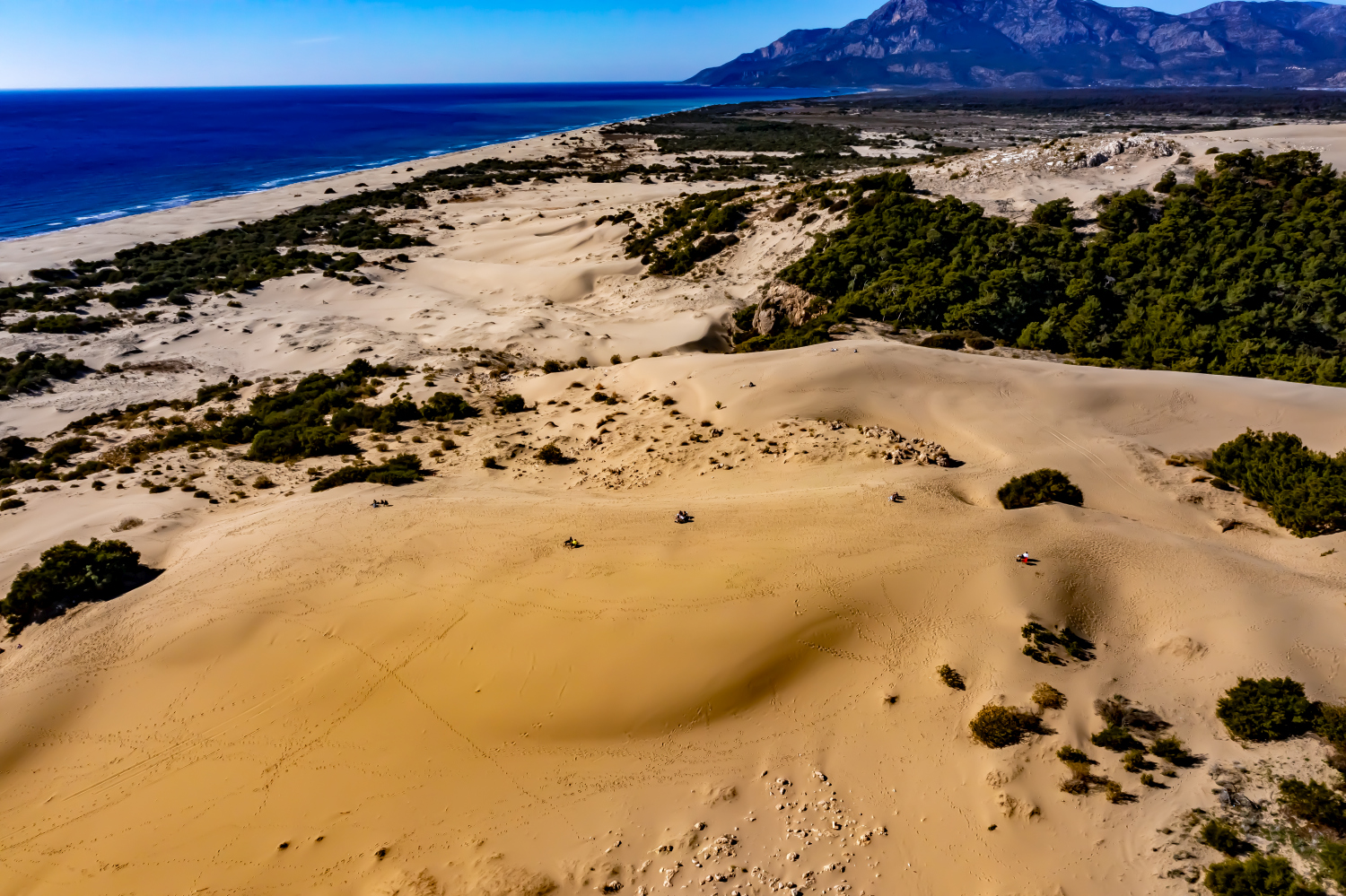
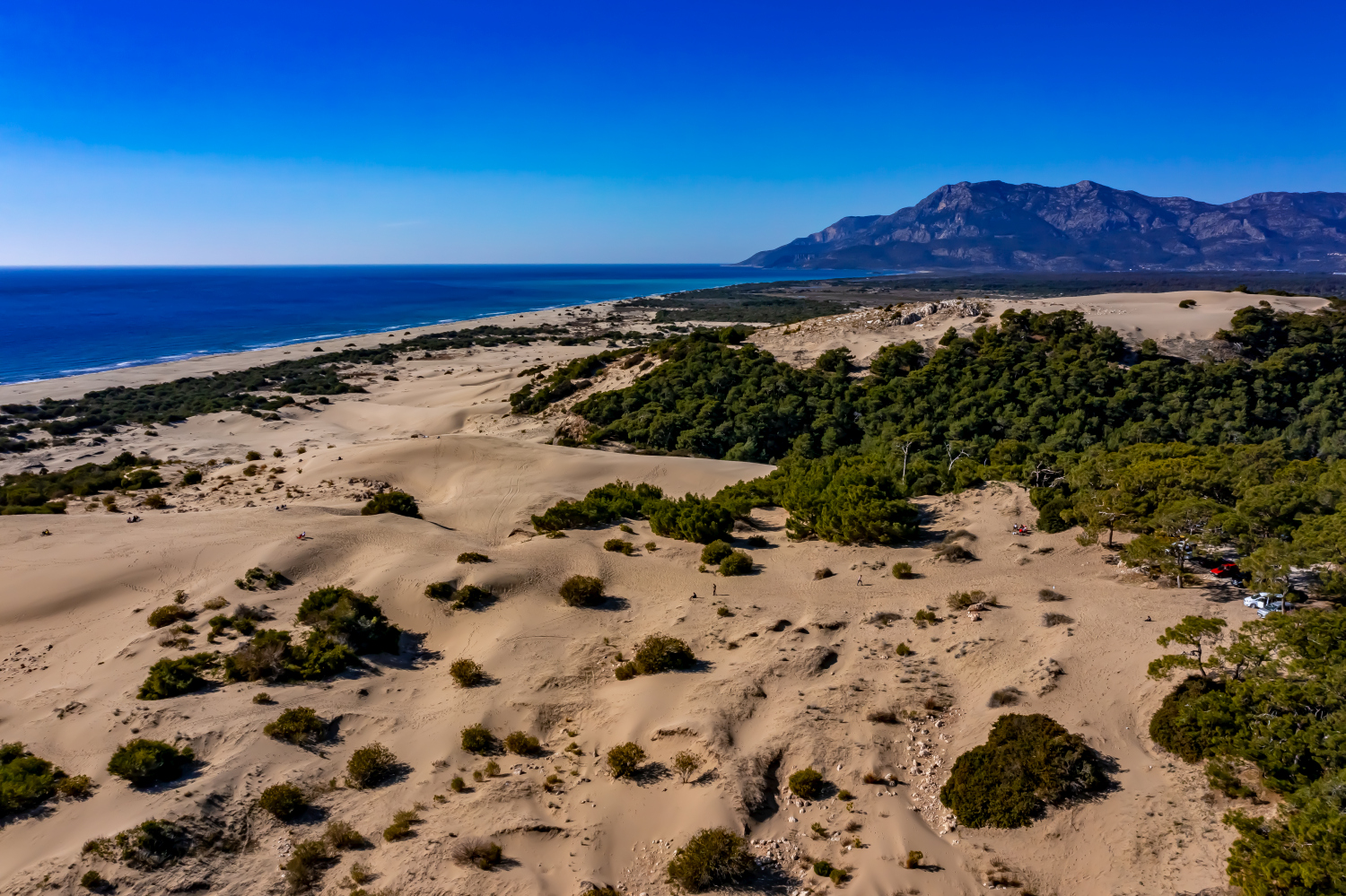
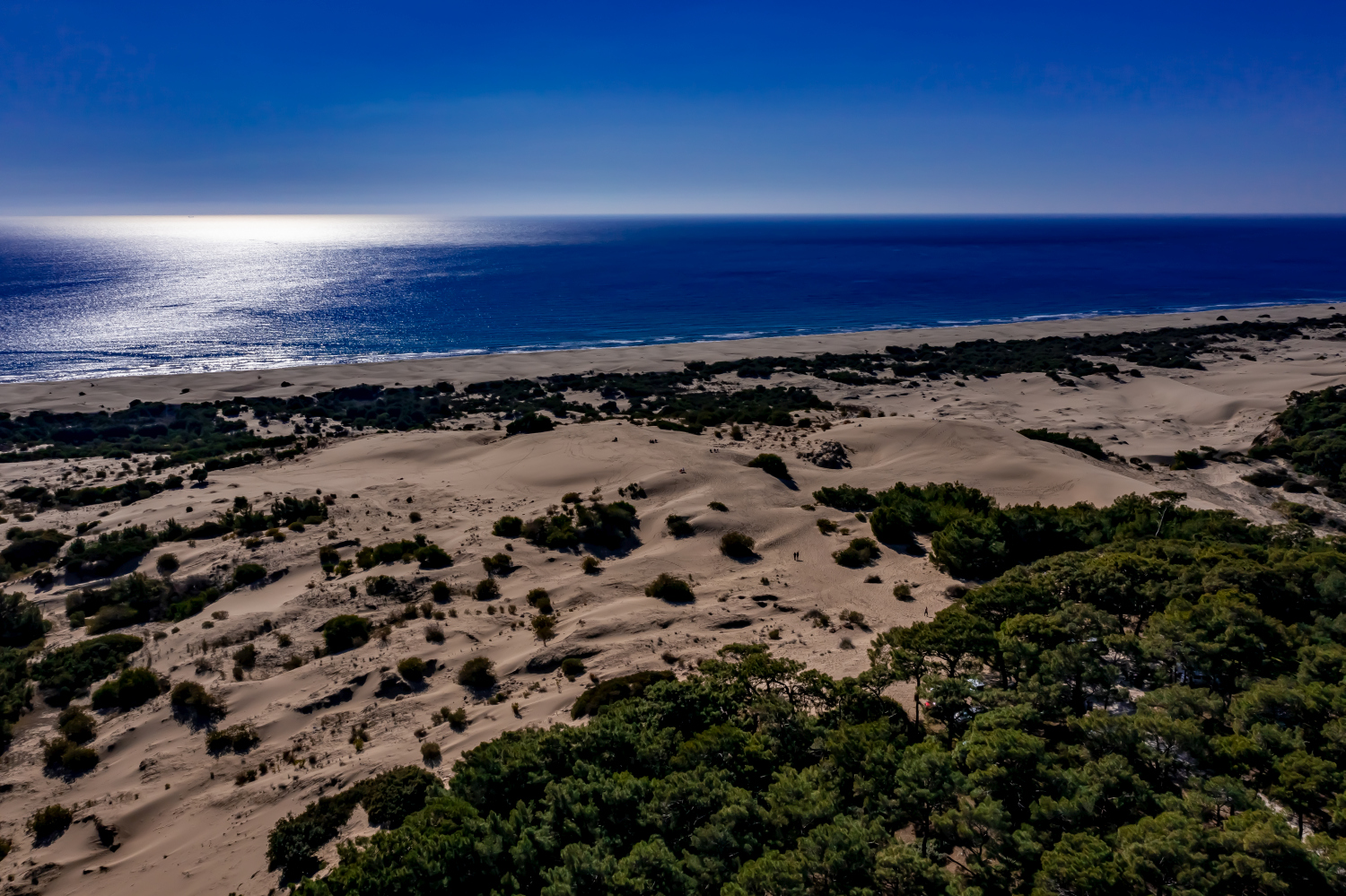
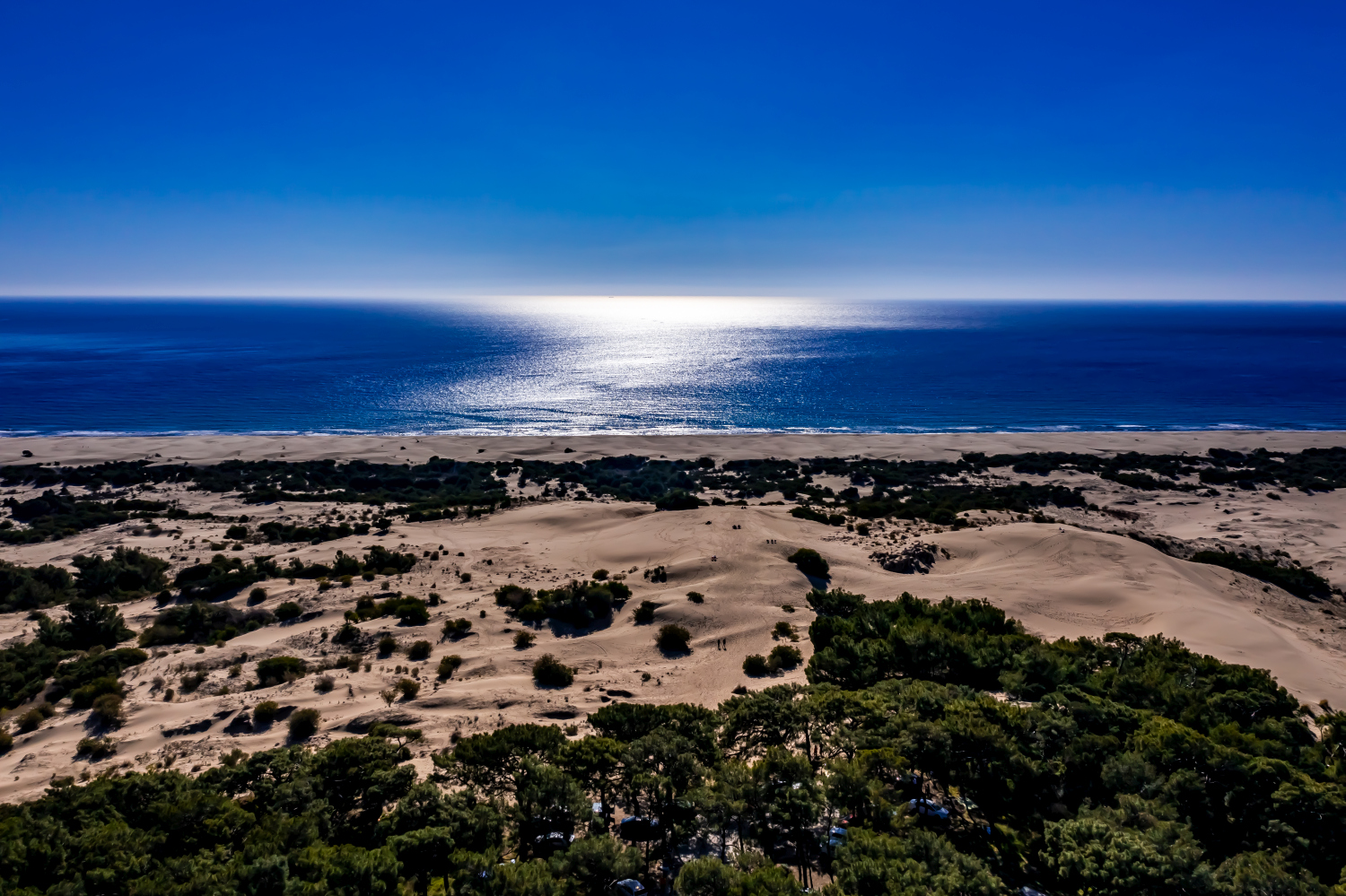
The sand dunes of Patara
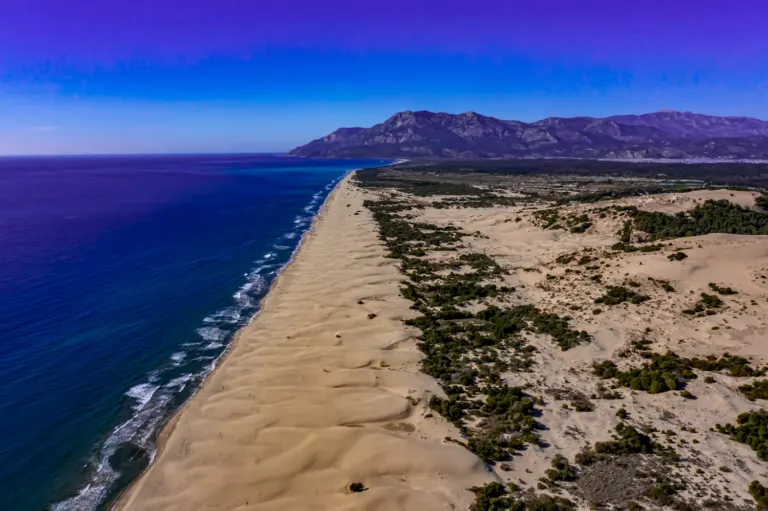
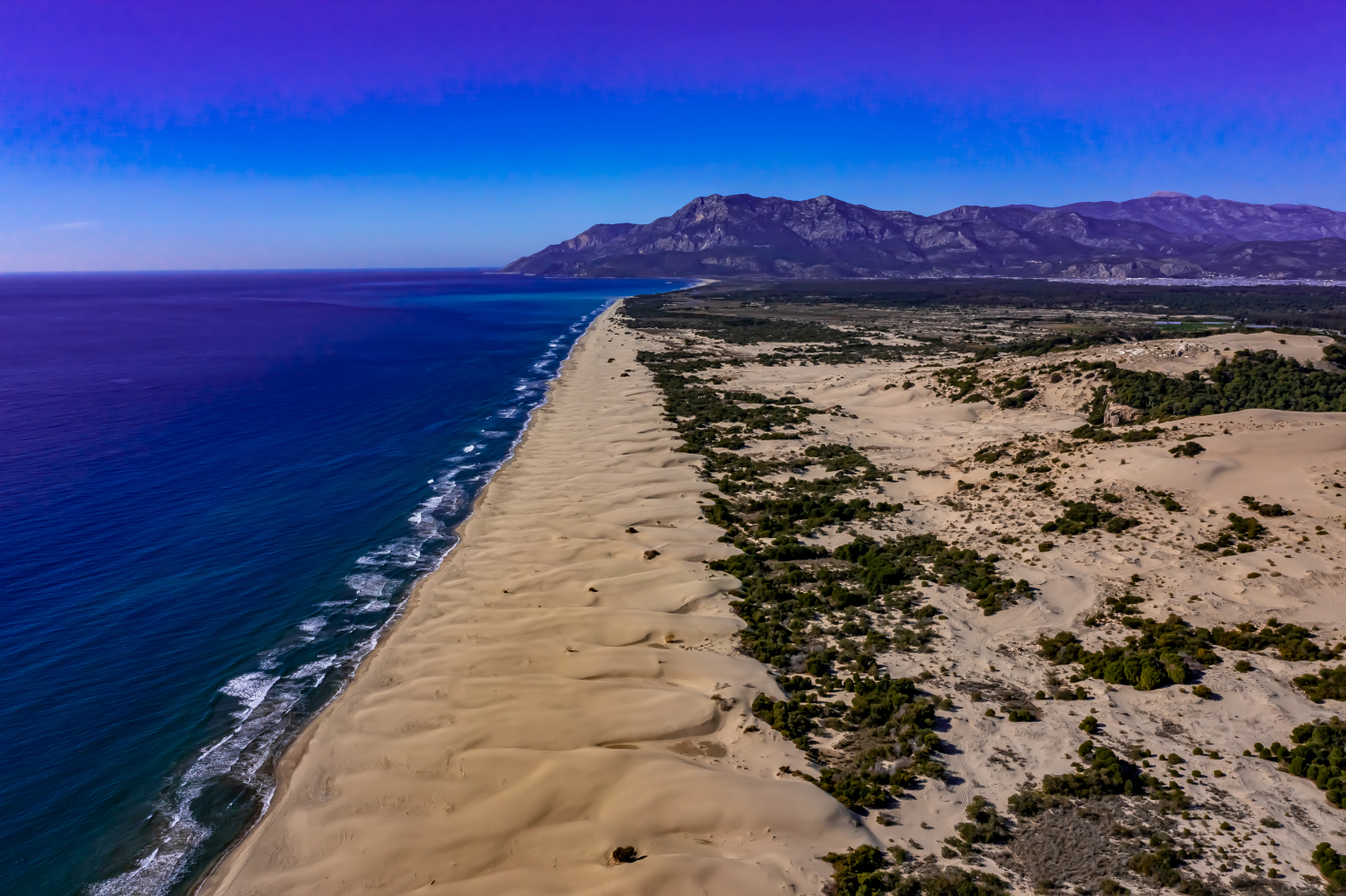
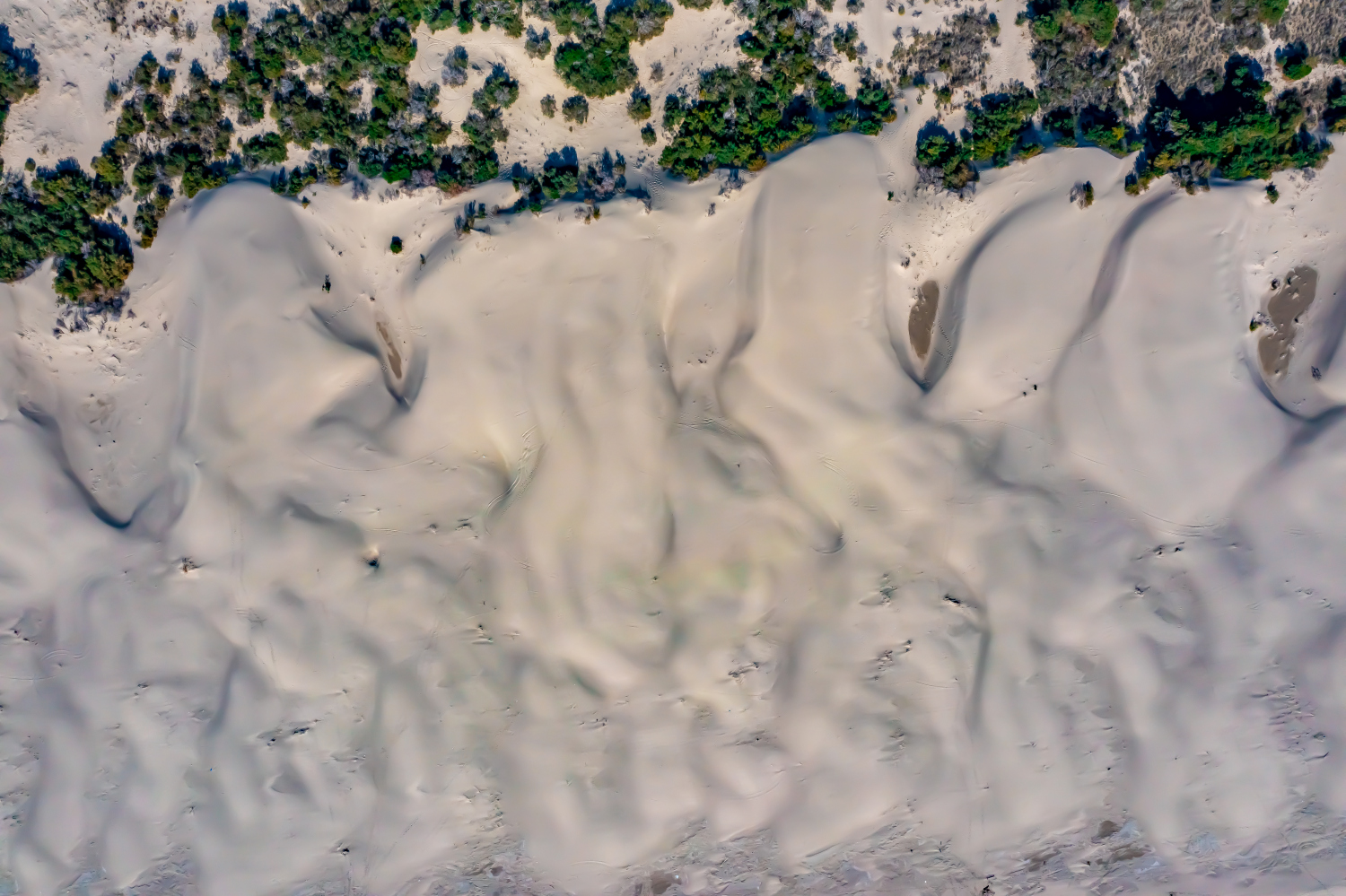
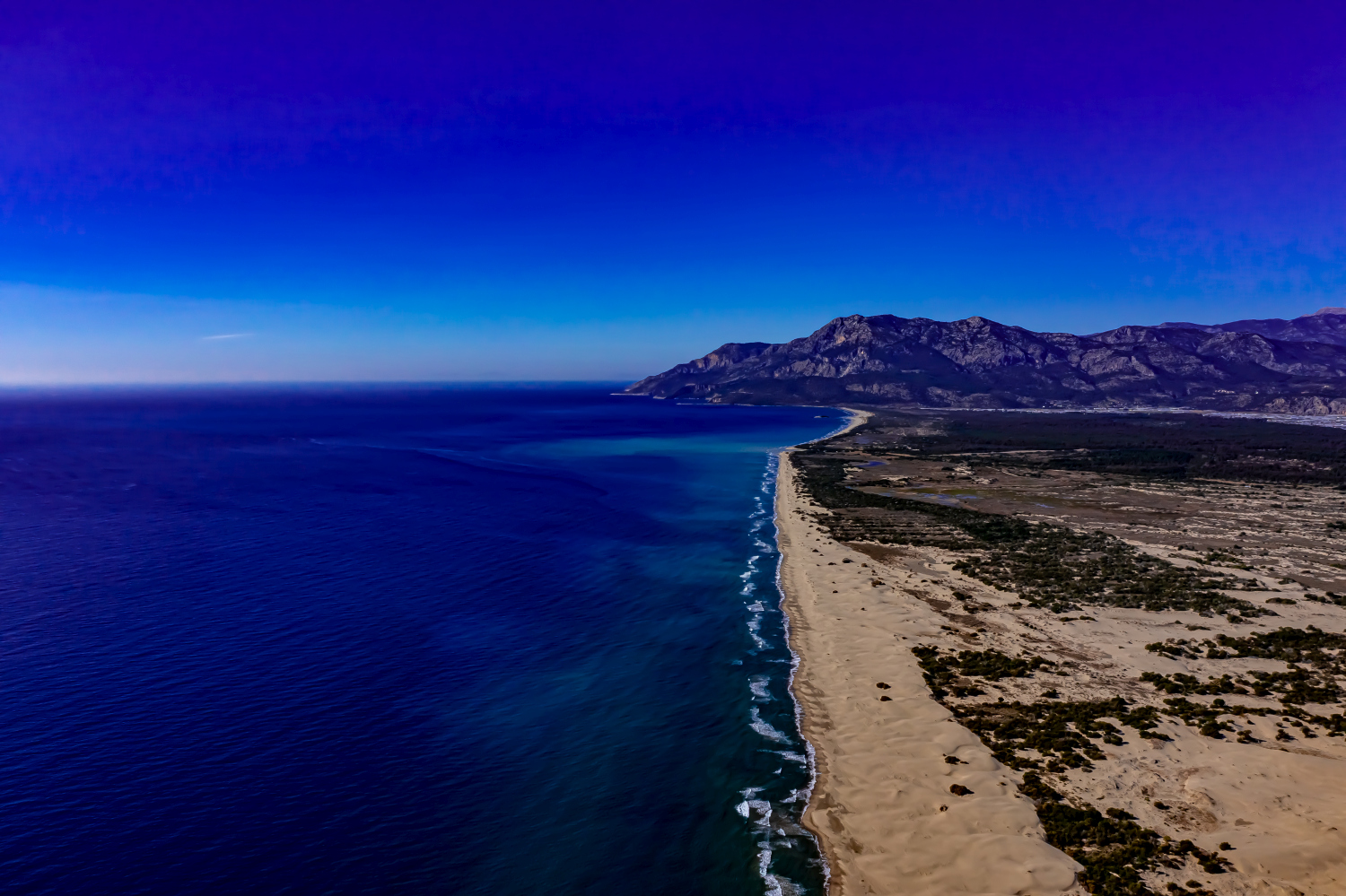
At Patara, the flat ridges of the sand dunes meet a long, almost uninterrupted coastline. There are darker bushes between the light sandy areas. From above, the wind-sculpted surfaces can be distinguished from the more linear tracks along the beach.
The transition from the dune to the sea
At Patara, the long beach gives the dune landscape a fixed reference line. The ridges in the sand run at varying angles, which are clearly visible in the light from the side.
In dunes, the narrow line between the illuminated and shadowed flanks is often clearer than the outer outline. A sideways view reveals the height of the sand ridges, a steep view traces their direction. If cropped too closely, such shapes can look like just any detail in the sand. A piece of beach or a continuous area of vegetation on the edge therefore helps to locate the dune field. For a close-up, the drawing of a single edge is then a comprehensible object.
The narrow zone between land and water
From a low angle, a beach often looks like a narrow, light fringe. The bird's eye view reveals its actual shape and shows where it widens or ends at a protrusion. In addition, connections to the hinterland emerge. The section where a path or buildings reach the beach can be particularly interesting for a townscape. There the location can be specifically named and the individual motif can be found within a longer stretch of coast.
The coastline as orientation
From land the first thing you notice is the open water. In an aerial view, the process can be reversed and the coast can be seen from the sea. Wherever it changes direction, small protected spaces are created. Other sections extend almost straight to the edge of the picture. When selecting a motif, it is worth comparing these transitions with each other. A single, striking rocky outcrop can identify a location more clearly than a much larger expanse of water with only light and waves visible.
The distribution of blue tones
Among the 12 photos in the gallery, shot 6 and shot 5 provide a good starting point for the comparison. In the first excerpt, shades of blue play a smaller role. In the second shot, blue areas take up more space. Blue can extend over a large contiguous area or only appear in individual parts. What also counts for the effect is whether these areas extend to the edge of the picture or surround the main subject.
The camera captured February 24, 2021 for shot 1 and shot 12. The time interval between these two views is approximately 6 minutes. The exposure time was 1/800 second for the first of the images mentioned and 1/1250 second for the second.
A moving view is also available. The clip “Patara Sand Dunes” can be found under Aerial Videos. The linked preview leads to inclusion in the aerial photographer's portfolio on Adobe Stock.
Select the coastal view for a photo series
When telling a story about a coast, the order of the images counts. A further look first explains the course of the bank. A closer view can then show the transition from land to water. If an image series begins with a narrow section, readers usually need an additional location reference. The planned size is also important for the aerial photographer. A small indentation can be a clear reference point on a double page spread and almost disappear completely in a narrow column. The caption should match the actual section used.
More aerial photos for comparison
Two further articles invite comparison. In the first, Kaş, a different detail is in the foreground. In Kaş, Turkey, houses and narrow streets are close together. Then Greece – Volos & Surroundings is a good option. In the series, the area around Volos appears as an open coastal strip and as a densely built-up city.
Aerial photos Patara Sand Dunes – Türkiye
Your aerial photographer across Europe
Request a free quote