 F4LUFTBILDER
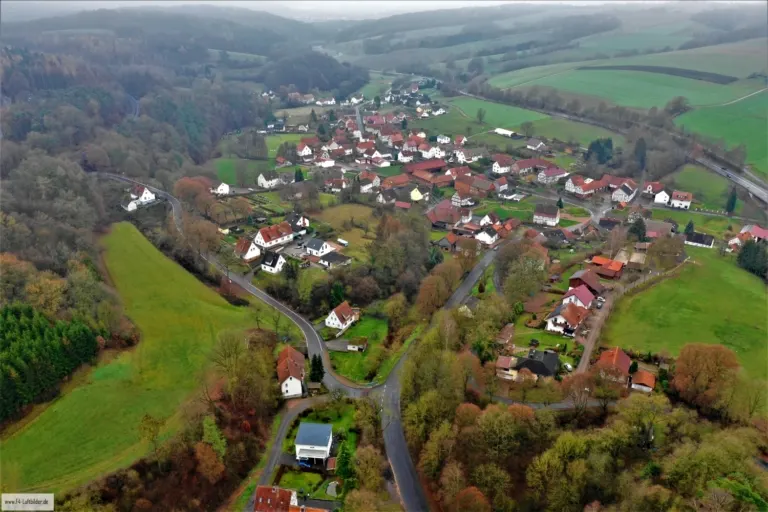
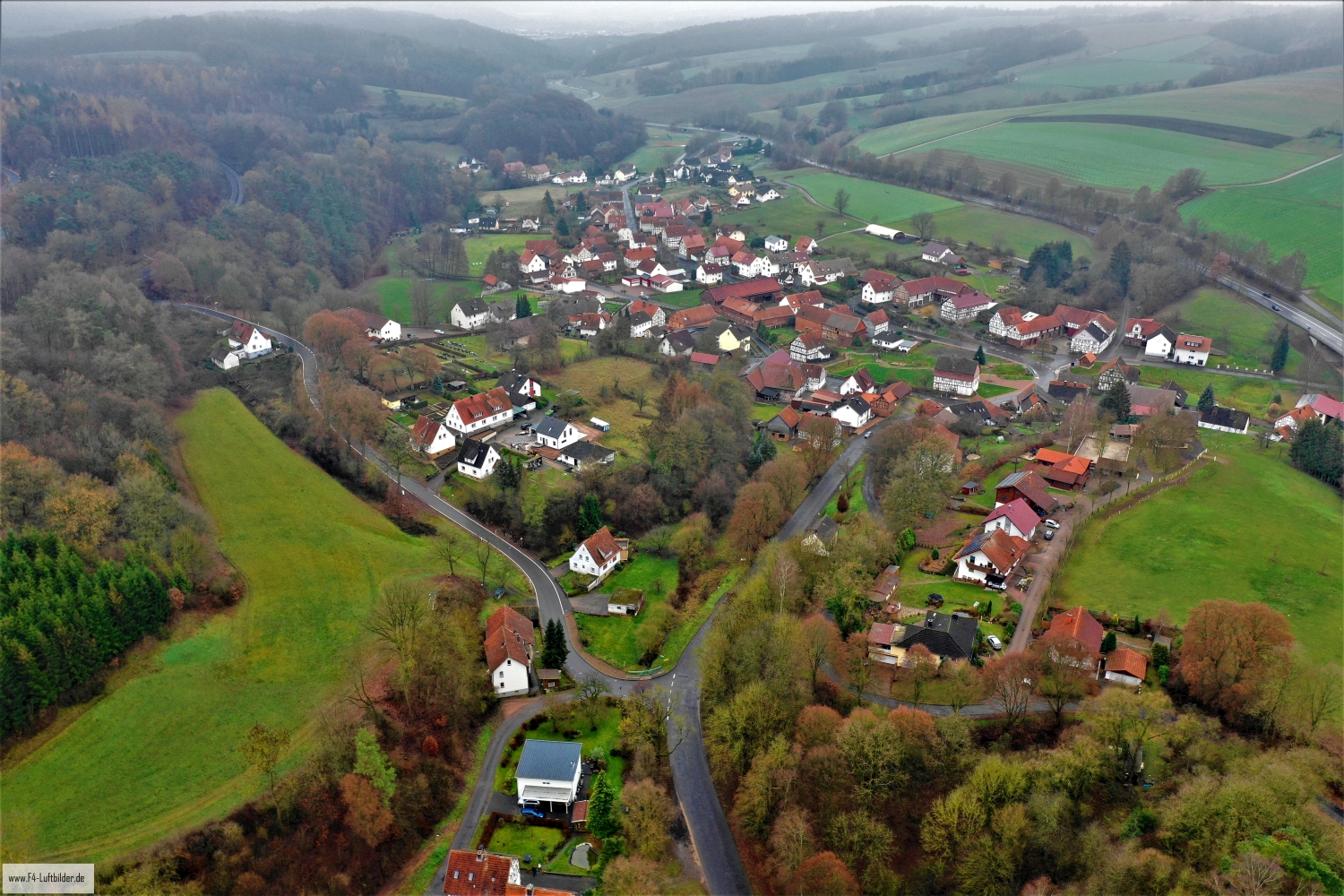
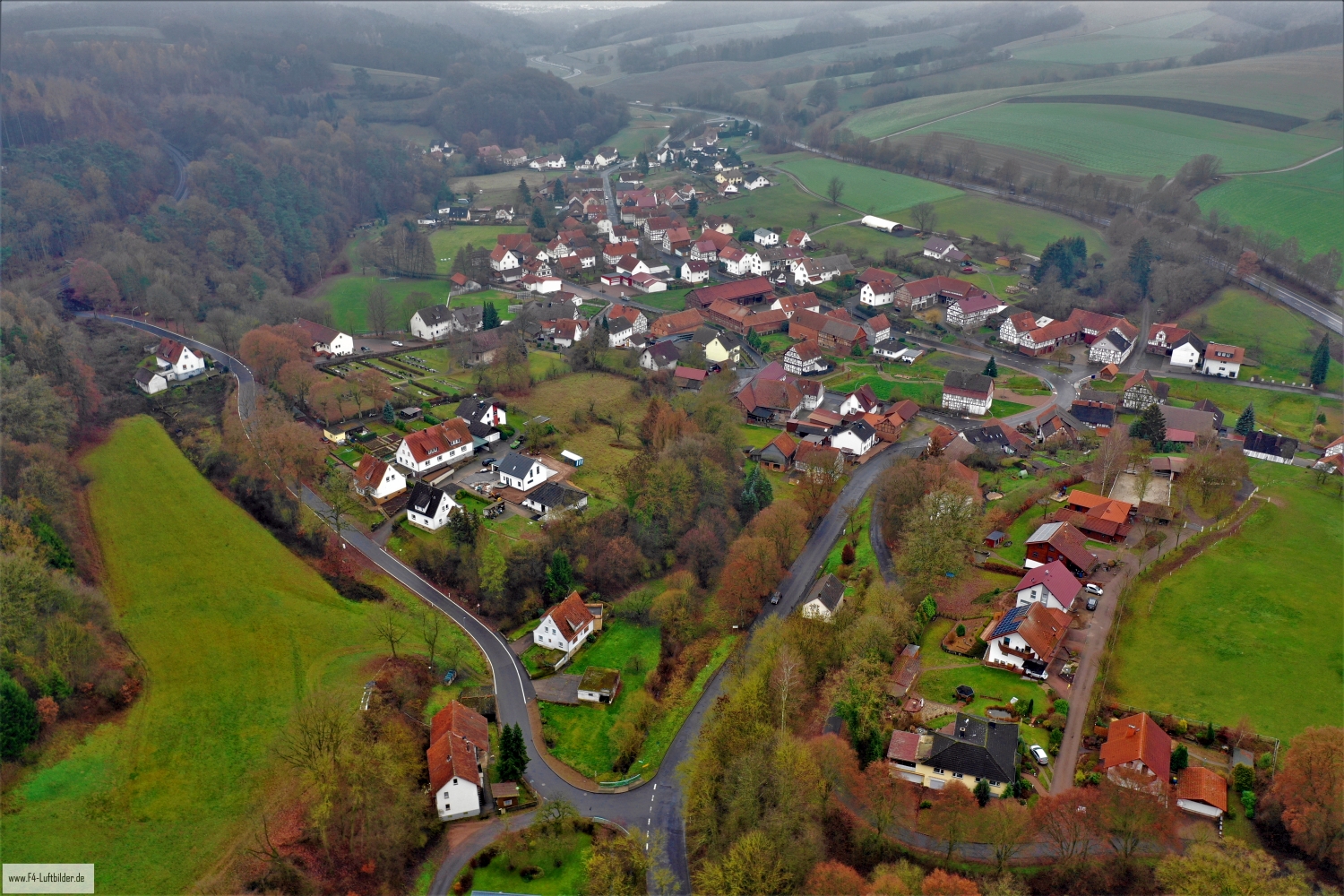
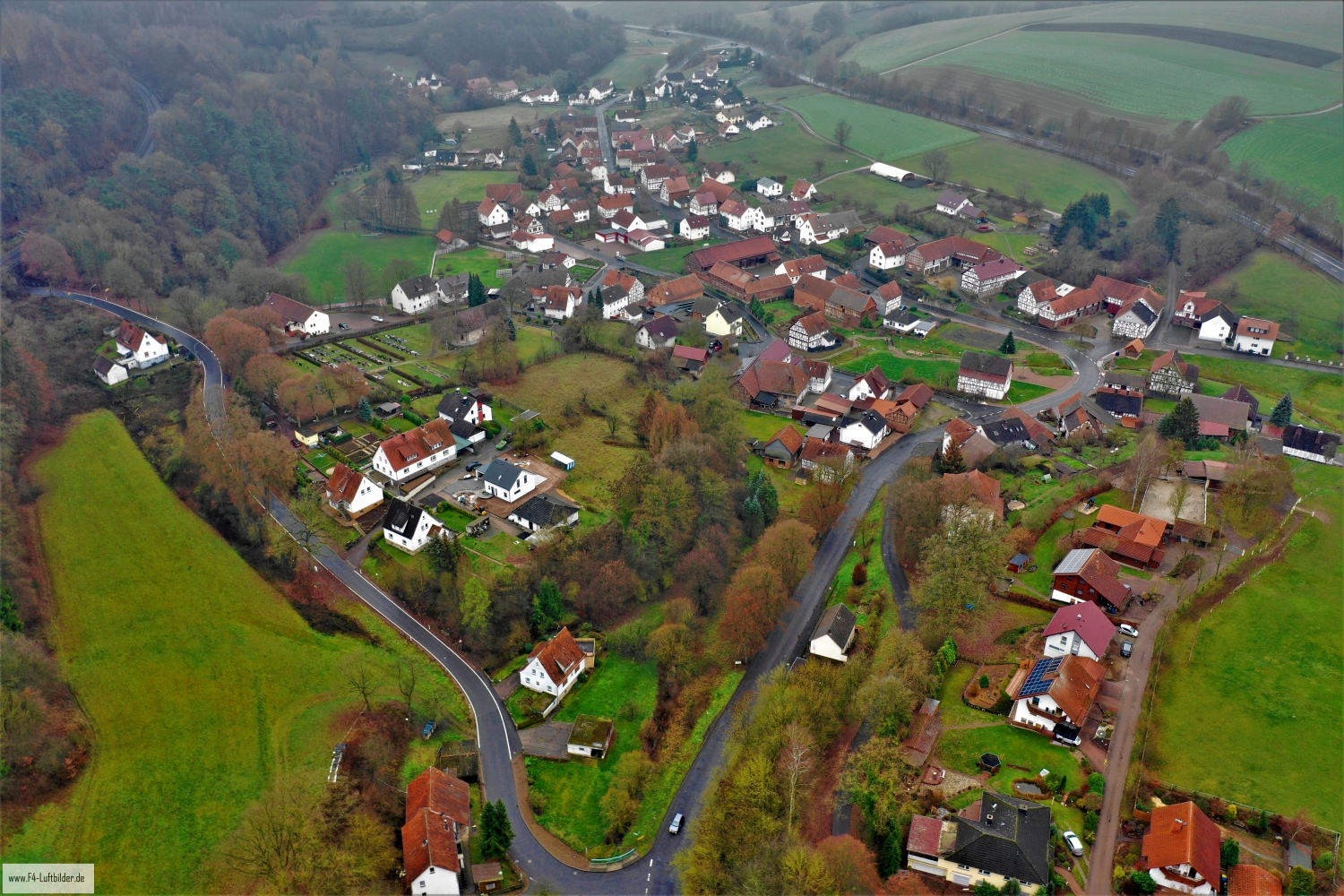
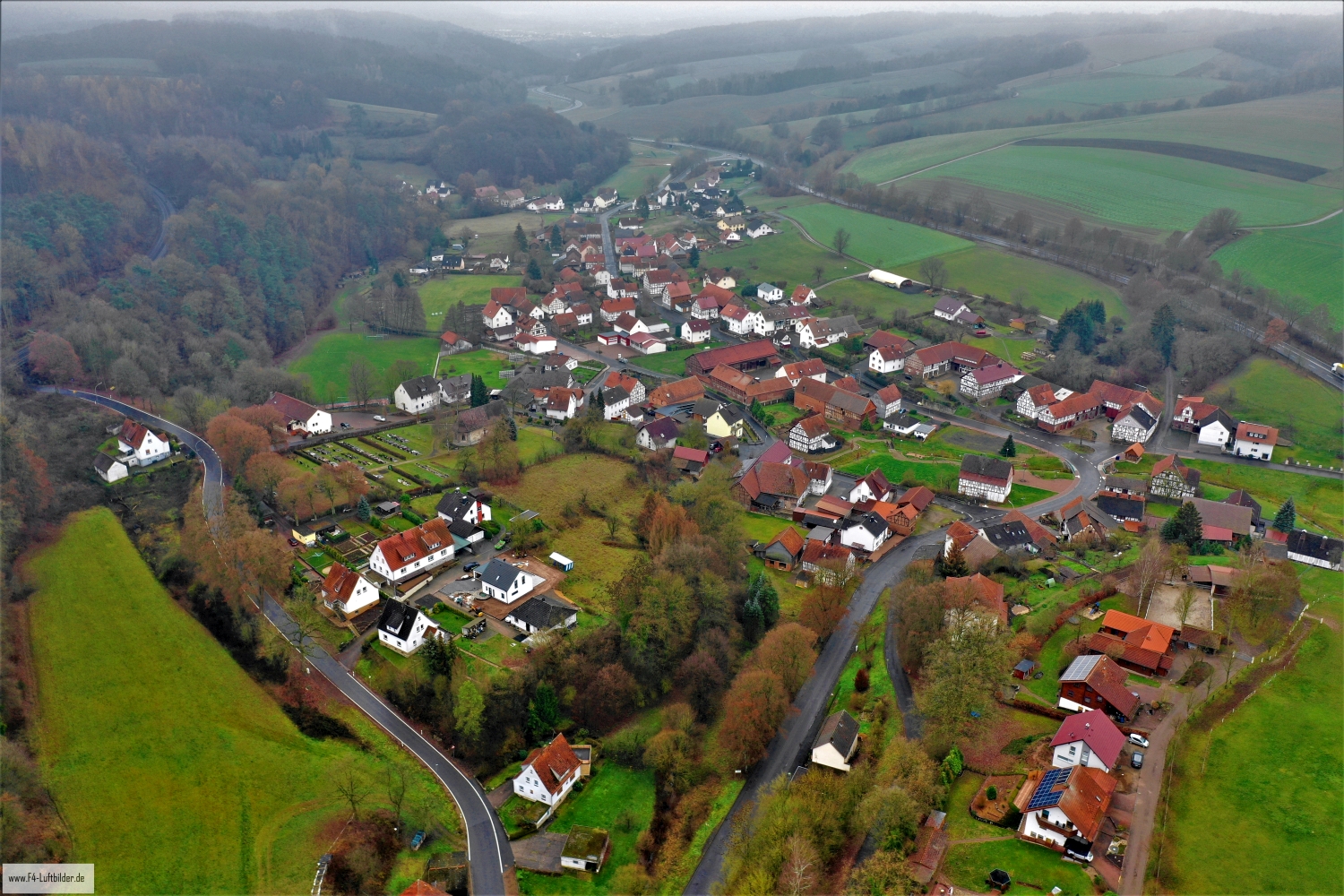
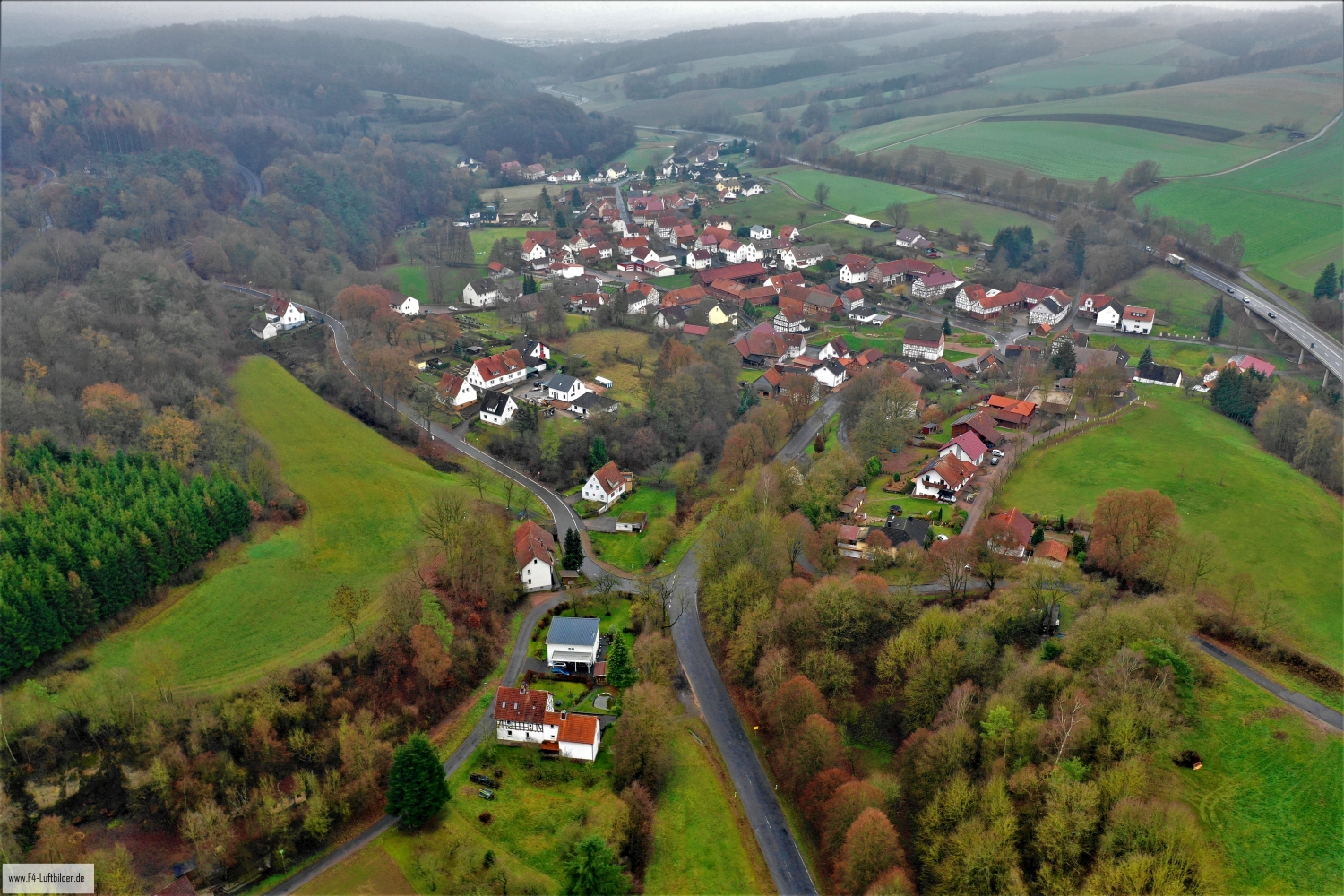
Asmushausen in a valley
The houses in Asmushausen are spread out in small groups between meadows and slopes. The distance between the courtyards can be clearly seen in the oblique view. A section that preserves the greenery between the buildings particularly clearly reflects this loose settlement form.
Open spaces in the middle of the village
In Asmushausen, smaller paths lead from the house groups into the meadows. If you follow one of them beyond the edge of the picture, the valley position becomes easier to read. Up close, the same paths are primarily connections between individual buildings.
The center of a town can often be recognized from the air by the intersection of several streets. These lines diverge towards the open landscape, the properties become longer and the distances between the houses become larger. Anyone who chooses an image for a location portrait can pay attention to these transitions. A motif with a piece of the surrounding area tells where the place is. A narrower shot, on the other hand, gives people who live or have lived here more opportunities to find familiar buildings in the picture.
Recognize the shape of the valley area
Two different narrative directions emerge along a valley and across it. The longitudinal view leads into the distance and shows what is arranged one behind the other. Looking sideways, the width of the valley floor and the rise on either side become clearer. Which view is convincing depends on the question asked of the image. For a description of the location, a lateral view is often productive. For a stretch along a route, the longitudinal view gives the viewer a direction to follow across multiple subjects.
Preserve open land in the picture
A meadow may look almost empty in a small preview. The larger view shows paths, individual shadows or transitions to neighboring properties. As a foreground, it creates distance before the view reaches the houses or the next slope. This distance is often an important part of the composition in landscape photos. If it is pruned too much, the development will appear denser. A deliberately wider section, on the other hand, shows what space the open land actually takes up.
Light and dark areas of the image
If you browse through the 5 aerial photos, you can stay at shot 3 and shot 1 for a comparison. In the first photo, light and dark areas are closer together in tonal value. In the second shot the contrast is more pronounced. When switching between photos, it is worth looking from the lightest area to the dark areas. The greater the distance, the more individual contours can stand out, even in a small preview.
For Shot 5 and Shot 3 the same day is noted in the image files, December 6th, 2018. The recording times recorded are less than a minute apart. The exposure time was 1/50 second for the first of the images mentioned and 1/40 second for the second.
A townscape for chronicle and community
Anyone who wants to show their family their place of origin often first looks for their own house in the aerial photo. When publishing for the community, the task is different. Even a non-local reader should be able to easily follow the path from the core to the landscape. An aerial photographer can start from the same terrain for both purposes and choose the section differently. What counts for the family portrait is the recognizability of a specific property. When it comes to the townscape, however, it is worth adding a little more surrounding area, even if it means that the individual roof appears smaller.
Related motifs in the aerial photo archive
If you are looking for related motifs, you can start with Allendorf (Lumda). The town views of Allendorf an der Lumda combine a dense center with loosely built-up peripheral areas. It's worth taking a second look at Geroda. The development of Geroda stretches between meadows and fields through a shallow valley.