 F4LUFTBILDER
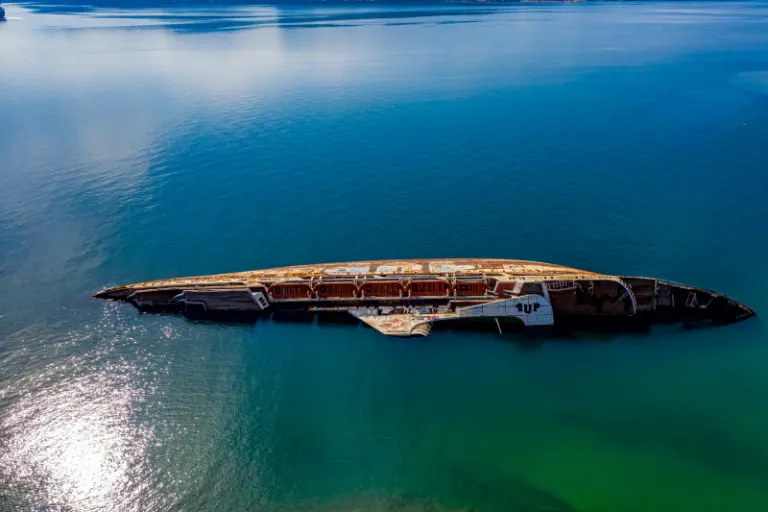


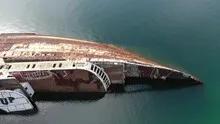
A shipwreck off the Greek coast
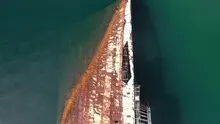
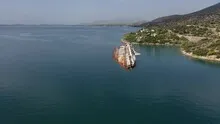
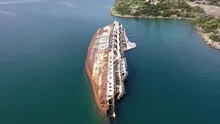
A long wreck lies in the clear water off the Greek coast. The rust-brown surface stands out against the blue and green tones of the sea. In the steep view, the outline can be followed almost completely; to the side, the distance to the coast becomes clearer.
The shape of the hull in the water
In the case of a shipwreck, the surface of the water connects the unusual shapes of the hull to the coast. A detail of the metal tells of the surface, another view locates it in front of the land.
From above, the course of a hull can be traced from bow to stern. How much of its side surfaces can be seen depends on the direction in which it is viewed and the water level. If light falls on the surface, reflections can cover up details or make the outline particularly clear. For a series of images, a subject with the entire contour is a helpful first view. Only then does a narrower section become understandable to outsiders who would otherwise hardly be able to identify the deck or the ship's side.
The coastline as orientation
From land the first thing you notice is the open water. In an aerial view, the process can be reversed and the coast can be seen from the sea. Wherever it changes direction, small protected spaces are created. Other sections extend almost straight to the edge of the picture. When selecting a motif, it is worth comparing these transitions with each other. A single, striking rocky outcrop can identify a location more clearly than a much larger expanse of water with only light and waves visible.
Light and surface of the water
On water, colors and brightness change with the direction of the light. A bright spot can be a reflection, a darker stripe can be caused by the shadow on the bank. The easiest way to describe such differences is to use a solid bank edge or an object in the water as a comparison. Two different distances are attractive for a sequence of images. The closer view shows small surface structures, while the overview makes their location in the entire water surface understandable.
The distribution of blue tones
To switch between two of the 10 aerial photos, shot 7 and shot 9 can be called up directly in the gallery. In the first excerpt, shades of blue play a smaller role. In the second shot, blue areas take up more space. Blue can extend over a large contiguous area or only appear in individual parts. What also counts for the effect is whether these areas extend to the edge of the picture or surround the main subject.
Shot 1 and Shot 10 are among the views from October 4, 2020. According to the camera's time information, there are approximately 3 minutes between the two images. The exposure time was 1/500 second for the first of the images mentioned and 1/640 second for the second.
For a selection of moving images, the gallery contains 4 linked clips. Below is “Shipwreck from the Air.” Under Aerial Videos the preview leads to the aerial photographer's respective offer at Adobe Stock.
Select the coastal view for a photo series
In a coastal view, water is both a motif and an open space. Whether a large piece of sea remains in the picture depends on the story. When reporting on the shoreline, it holds different landforms together. For a portrait of a coastal town, the development may need more space. An aerial photographer can take this difference into account when choosing the angle of the image. When publishing, it's worth taking a final look at the final format so that a headland or riverside path at the edge isn't accidentally cut off.
Related motifs in the aerial photo archive
Two additional views can be used in the archive for comparison. The first can be found under Anissaras – Crete. In front of Anissaras, small rocks rise out of the water, which respond to the protruding coast in the wide views. The second belongs to the article Landscapes in Albania. In the Albanian landscape series, narrow beaches alternate with mountain ridges and open slopes.