 F4LUFTBILDER
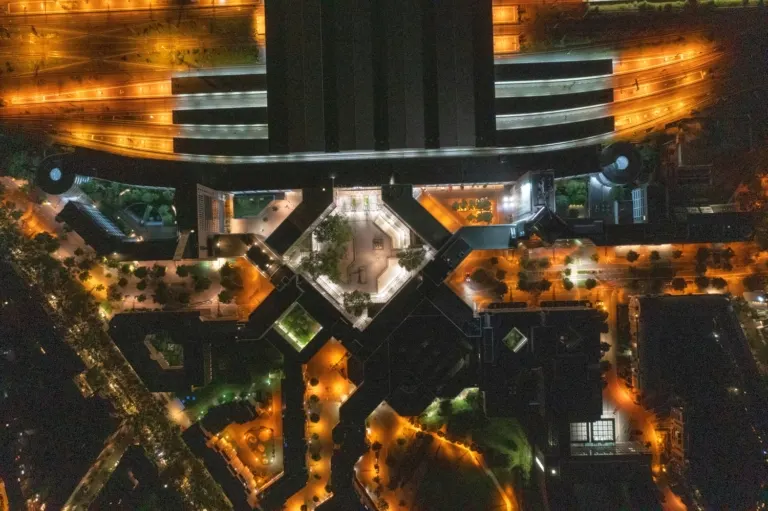
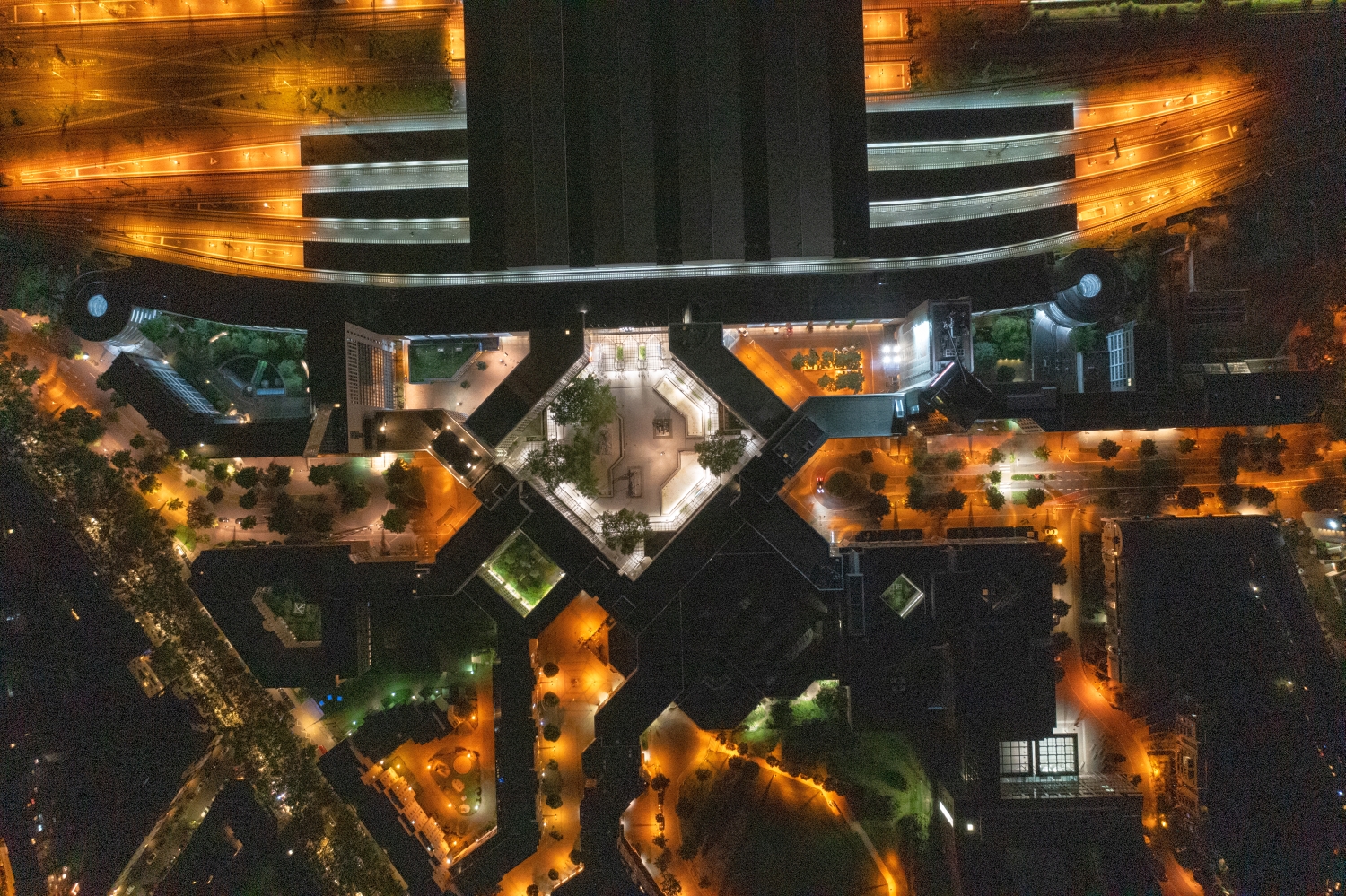
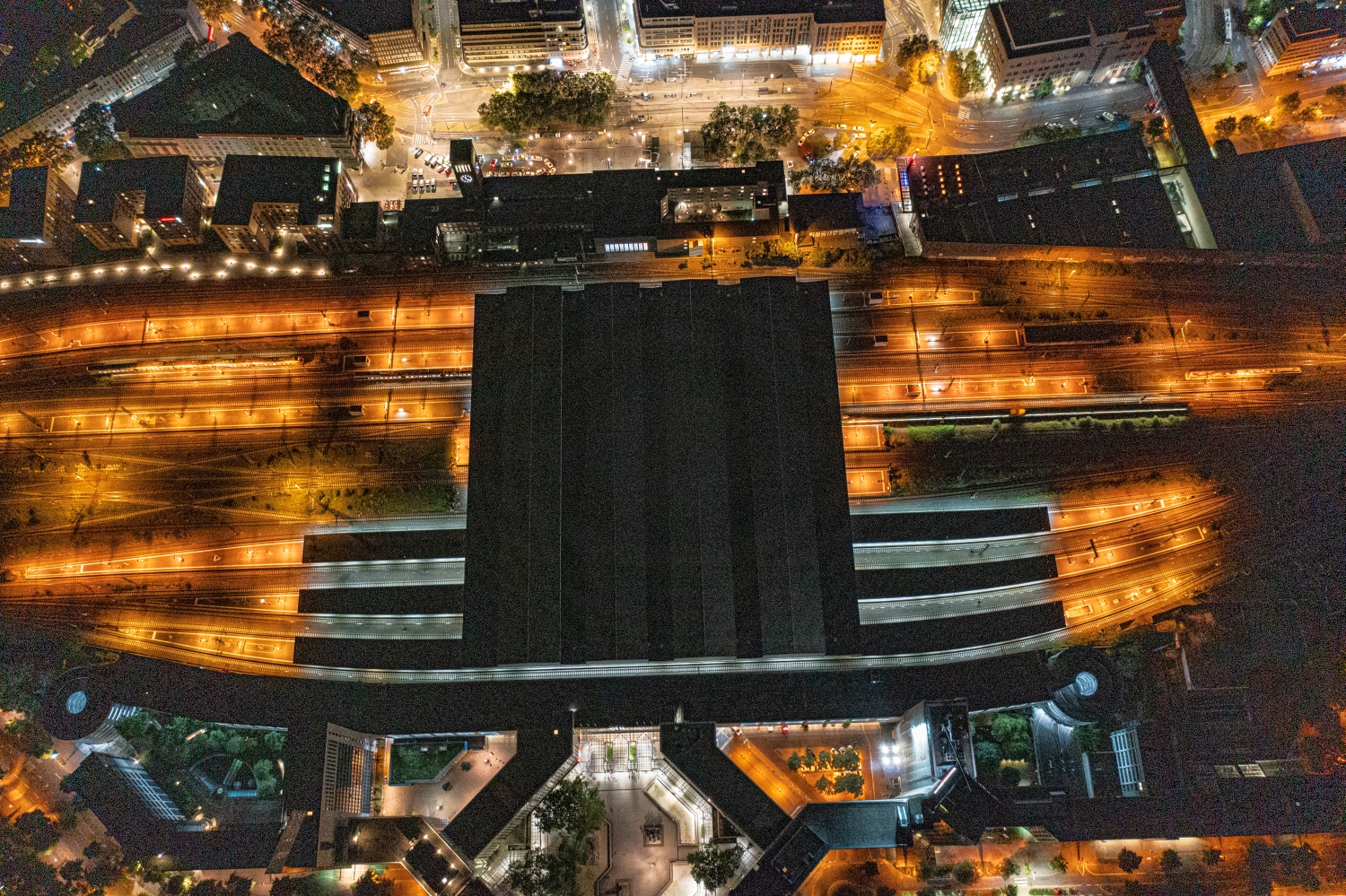
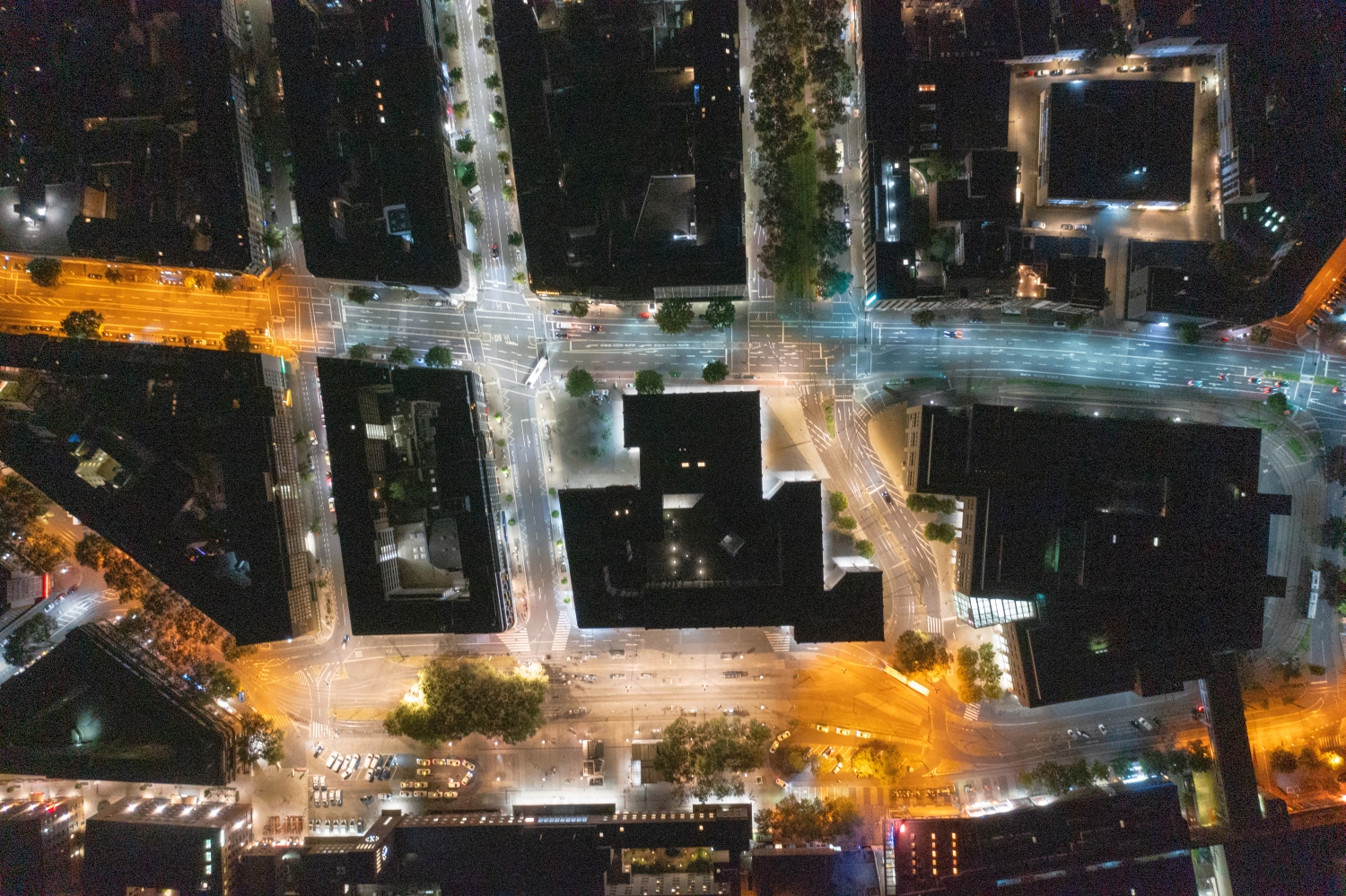
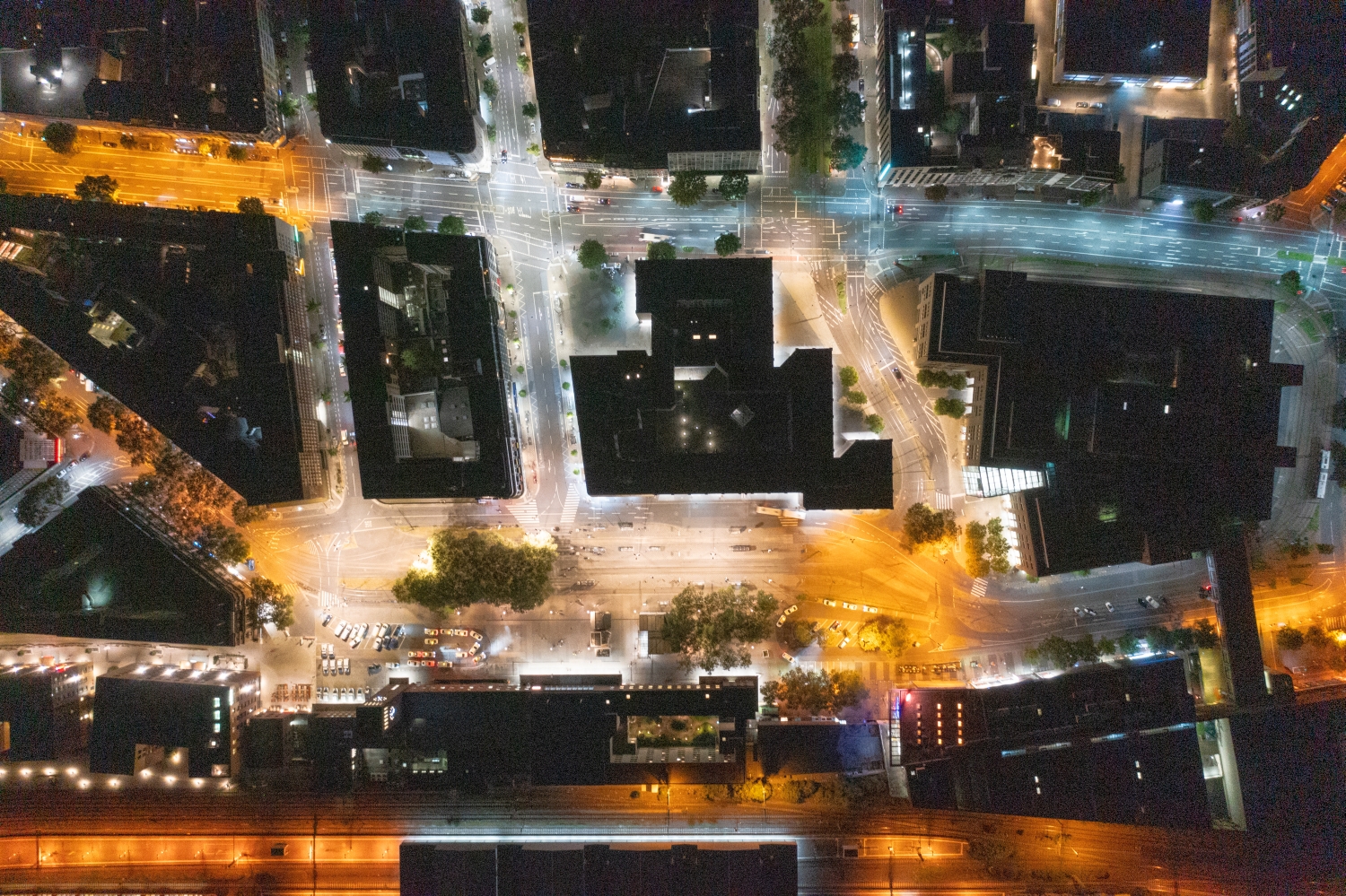
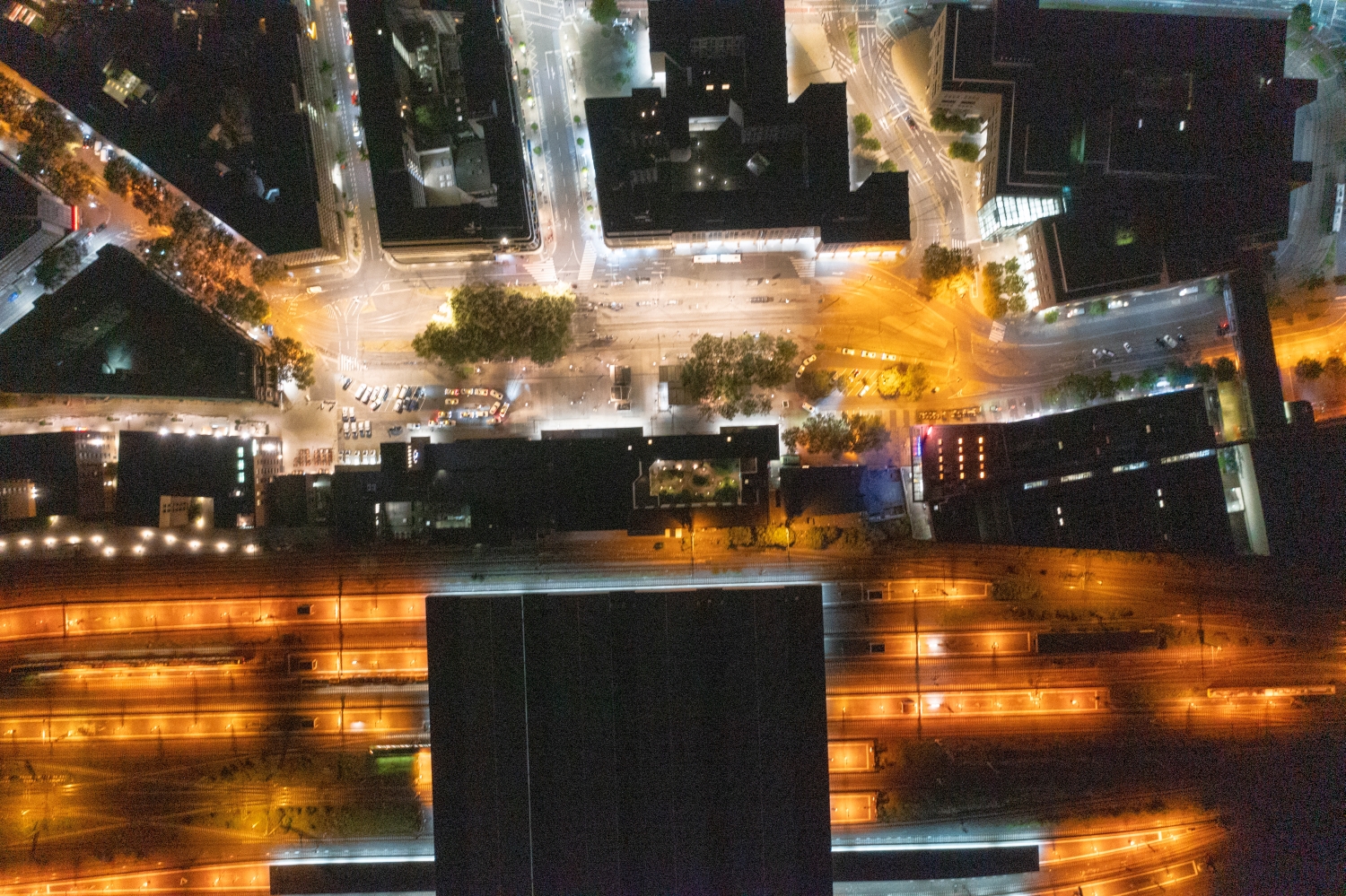
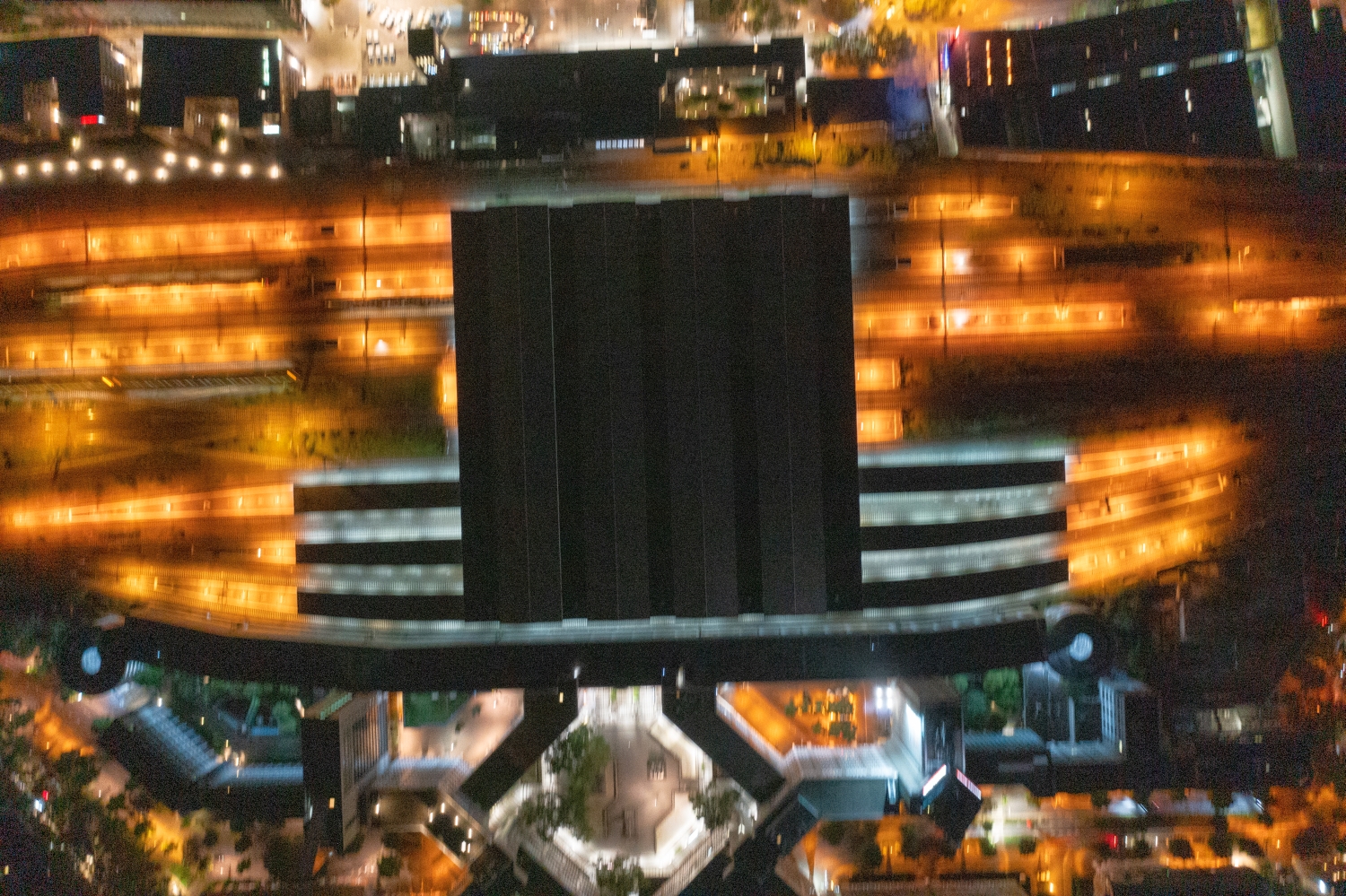
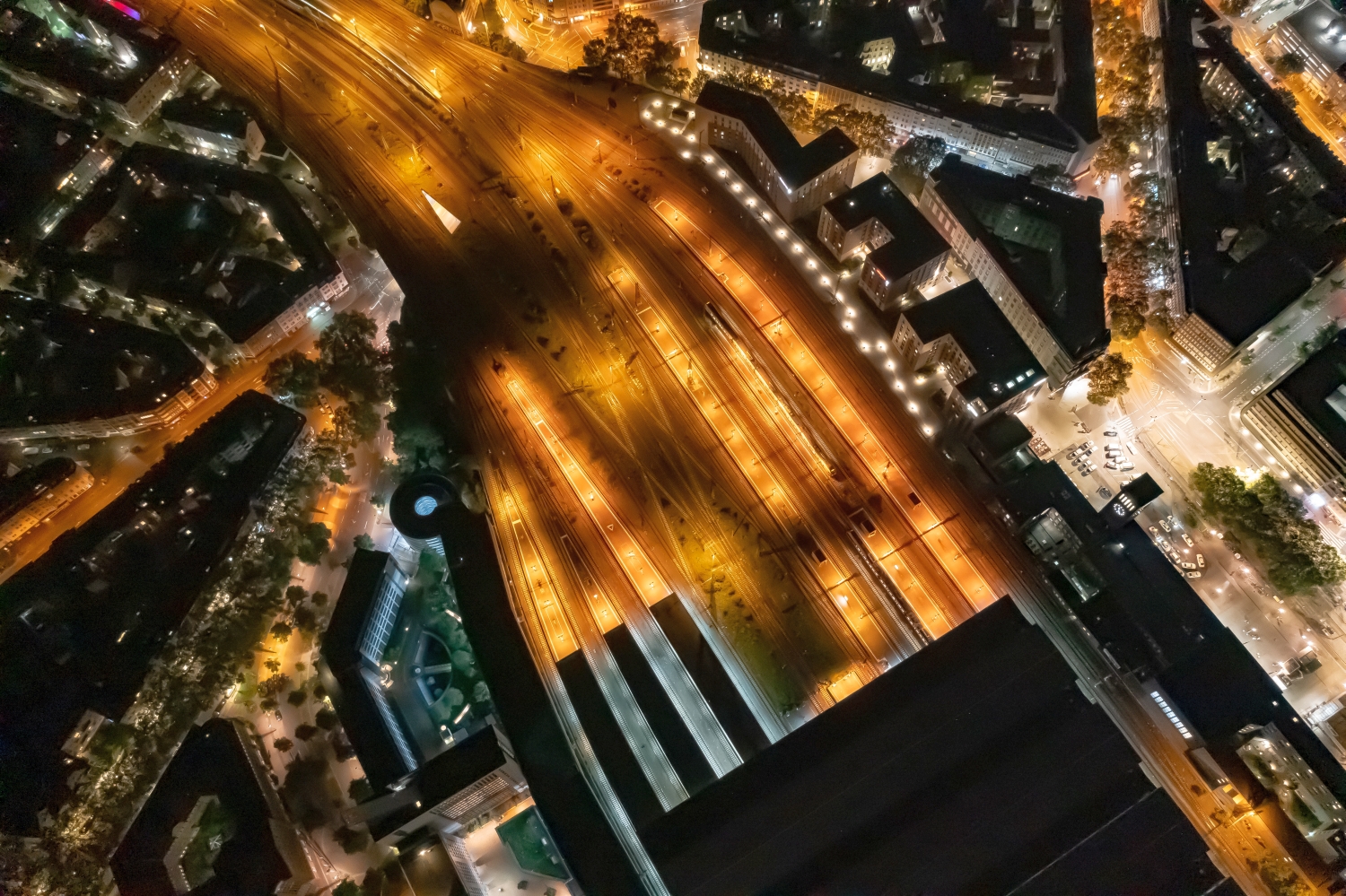
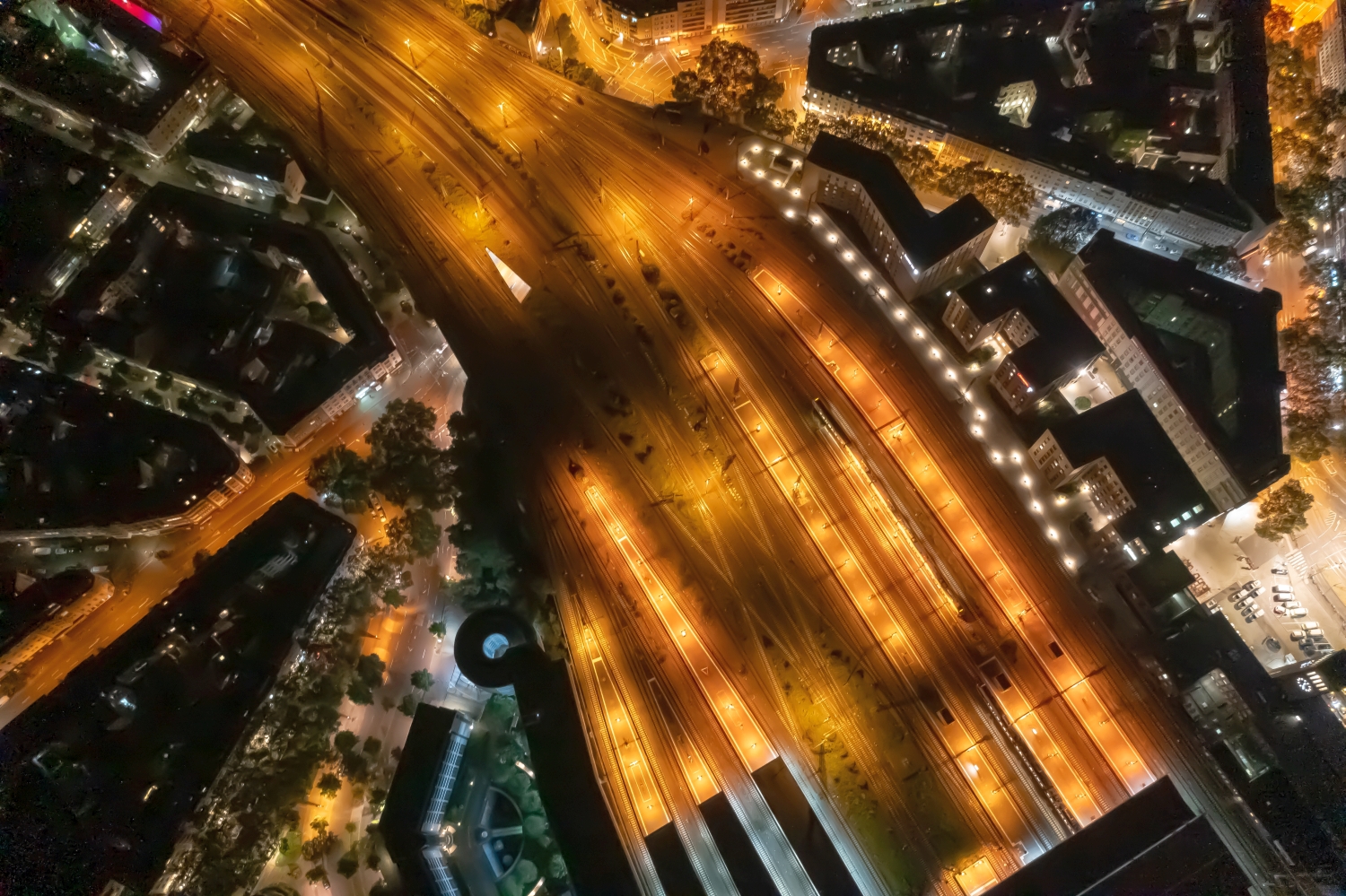
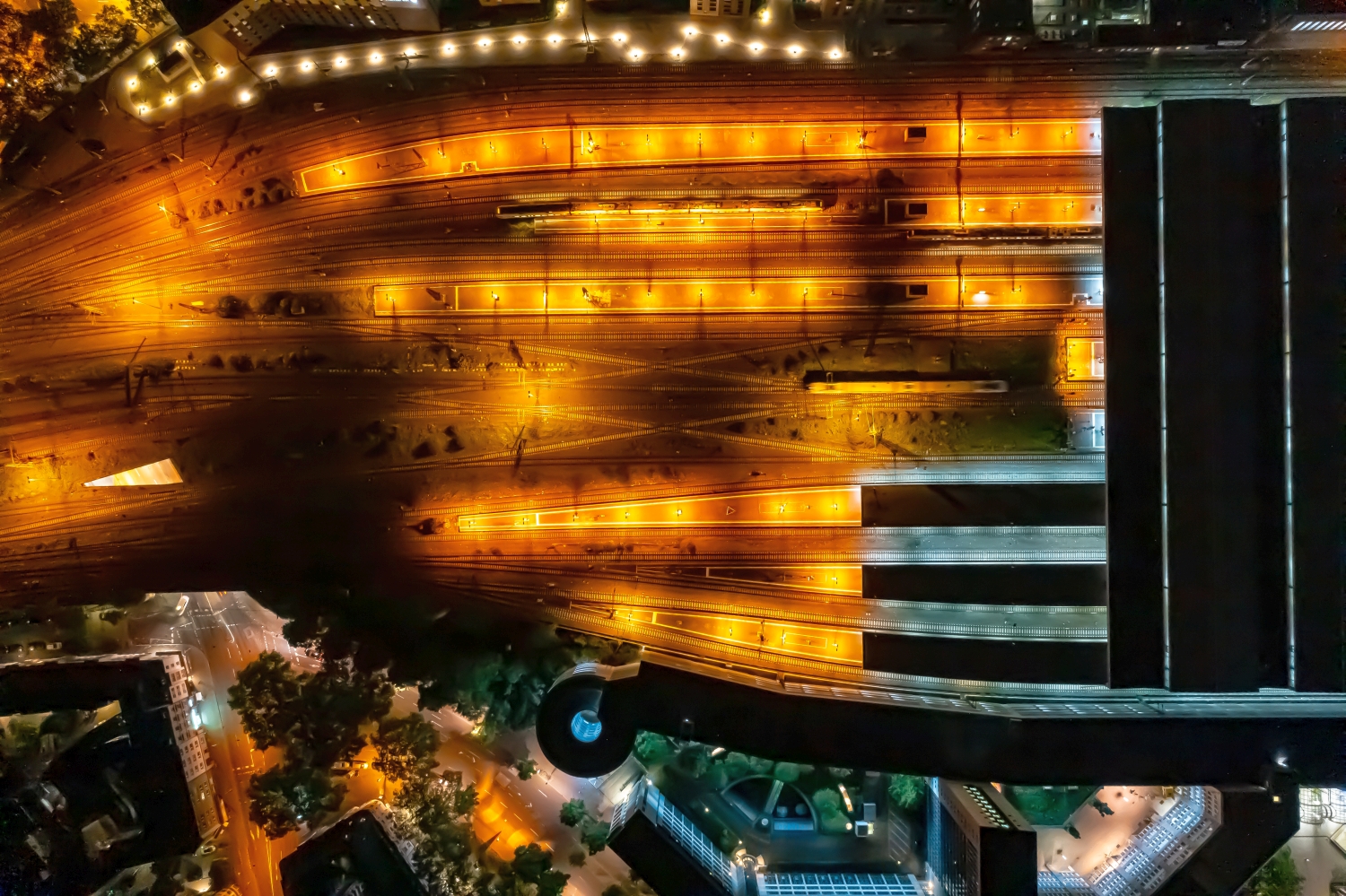
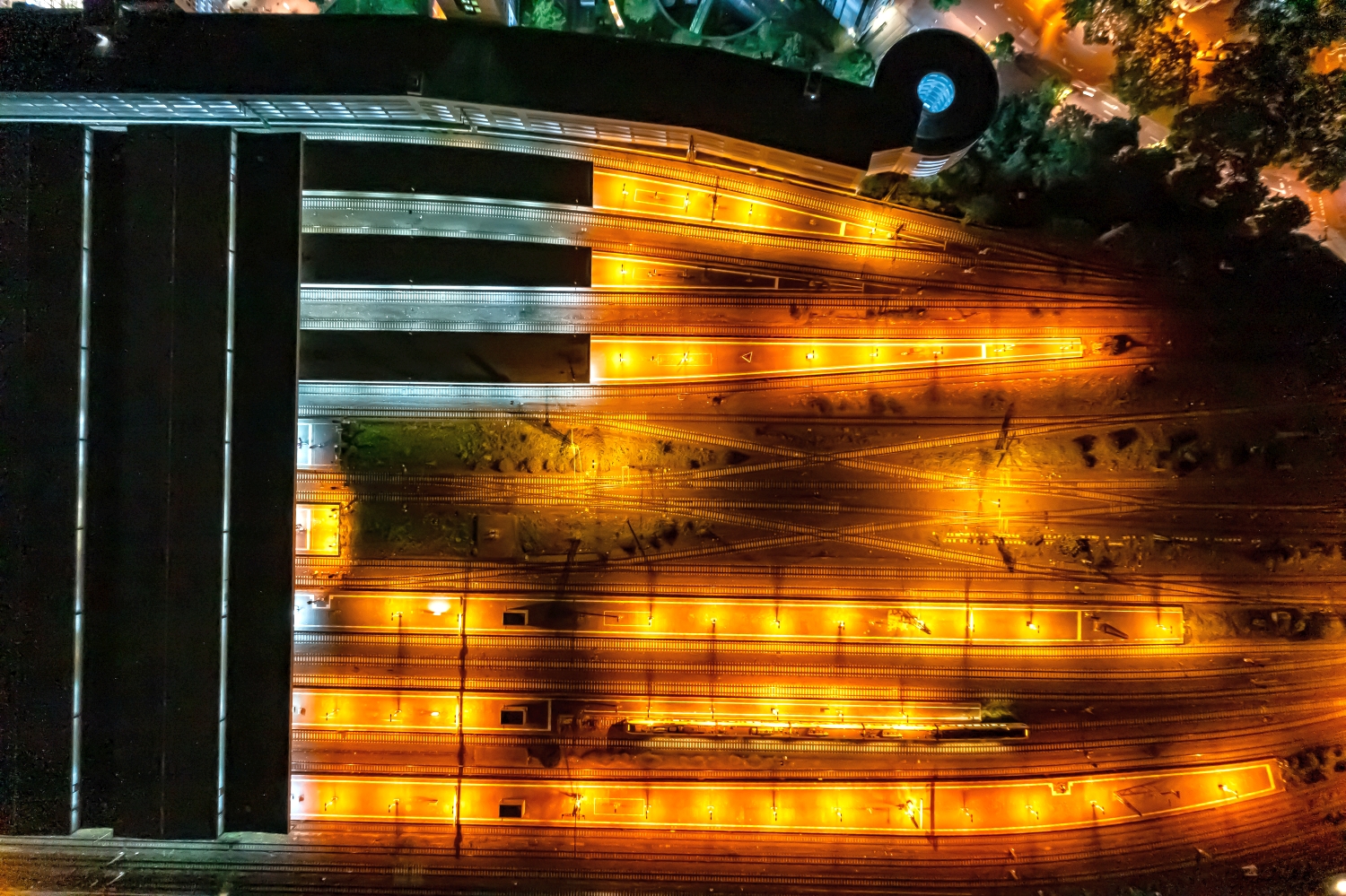
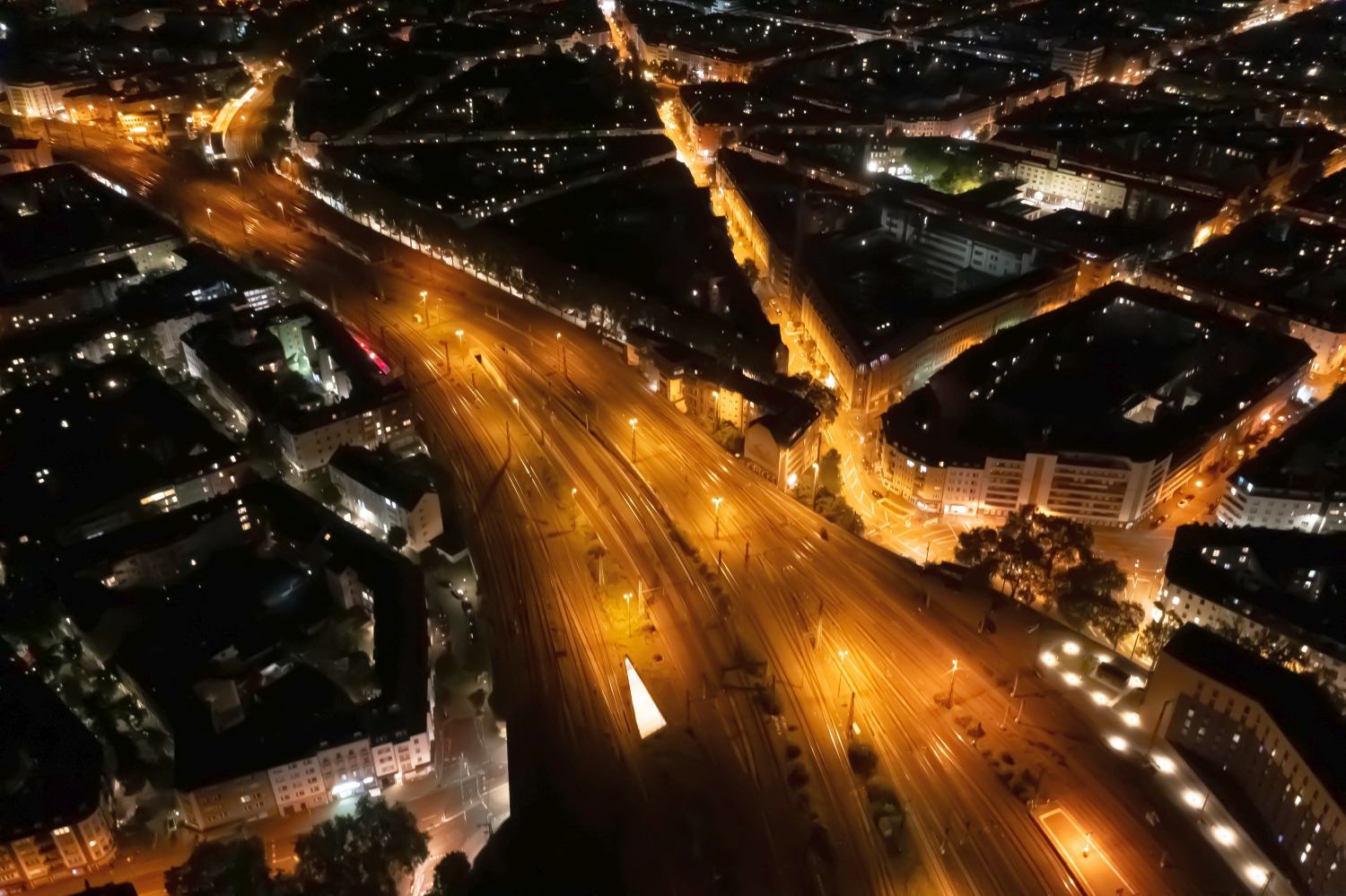
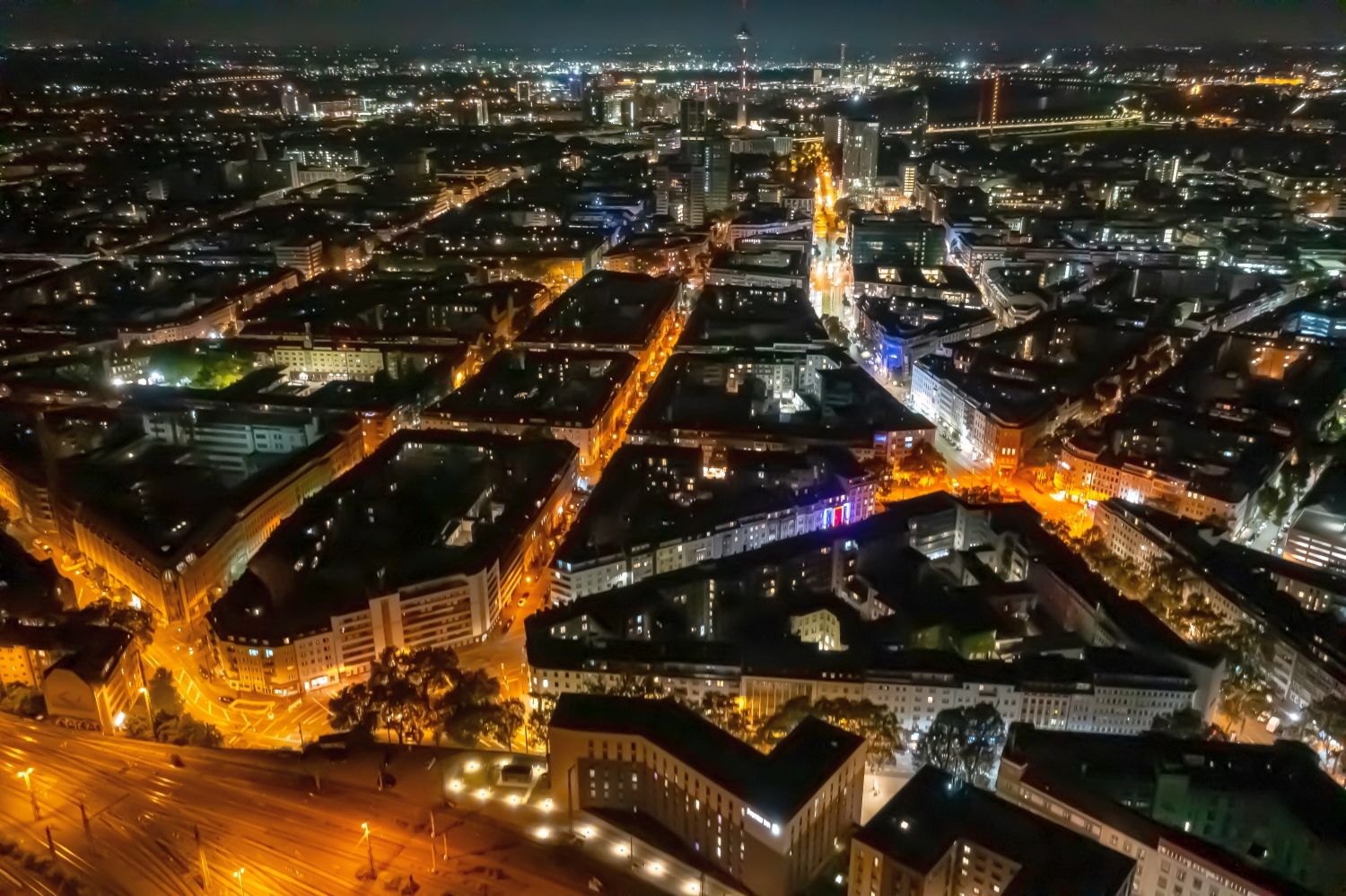
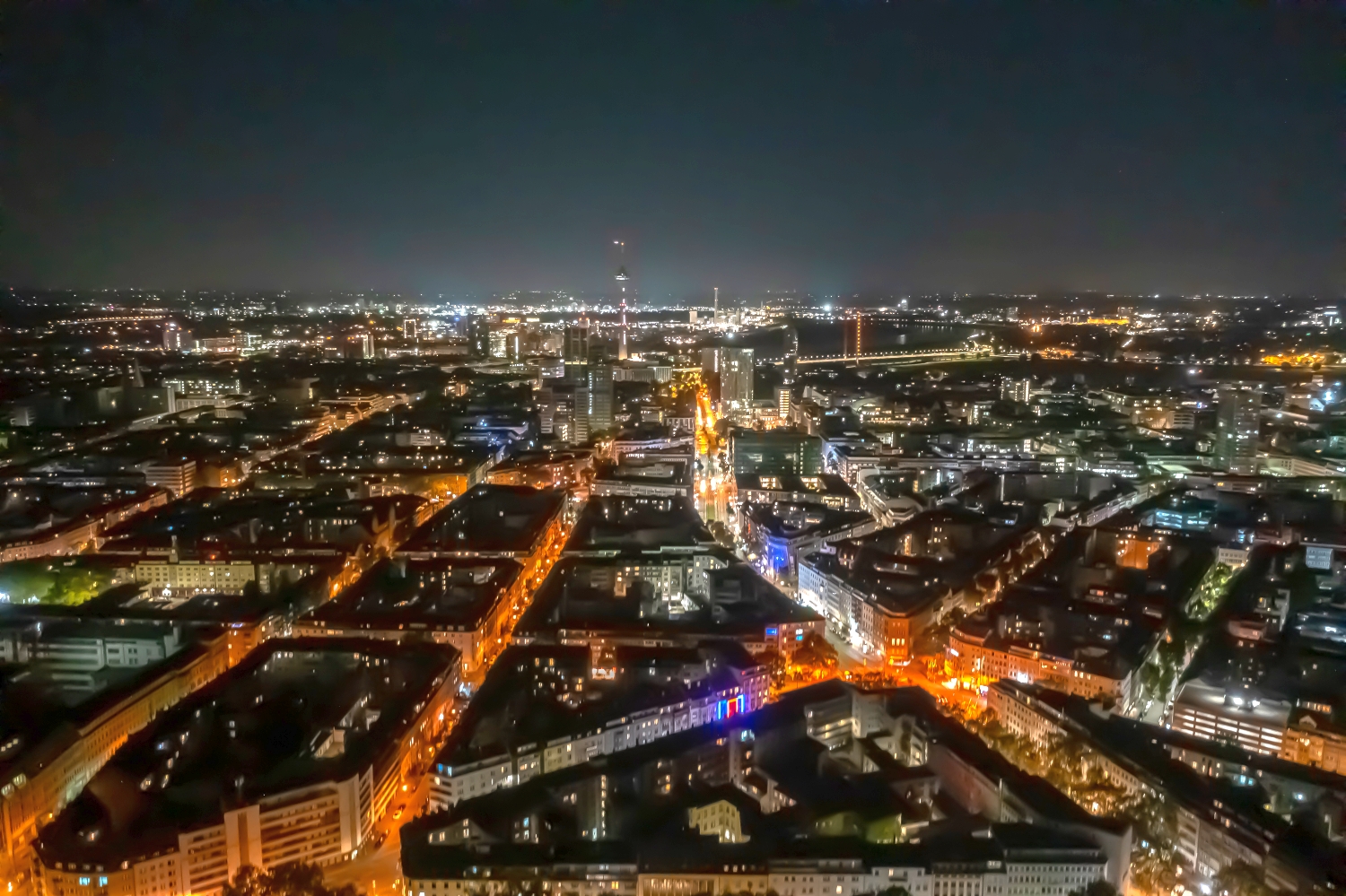
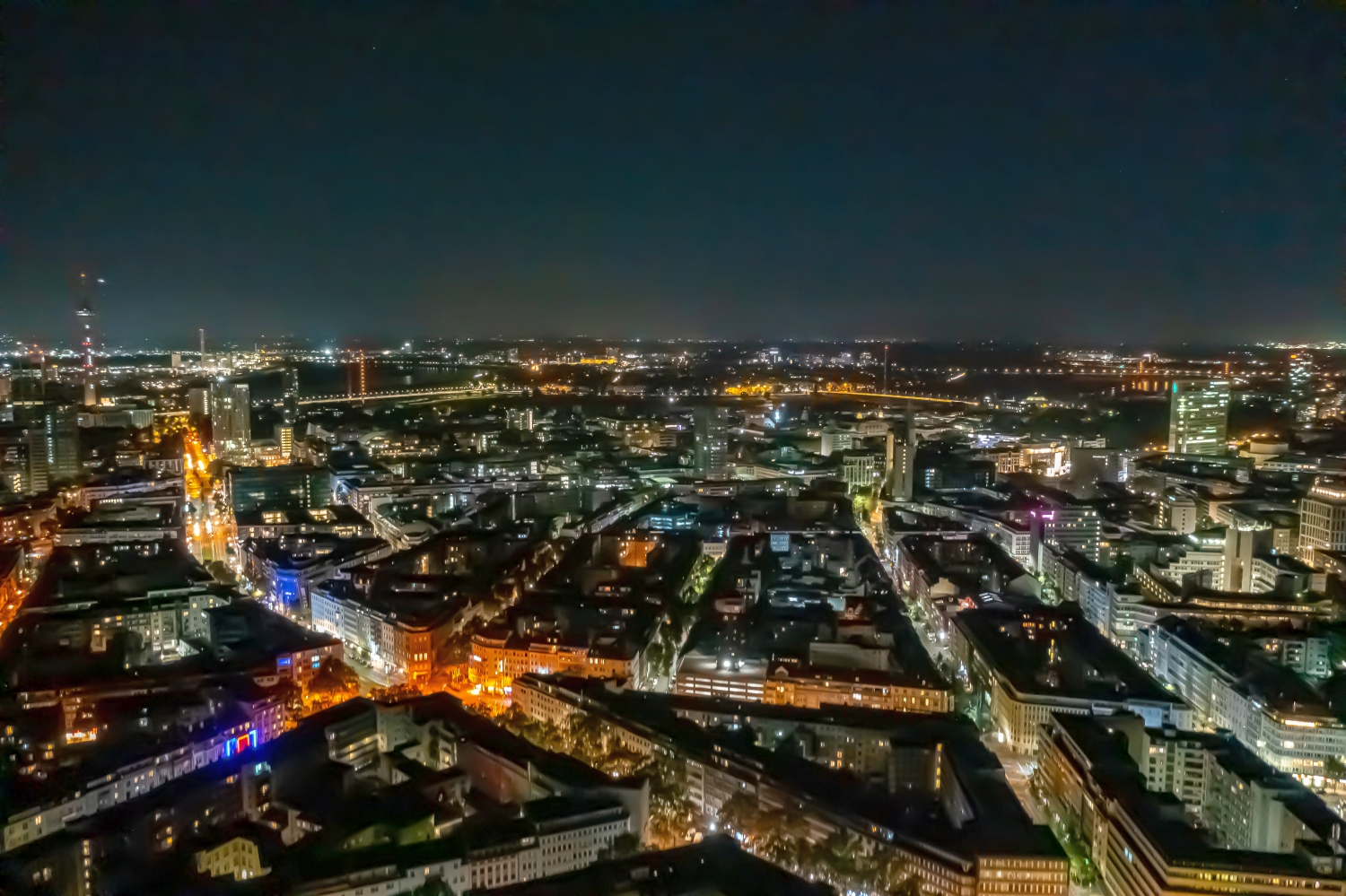
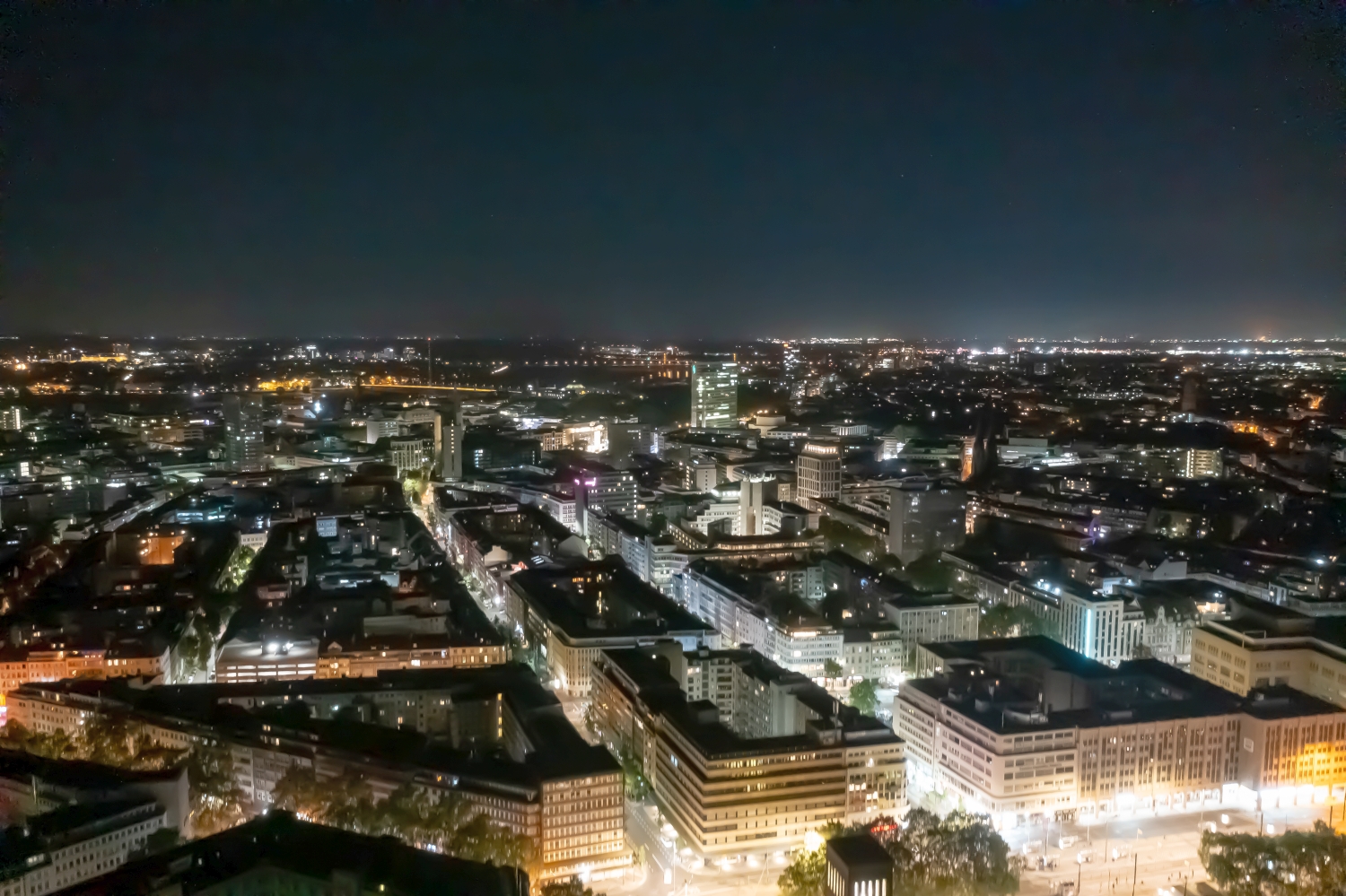
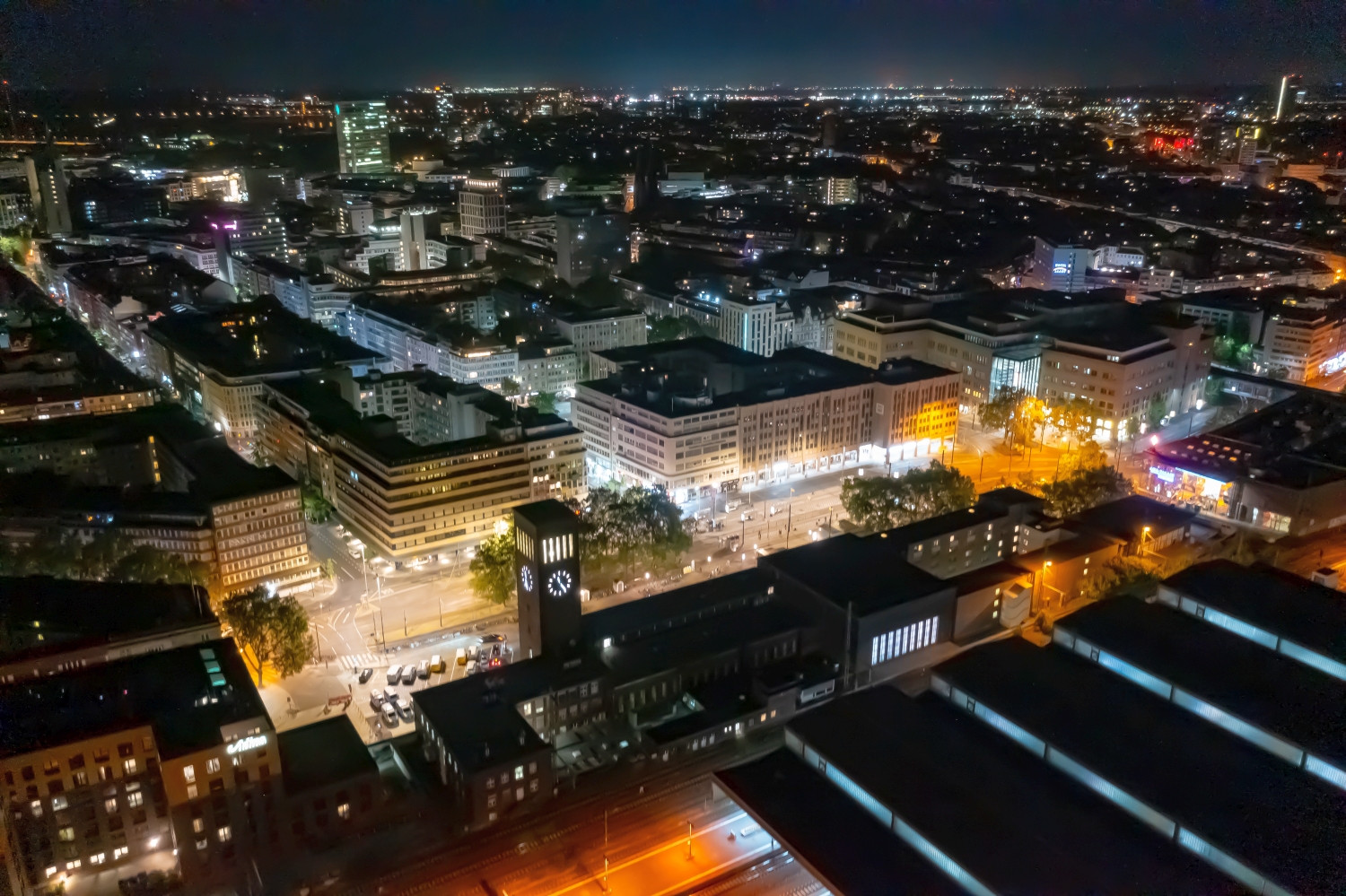
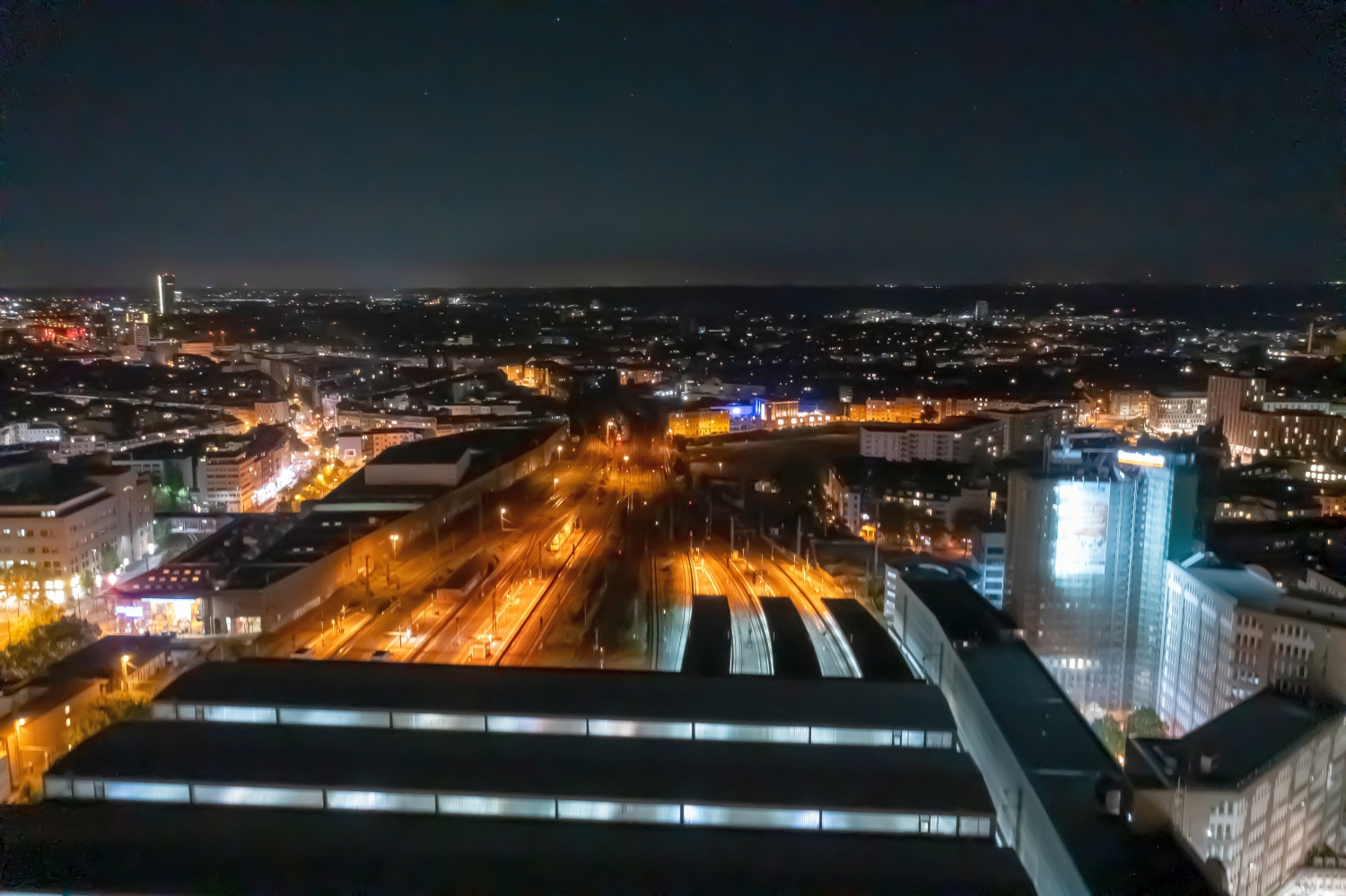
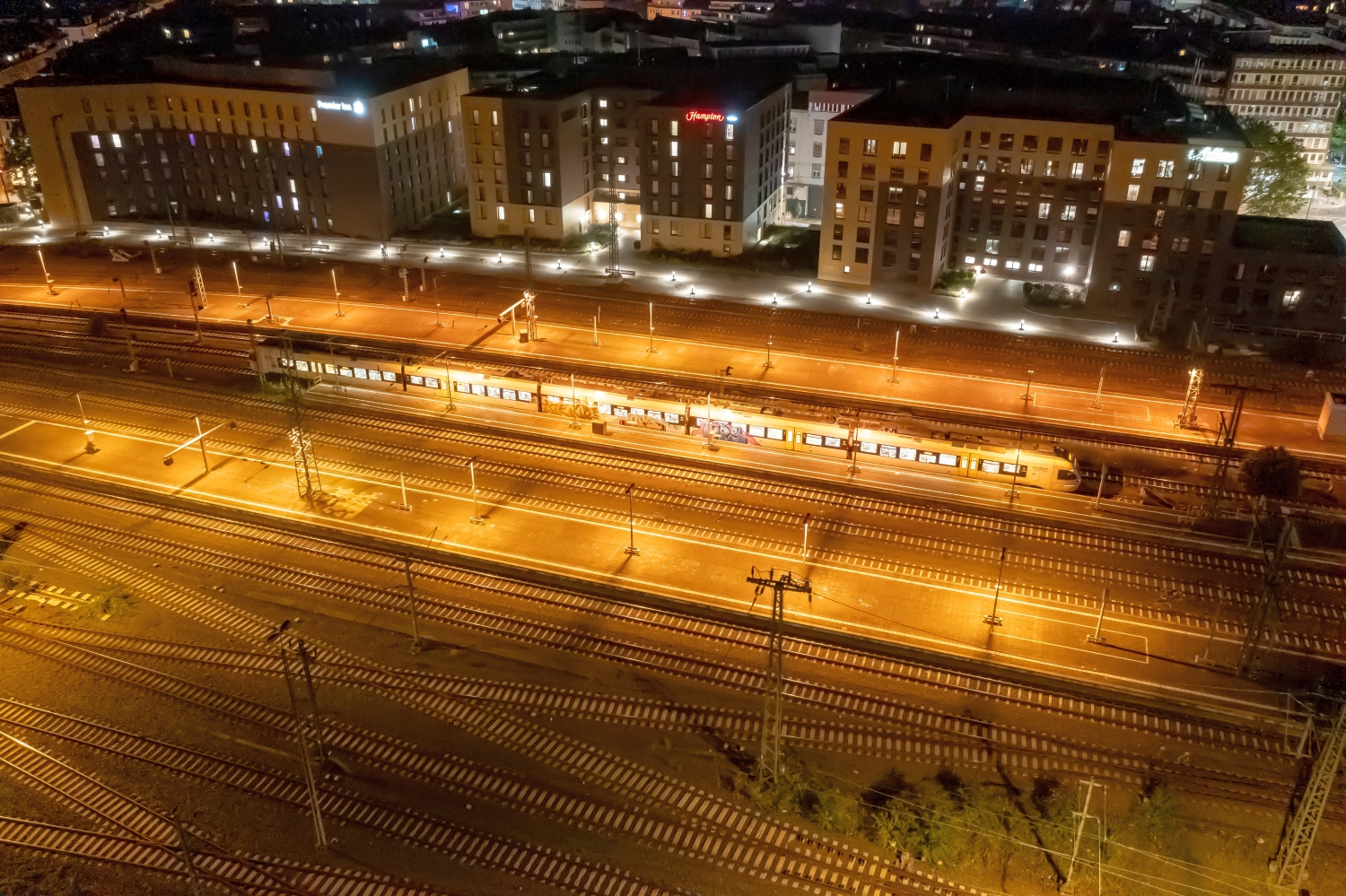
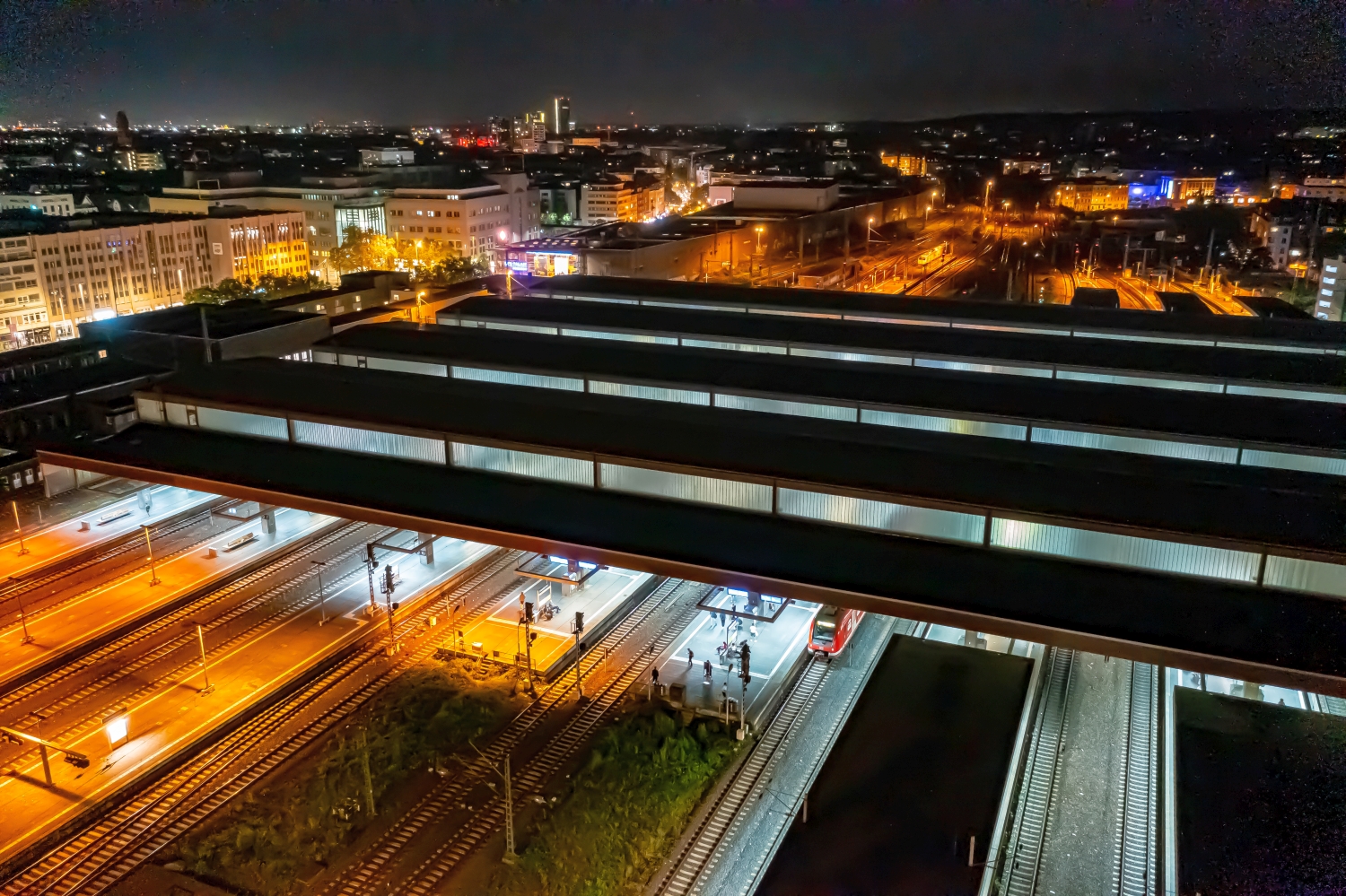
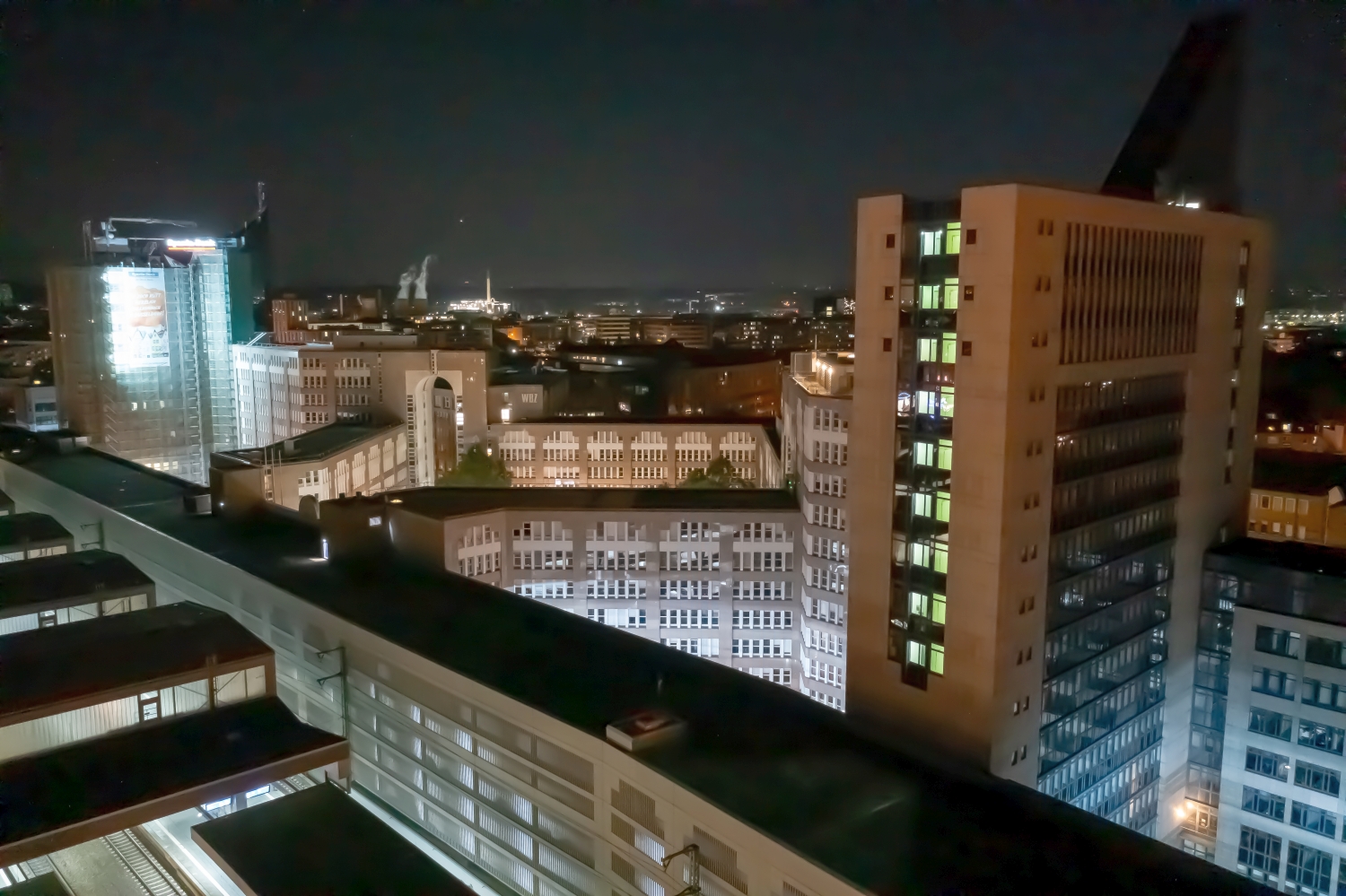
Düsseldorf main station in the dark
These aerial photos show Düsseldorf Central Station and the surrounding streets at night. The tracks glow orange, tracing long lines across the frame. Beyond the platforms, the illuminated street grid echoes the parallel lines of the railway.
A train station as a light drawing
At Düsseldorf main station, the parallel strips of light can be followed across several platforms. This pattern breaks down into individual streets between the nearby houses. A picture with both areas illustrates the location of the station better than a narrow section of the tracks alone.
At night, light and dark surfaces tell a different story than during the day. Streets remain visible as lines, while green spaces and unlit facades recede. A bright spot easily attracts more attention than the intended subject. When it comes to publishing, it helps to take a look at the small preview. If the location is also recognizable at this scale, the recording works as an introduction. When viewed larger, the transitions between the warm light of the streets and the darker buildings can be seen.
The parallel lines of the tracks
Tracks guide the eye through the image over longer distances. Where several lines converge, an easily recognizable reference point is created. If you take a broader view, you will also see adjacent streets and houses. This shows how much space the railway system takes up within the town. A tighter neckline can focus on the repetition of lines. Both variants are interesting for a report about the location, as long as the caption makes it clear which section is actually visible.
What the roofs reveal about the floor plan
A city center can often be read by its roofs. Where narrow gables are close together, the street space is also divided into short sections. A large, connected building interrupts this sequence. In the aerial photo you can follow the direction of an alley from such an interruption. For an illustration in a smaller format, a section with just a few easily distinguishable roof groups is worthwhile. In a large print, however, the spaces and small changes in direction are allowed to keep their place.
Warm tones within the series
If you browse through the 20 aerial photos, you can stay at shot 15 and shot 18 for a comparison. In the second view, warm reds and browns have more weight than in the first. Red-brown and yellowish areas are particularly noticeable next to cooler surfaces. What is interesting when comparing is whether they are concentrated on a single object or appear spread out across the entire view.
For Shot 1 and Shot 20, the same day is noted in the image files, August 22, 2023. The recording times recorded are about 4 minutes apart. ISO 2500 and an exposure time of 1/4 second are recorded for both files.
A moving view is also available. Under Aerial Videos you can find the clip “Aerial View of Düsseldorf Central Station (Düsseldorf HBF), Germany”. The linked preview leads to inclusion in the aerial photographer's portfolio on Adobe Stock.
Maintain the lighting mood in the selection
A special lighting atmosphere also changes the description of the location. What appears clearly in the photo may only be an inconspicuous detail in daylight. For a caption, it is worth linking the observed effect precisely to this recording. If you want to have a similar view photographed again, you can show the aerial photographer the previous image as a reference. Weather, cloud cover and lighting can only be repeated to a limited extent. The comparison becomes all the more interesting when a fixed starting point makes the same place visible in both views.
Related motifs in the aerial photo archive
If you are looking for related motifs, you can start with Food. In Essen city center, the streets around the main train station glow in warm colors. It's worth taking a second look at Frankfurt am Main. Frankfurt at night first appears as a network of light.