 F4LUFTBILDER
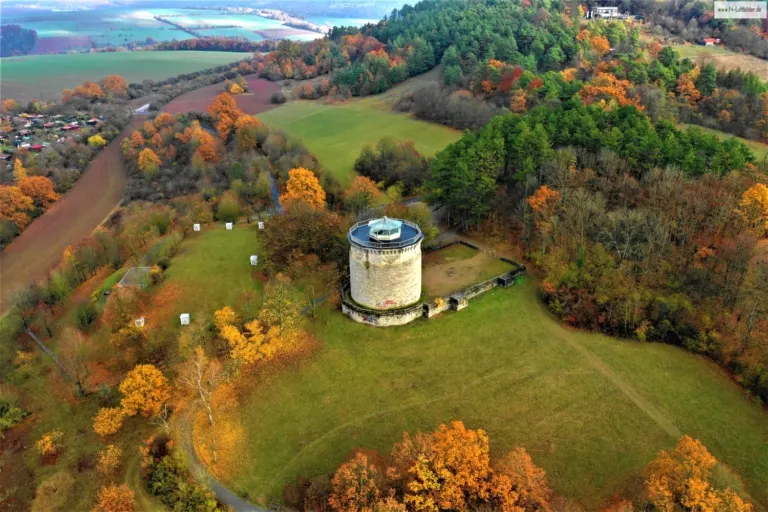
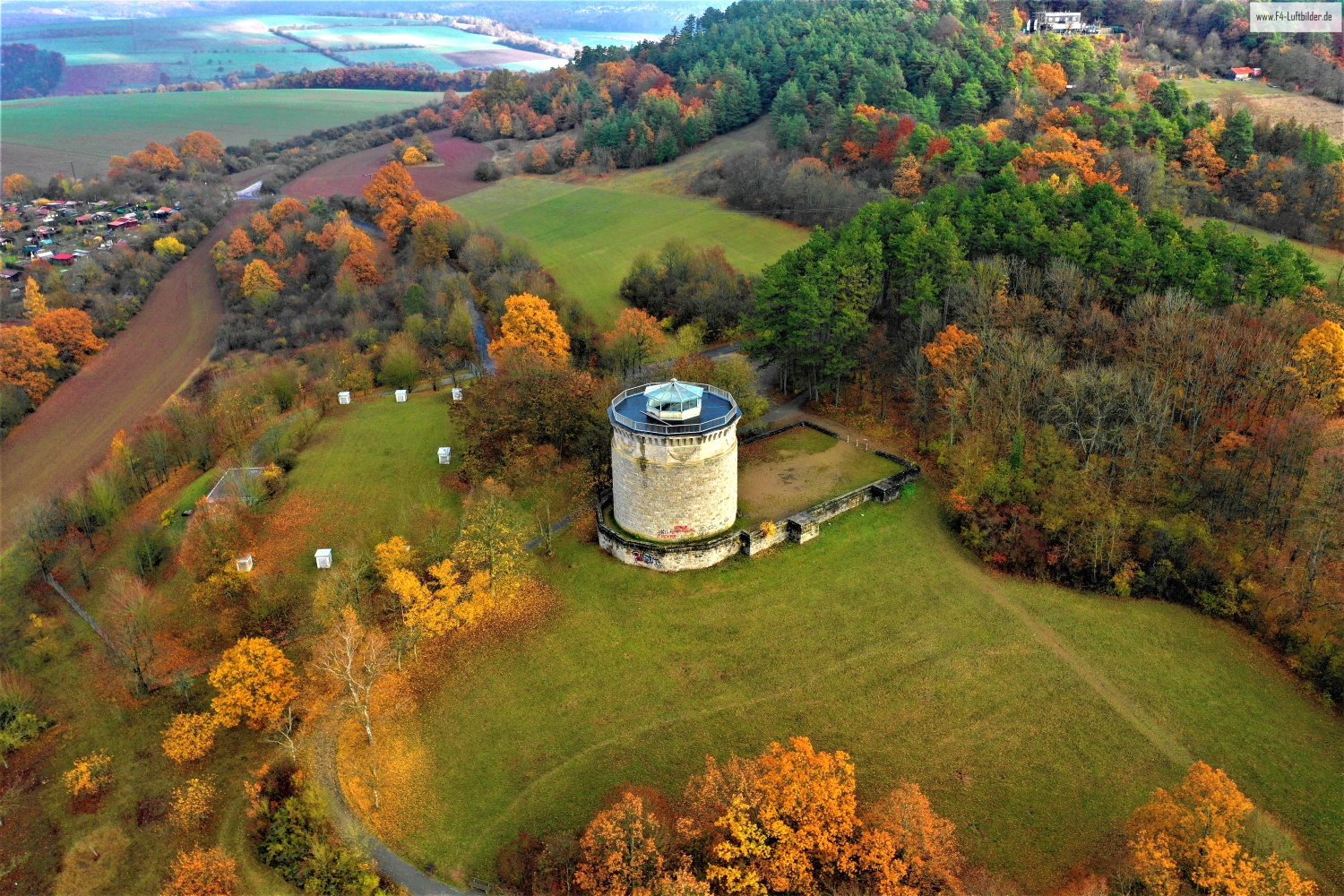
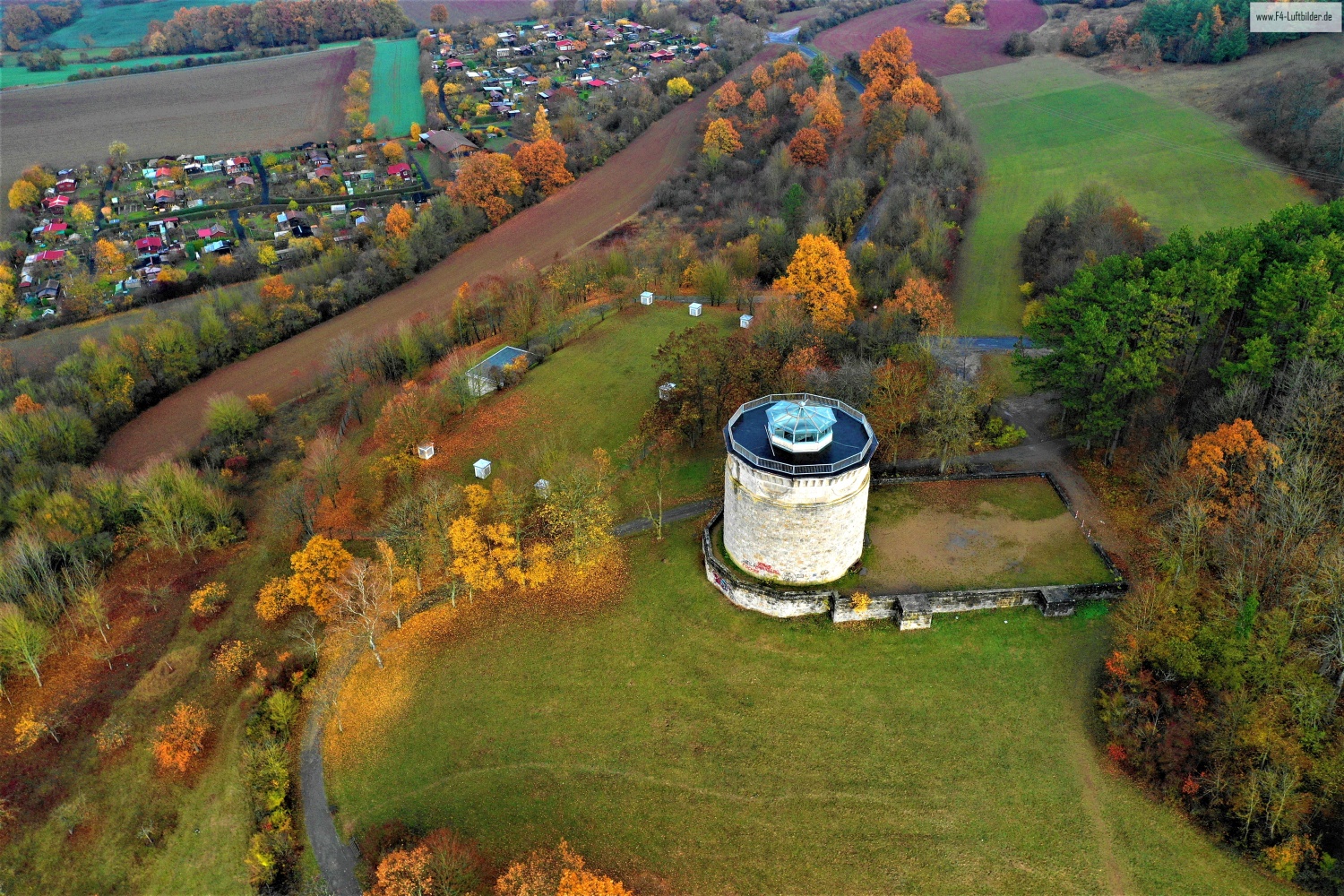
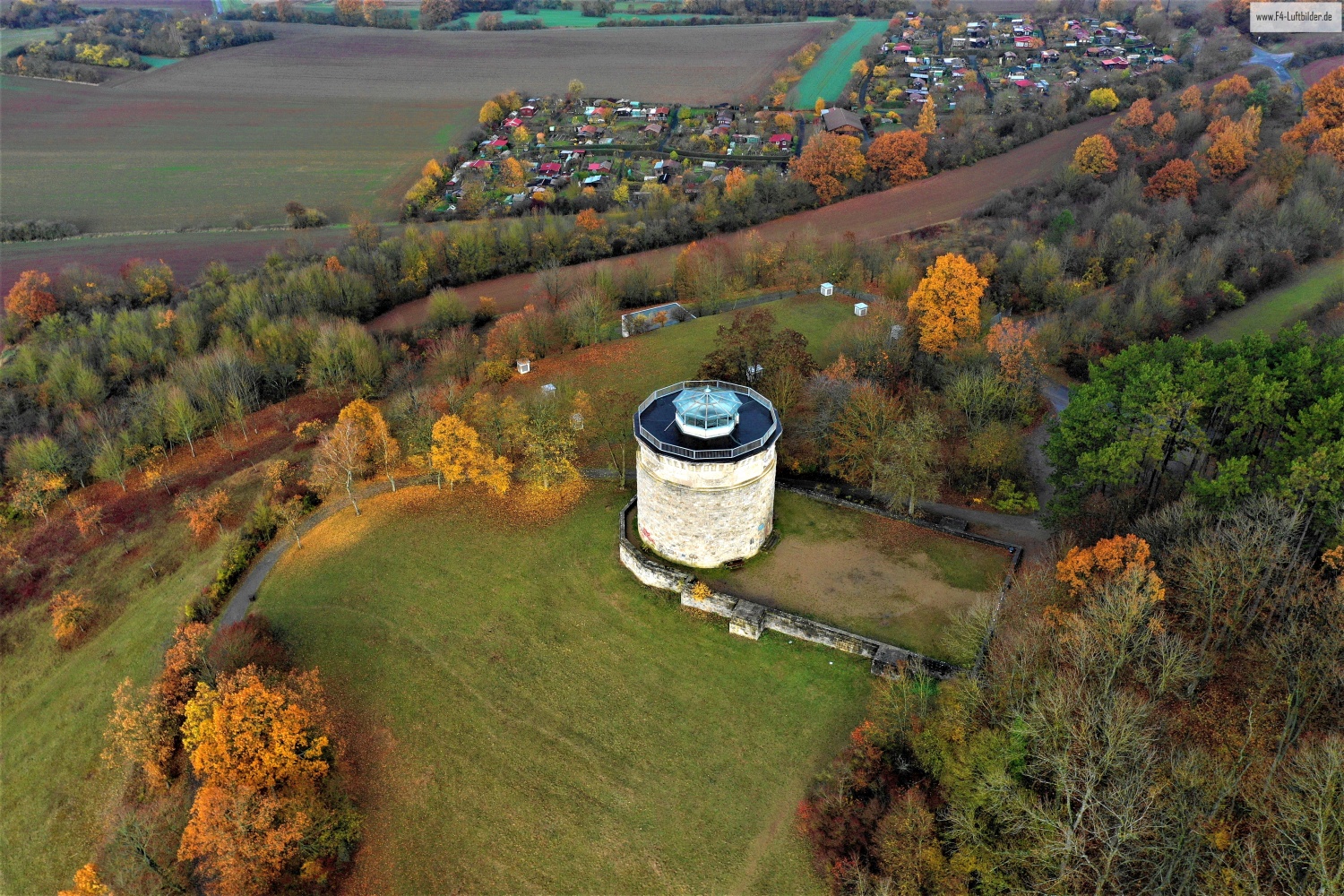
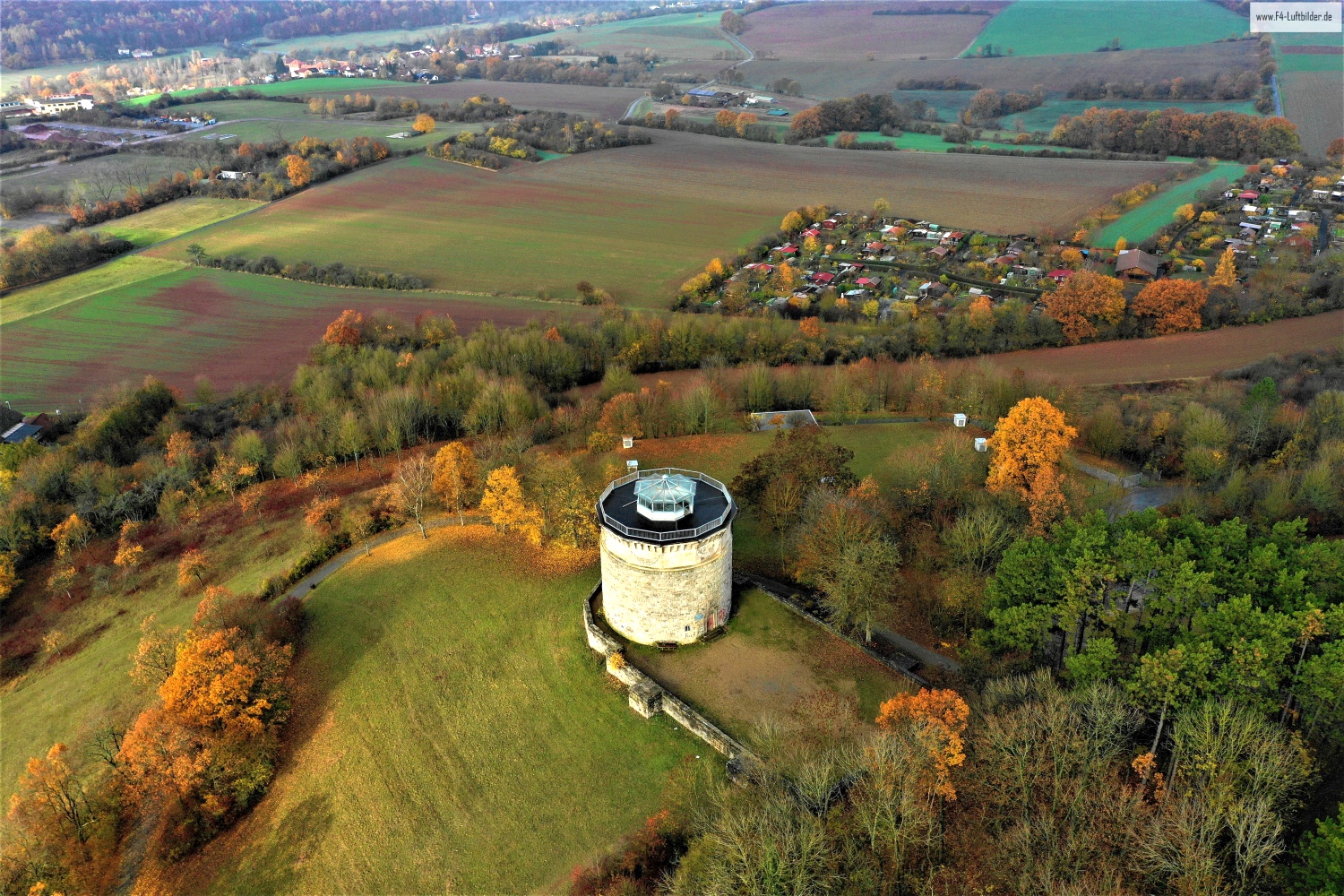
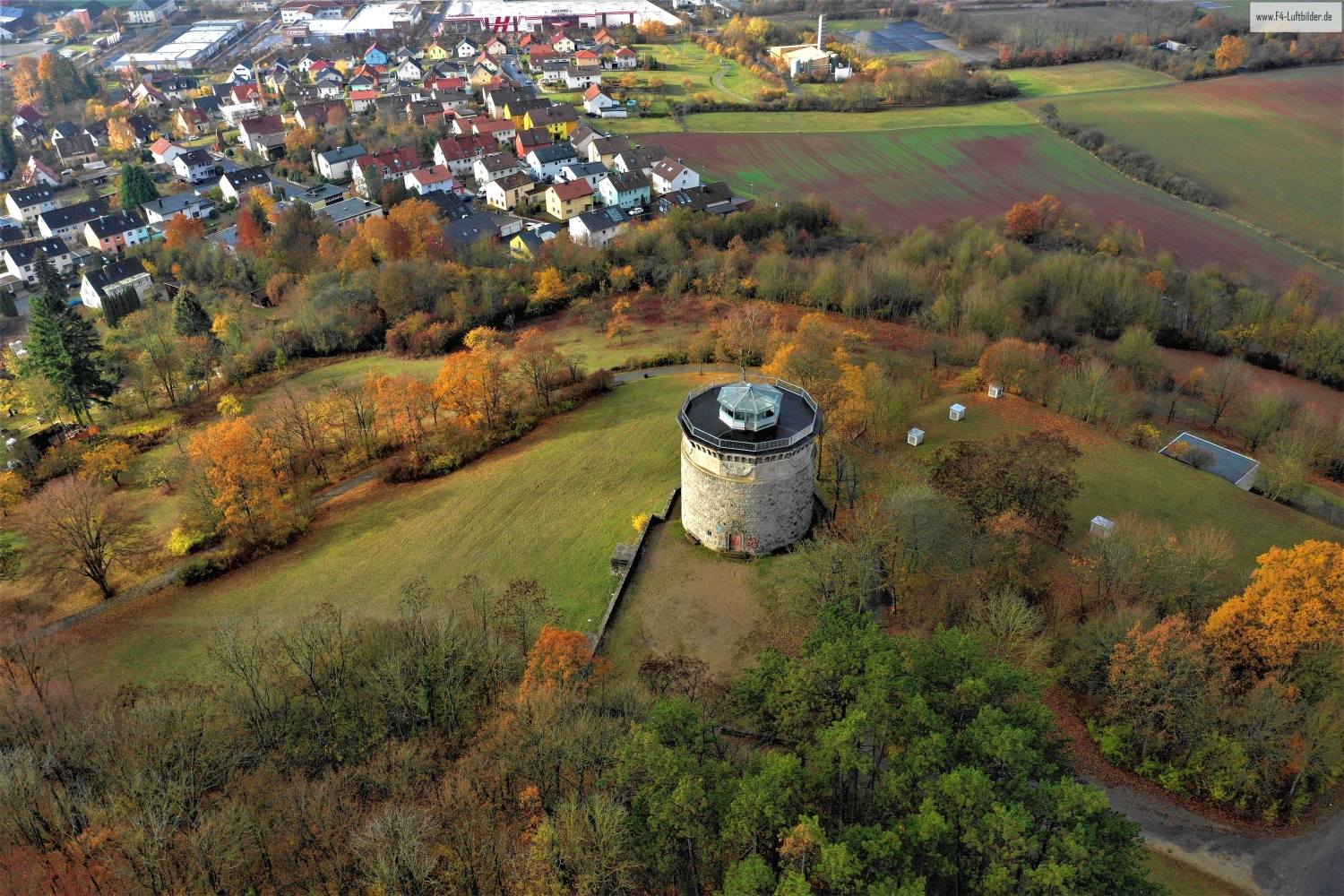
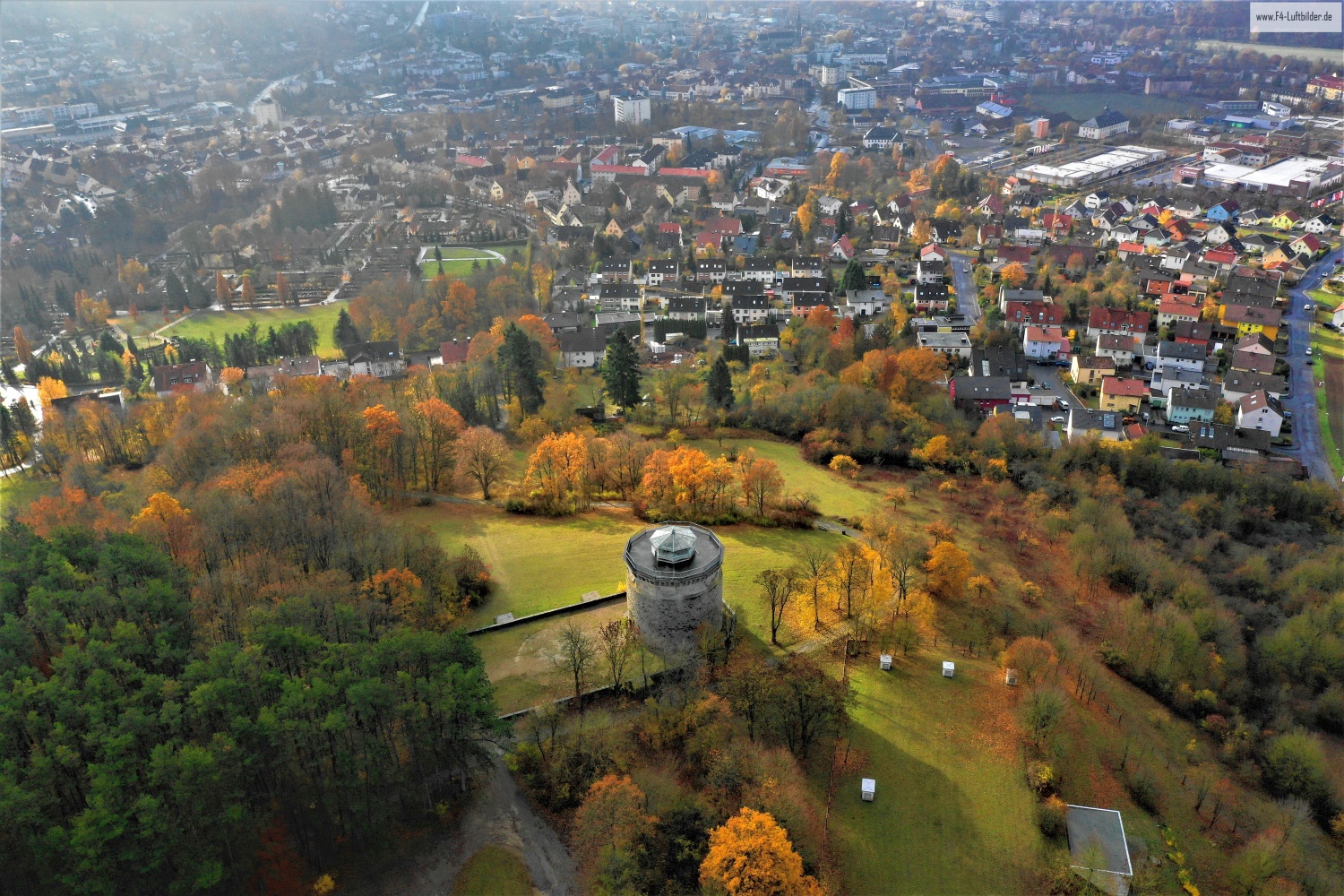
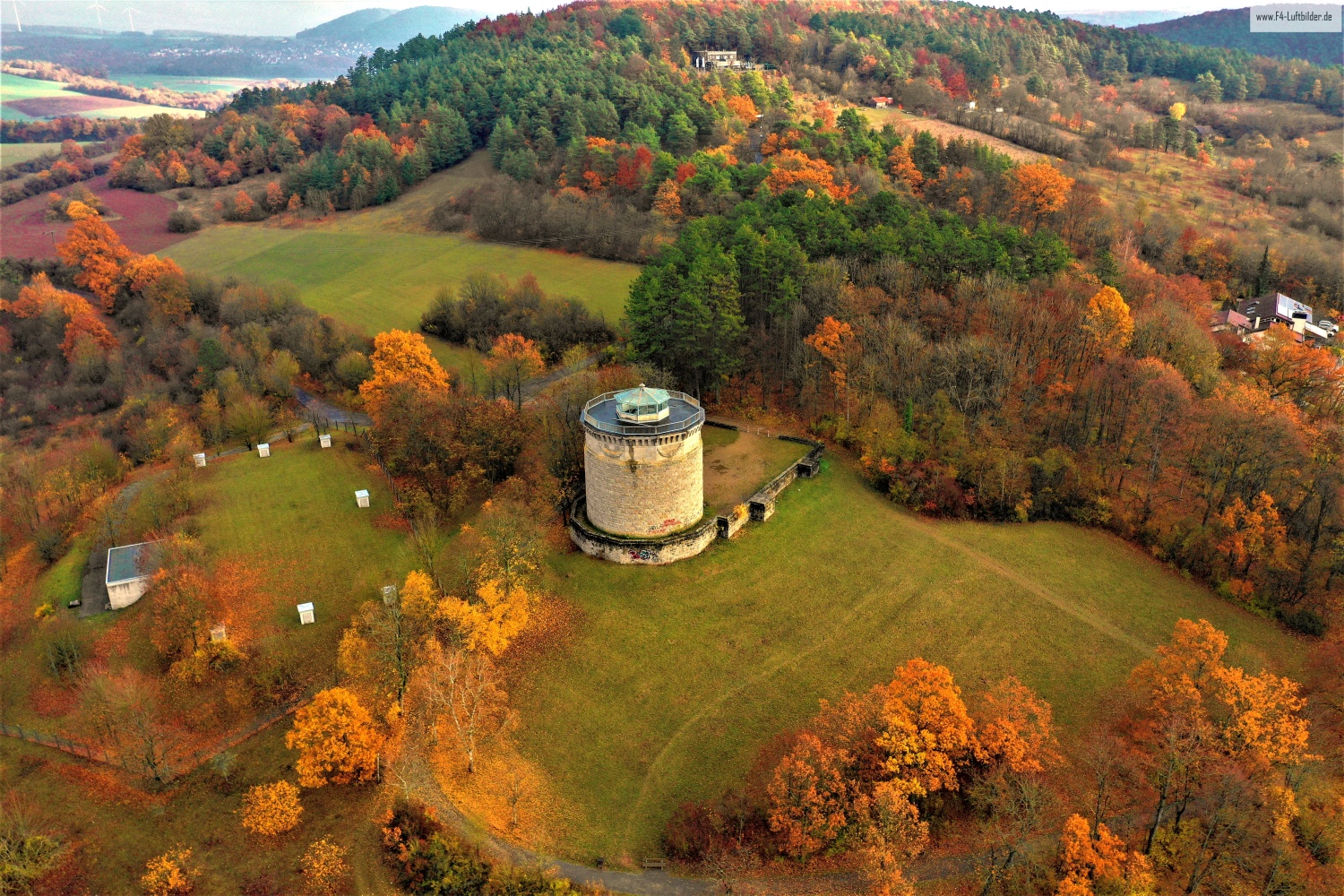
The Bismarck Tower above Bad Kissingen
The bright Bismarck Tower rises above Bad Kissingen from the autumn leaves. In the distance are the houses in the valley. A selection of images at some distance from the tower conveys its elevated position and at the same time gives the viewer a scale for the surrounding treetops.
From the tower to the wooded ridge
The Bismarck Tower near Bad Kissingen is easier to see against the foliage than in the wide panorama. The panorama shows the distance between the tower and the houses in the valley.
Up close, a tower draws the eye upwards. In the aerial photograph this movement is reversed. From the top, the eye follows the sides down to the ground and finds paths, neighboring buildings or vegetation for size comparison. A steep perspective shortens the visible shaft. When viewed from the side, it stands out from its surroundings. When selecting a representative image, it is therefore crucial whether the shape of the tower or its location in the terrain should be shown.
What the treetops reveal
A forest changes the view of every structure and every path that lies on its edge. From one side the treetops cover the lower area, from another a small gap opens. Photos in which the boundary between open space and vegetation can be clearly seen are particularly interesting. They explain which parts of a motif are visible. In a description, it is possible to distinguish precisely between the section depicted and the terrain hidden by the foliage.
The graduation of the mountain ranges
The silhouette of a mountain range is a good way to start looking. First you notice the highest point, then the succession of saddles and flatter sections. In an oblique shot, this profile connects with the shapes in the foreground. A steeper perspective takes more interest in the surface of the slope. A direct comparison makes it understandable why a location can change significantly when the viewing angle changes, even though the recognizable heights in the background remain the same.
Warm tones within the series
To switch between two of the 7 aerial photos, shot 6 and shot 7 can be called up directly in the gallery. In the second view, warm reds and browns have more weight than in the first. Red-brown and yellowish areas are particularly noticeable next to cooler surfaces. What is interesting when comparing is whether they are concentrated on a single object or appear spread out across the entire view.
Shot 7 and Shot 4 are among the views from November 11, 2018. According to the camera's time information, there is less than a minute between the two images. ISO 100 and an exposure time of 1/320 second are recorded for both files.
Communicate architecture and location together
Anyone who has visited a building themselves often remembers the entrance and the first view upwards. In the aerial photograph, these exact areas can disappear behind a roof or a wall. A suitable caption helps to connect the tour experienced with the spatial overview. For an aerial photographer, planned use is therefore a good starting point. A view for a site plan needs clear outer edges. An image for the cover page may focus more on the interaction between the building and its surroundings.
Related motifs in the aerial photo archive
Two additional views can be used in the archive for comparison. The first can be found at Frankenwarte. There are open areas and autumn-colored forest edges around the Frankenwarte. The second belongs to the article Bismarckturm Würzburg. The Bismarck Tower in Würzburg is surrounded by dense foliage in this series.